RV Gear ›
Best RV Surge Protectors in 2026 – Beginner Friendly Guide
by Jake Mercer
The Progressive Industries EMS-PT30X stands as our top pick for RV surge protection in 2026, delivering comprehensive electrical management at a price point that makes sense for most travelers. After evaluating seven of the most popular models on the market, our team found that the difference between a reliable surge protector and a mediocre one often comes down to joule ratings, fault detection capabilities, and build quality — factors that are not always obvious from product photos alone.
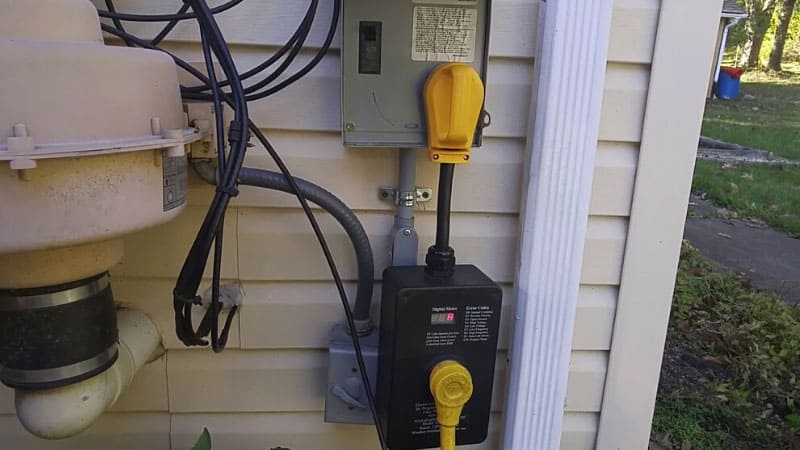
An RV surge protector is not a luxury accessory — it is an essential piece of safety equipment that stands between campground power pedestals and thousands of dollars worth of electronics. Power surges, miswired outlets, and voltage fluctuations are surprisingly common at campgrounds across North America, and a single incident can destroy air conditioners, refrigerators, and entertainment systems in seconds. The underlying technology relies on metal oxide varistors that absorb excess voltage before it reaches sensitive components, and the quality of these internal components varies dramatically between manufacturers.
Whether the goal is protecting a modest travel trailer or a fully loaded Class A motorhome, choosing the right RV gear requires understanding the distinction between simple surge-only strips and full electrical management systems. This guide breaks down seven top-rated models across 30-amp and 50-amp configurations, covering everything from budget-friendly circuit analyzers to hardwired units designed for permanent installation. For those also upgrading other systems on the rig, our reviews of the best RV inverters and best RV thermostats provide complementary guidance on electrical and climate management.
Contents
Editor's Recommendation: Top Picks of 2026
- #PreviewProductRating
- Bestseller No. 1
 Rating:

- Bestseller No. 2
 Rating:
 - Bestseller No. 3
 Rating:
 - Bestseller No. 4
 Rating:
 - Bestseller No. 5
 Rating:
 - Bestseller No. 6
 Rating:
 - Bestseller No. 7
 Rating:
Detailed Product Reviews
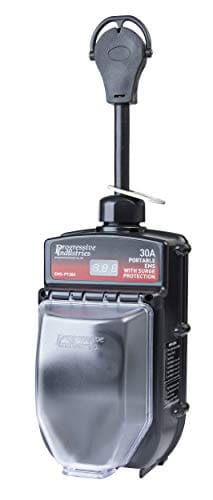
1. Progressive Industries EMS-PT30X Portable RV Surge Protector — Best Overall for 30 Amp
The Progressive Industries EMS-PT30X earned our top recommendation in 2026 because it combines a full electrical management system with portable convenience in a single weatherproof housing. Rated for 30 amps at 120 volts with a maximum capacity of 3,600 watts, this unit absorbs surges up to 1,790 joules — a figure that places it well above basic surge-only strips in terms of meaningful protection. The built-in EMS continuously monitors incoming power and will automatically disconnect the RV when it detects dangerous conditions, then reconnect once safe voltage levels return.
What separates the EMS-PT30X from simpler protectors is the depth of its fault detection suite. The unit guards against overvoltage, undervoltage, open ground, open neutral, reverse polarity, miswired pedestals, accidental 240-volt connections, surge failure indicators, and AC frequency anomalies. That is an exceptionally thorough list of protections, and our team found the diagnostic LED display easy to read even in direct sunlight. The housing itself is constructed from durable thermoplastic that resists UV degradation and moisture intrusion, which matters when the unit hangs exposed at a campground pedestal for weeks at a time.
Installation could not be simpler — the EMS-PT30X plugs directly between the power pedestal and the RV's shore power cord with no tools or wiring required. The 128-second startup delay gives the air conditioning compressor time to equalize pressure before power is restored after an interruption, a thoughtful design choice that prevents compressor damage. For 30-amp RV owners who want comprehensive protection without permanently modifying their electrical system, this remains the gold standard in 2026.
Pros:
- Full electrical management system with 1,790-joule surge absorption
- Comprehensive fault detection covering nine distinct electrical hazards
- Portable plug-and-play design with no wiring or modifications required
- Weather-resistant housing with easy-to-read LED diagnostic display
Cons:
- Higher price point compared to basic surge-only protectors
- The 128-second reconnection delay can feel lengthy during brief power interruptions
2. Progressive Industries EMS-PT50X Portable RV Surge Protector — Best for 50 Amp Systems
The EMS-PT50X is the 50-amp counterpart to our top pick, and it delivers the same caliber of electrical management for larger RVs with dual-pole 120/240-volt service. Rated for 50 amps with a maximum capacity of 12,000 watts, this unit provides 3,580 joules of surge absorption — exactly double the 30-amp version, which is appropriate given the higher power demands of 50-amp rigs. Class A motorhomes, large fifth wheels, and luxury travel trailers running dual air conditioners and residential refrigerators will benefit enormously from this level of protection.
The advanced fault detection system monitors both legs of the 240-volt supply independently, catching overvoltage and undervoltage conditions on either leg before they can damage sensitive electronics. Reverse polarity detection and surge failure indicators are also included, and the unit automatically disconnects power when conditions fall outside safe operating parameters. Our team appreciated the large, clearly labeled LED display that shows real-time voltage readings for both legs, making it immediately apparent whether a campground pedestal is delivering clean, stable power.
At this price tier, the EMS-PT50X competes primarily with hardwired units, but its portable design offers a significant advantage for owners who may sell or trade their RV in the future. The protector transfers easily between vehicles and requires zero permanent modification. The only real drawback is the physical size and weight — the 50-amp unit is substantially larger than its 30-amp sibling, and some owners find it cumbersome to store during transit.
Pros:
- 3,580 joules of surge protection across both legs of 240-volt service
- Independent voltage monitoring for each leg with real-time LED readout
- Portable design transfers between vehicles without any modification
Cons:
- Significantly larger and heavier than 30-amp portable units
- Premium pricing that approaches hardwired EMS alternatives
3. Progressive Industries EMS-HW30C Heavy Duty RV Surge Protector — Best Hardwired Option
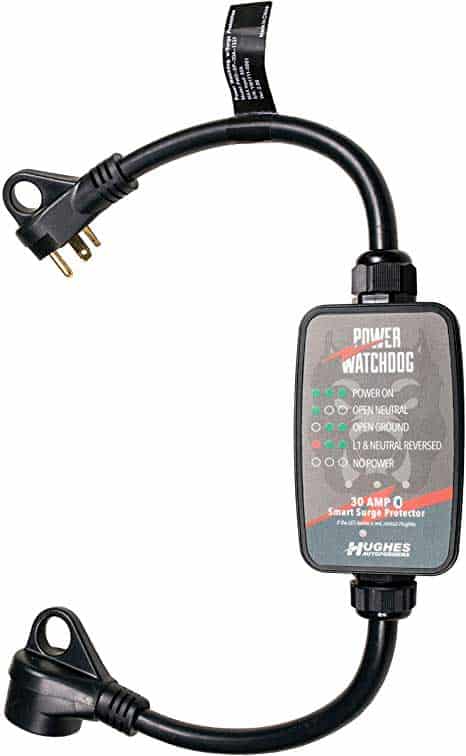
For RV owners who prefer a permanent, set-and-forget solution, the EMS-HW30C hardwired unit offers the same robust protection as the portable PT30X but installs directly inside the RV's electrical panel. This approach eliminates the risk of theft at campgrounds — a genuine concern with portable units that dangle visibly from power pedestals — and keeps the protector shielded from weather extremes year-round. The unit absorbs up to 1,790 joules and provides 3,600 watts of capacity at 30 amps and 120 volts.
The fault detection capabilities mirror those of the portable version, covering overvoltage, undervoltage, open ground, open neutral, reverse polarity, miswired pedestals, accidental 120-volt cross-connections, surge failure, and AC frequency deviations. The hardwired installation does require basic electrical knowledge or a professional electrician, but the process is straightforward for anyone comfortable working with a 30-amp breaker panel. Progressive Industries includes clear wiring diagrams and mounting hardware in the box.
One notable advantage of the hardwired configuration is the remote display option, which allows owners to mount a small readout panel inside the RV's living area. This provides real-time voltage and amperage monitoring without stepping outside to check the unit, a convenience that proves valuable during extended stays at campgrounds with questionable electrical infrastructure. The EMS-HW30C is the protector our team recommends for full-time RVers who want maximum security and the cleanest possible installation.
Pros:
- Permanent installation eliminates theft risk and weather exposure
- Optional remote display panel for indoor voltage monitoring
- Full nine-point fault detection identical to the portable EMS series
Cons:
- Requires hardwired installation into the RV's electrical panel
- Cannot be transferred between vehicles without reinstallation
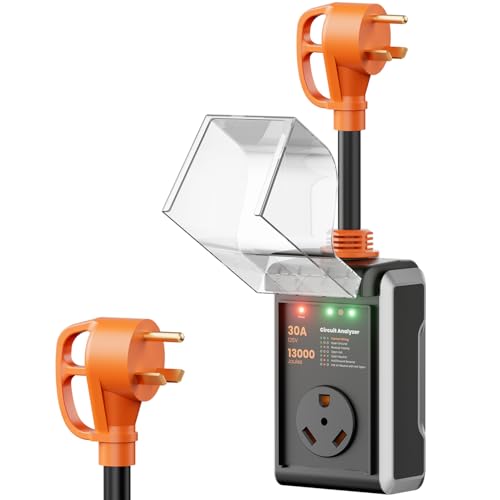
4. CRTBETLIF RV Surge Protector 30 Amp — Best Budget High-Joule Option
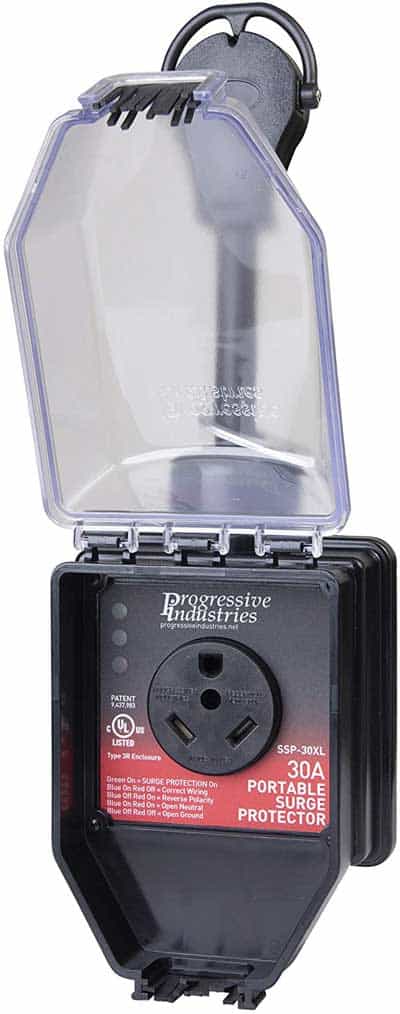
The CRTBETLIF surge protector represents an interesting value proposition in the 2026 market, offering a staggering 13,000 joules of surge absorption at a fraction of the cost of the Progressive Industries lineup. That joule rating is the highest on this list by a wide margin, and while raw joule counts do not tell the entire protection story, this specification does indicate a substantial amount of MOV material inside the housing. The unit functions as both a surge protector and a circuit analyzer, testing power quality before the RV connects to a campground pedestal.
The 2026 upgraded design features a weatherproof housing with an included protective cover, addressing one of the most common complaints about budget portable protectors. The continuous power monitoring system checks connection status in real time and provides visual indicators for common wiring faults. For weekend campers and seasonal travelers who want strong surge absorption without the investment required for a full EMS, the CRTBETLIF delivers impressive specifications at an accessible price point.
Our team does note that this unit lacks some of the advanced fault detection features found in the Progressive Industries EMS models, particularly the protection against accidental 240-volt connections and AC frequency anomalies. The brand also does not have the decades-long track record that Progressive Industries has built in the RV community. However, for buyers focused primarily on raw surge protection capacity and working within a tighter budget, this model offers remarkable value.
Pros:
- Industry-leading 13,000-joule surge absorption rating
- Built-in circuit analyzer tests pedestal wiring before connection
- Includes weatherproof cover for outdoor exposure protection
Cons:
- Lacks advanced fault detection for 240-volt and frequency anomalies
- Newer brand without an established long-term reliability record
5. Camco PowerGrip 30-Amp Circuit Analyzer Dogbone — Best Compact Design
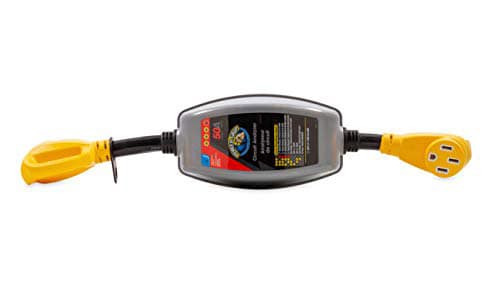
The Camco PowerGrip 55318 takes a different approach to RV electrical protection by integrating surge absorption directly into a compact dogbone adapter. This inline design is significantly smaller and lighter than box-style protectors, making it an excellent choice for travelers who prioritize storage space and portability. The unit provides up to 2,100 joules of surge protection through its NEMA TT-30P male and TT-30R female connections, covering the standard 30-amp RV plug configuration.
Diagnostic LEDs on the housing provide immediate visual indication of wiring faults, including reverse polarity, open neutral, and other common campground electrical issues. The PowerGrip handles on both ends make connections and disconnections straightforward, even in tight pedestal boxes where space is limited. Camco has been a trusted name in RV accessories for decades, and the build quality on this unit reflects that heritage with solid molded construction and reliable contact points.
The trade-off for the compact form factor is a lower joule rating compared to full-size EMS units, and the Camco does not include automatic disconnect or voltage monitoring features. This makes the PowerGrip best suited as an entry-level protector for occasional campers, or as a backup unit that stays in the truck for emergencies when the primary protector is unavailable. Those upgrading their rig's entertainment setup might also want to explore our guide to the best RV TV antennas for reliable signal reception at campgrounds.
Pros:
- Ultra-compact dogbone design saves storage space and reduces weight
- PowerGrip handles simplify connections in tight pedestal enclosures
- Diagnostic LEDs provide immediate fault indication upon connection
Cons:
- Lower 2,100-joule rating compared to full-size EMS protectors
- No automatic disconnect or continuous voltage monitoring capability
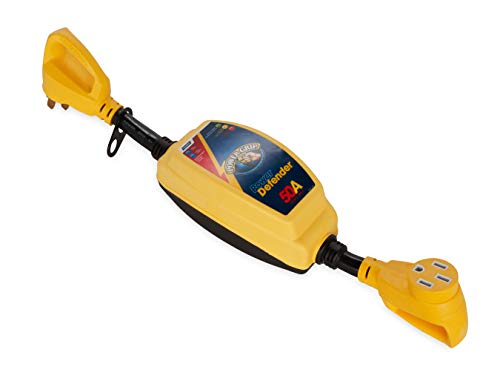
6. Camco Power Grip RV 50-Amp Voltage & Surge Protector — Best Mid-Range 50 Amp
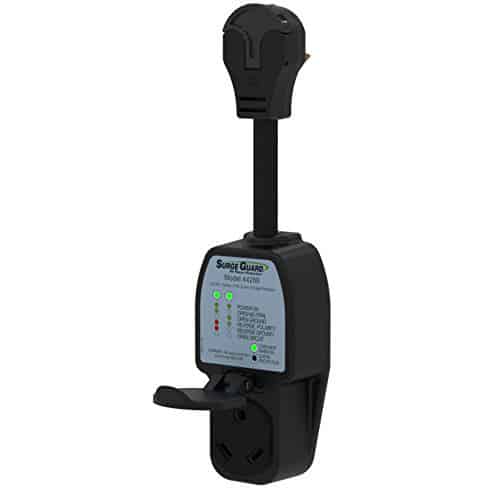
The Camco 55306 steps up considerably from the dogbone design, offering a full-featured voltage and surge protector built specifically for 50-amp RV systems. This unit provides 4,200 joules of surge absorption and includes automatic connect/disconnect functionality that monitors voltage levels in real time. When incoming voltage exceeds 132 VAC or drops below 102 VAC, the unit automatically disconnects power to the RV and reconnects once conditions return to safe operating ranges — a critical feature for protecting dual-compressor air conditioning systems.
The diagnostic LED array provides clear indication of reverse polarity, open neutral, and other wiring faults, giving owners immediate feedback about campground electrical quality. Camco designed the housing with a sturdy, weather-resistant enclosure that holds up well to rain, dust, and the general rigors of campground life. The auto-disconnect feature alone makes this unit a significant upgrade over basic surge-only protectors, bringing it closer to the functionality of full EMS systems at a noticeably lower price point.
Compared to the Progressive Industries EMS-PT50X, the Camco 55306 offers fewer total joules of protection and a somewhat less comprehensive fault detection suite. However, it covers the most critical protection categories — voltage regulation, surge absorption, and polarity verification — at a price that many 50-amp RV owners will find far more approachable. For buyers who want meaningful protection beyond a basic surge strip but are not ready to invest in a top-tier EMS, this Camco model occupies a productive middle ground.
Pros:
- Automatic disconnect and reconnect for dangerous voltage conditions
- 4,200-joule surge absorption at a mid-range price point
- Covers high voltage (above 132 VAC) and low voltage (below 102 VAC) protection
Cons:
- Fewer total joules than the Progressive Industries EMS-PT50X
- Does not detect accidental 240-volt connections or AC frequency issues
7. Progressive Industries SSP-30XL Portable RV Smart Surge Protector — Best Entry-Level Progressive
The SSP-30XL offers a gateway into the Progressive Industries ecosystem at a lower price point than the EMS series, providing intelligent surge protection with smart fault detection for 30-amp RV systems. Rated for 3,600 watts at 120 volts, the unit absorbs surges up to 825 joules — a lower figure than the EMS-PT30X but still sufficient for protecting against the vast majority of campground power anomalies. The "smart" designation refers to the unit's ability to identify and warn against multiple fault conditions before they cause damage.
The fault detection suite covers overvoltage, undervoltage, open ground, open neutral, reverse polarity, surge failure, and AC frequency issues. While this list is slightly shorter than the full EMS lineup, it addresses every common electrical hazard that RV owners are likely to encounter at North American campgrounds. The LED indicator system provides clear visual feedback about power quality, and the unit's compact housing makes storage and transport considerably easier than the larger EMS models.
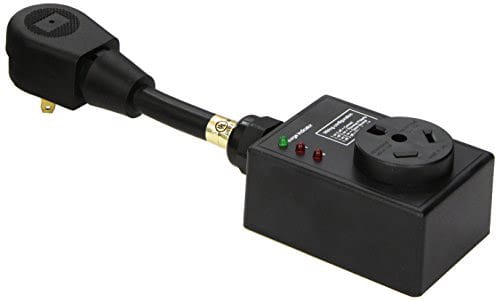
Our team recommends the SSP-30XL for occasional campers who want trusted brand-name protection without the full investment of an EMS unit. The Progressive Industries warranty and customer support infrastructure apply equally to this model, providing peace of mind that budget alternatives often cannot match. For anyone who eventually decides to upgrade, the SSP-30XL makes an excellent backup protector to keep stored in the tow vehicle for emergencies.
Pros:
- Progressive Industries build quality and warranty at a lower price point
- Smart fault detection covering seven common electrical hazards
- Compact and lightweight design ideal for storage and travel
Cons:
- 825-joule surge rating is the lowest among full-featured protectors tested
- Does not include miswired pedestal or accidental 240-volt detection
Key Features to Consider When Choosing an RV Surge Protector
Joule Rating and Surge Absorption Capacity
The joule rating represents the total amount of energy a surge protector can absorb before its internal components are exhausted. Higher joule ratings generally indicate greater protection capacity, though the relationship is not perfectly linear because component quality and circuit design also play significant roles. For most 30-amp RV systems, a minimum of 1,500 joules provides adequate protection against typical campground surges, while 50-amp systems benefit from ratings above 3,000 joules due to the higher power levels involved.
It is important to understand that joule ratings are cumulative and decrease over the life of the protector. Each surge the unit absorbs reduces its remaining capacity, and most quality protectors include a surge failure indicator that alerts owners when the MOV components have been depleted. Replacing the protector at that point is essential, as a depleted unit provides zero surge protection even though it may still pass power through to the RV.
Electrical Management System vs. Surge-Only Protection
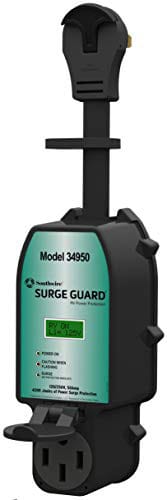
A basic surge protector absorbs excess voltage from power spikes but does nothing about sustained overvoltage, undervoltage, or wiring faults — all of which are equally capable of destroying RV electronics. A full electrical management system monitors incoming power continuously and automatically disconnects when conditions fall outside safe parameters. The cost difference between surge-only and EMS units is significant, but so is the gap in protection coverage. Our team strongly recommends EMS units for anyone who camps more than a handful of weekends per year.
Full-time RVers and those who frequently visit older campgrounds with aging electrical infrastructure should consider EMS protection non-negotiable. The cost of replacing a single rooftop air conditioner or residential refrigerator far exceeds the price difference between a basic surge strip and a comprehensive EMS unit. This same principle applies to other electrical accessories — our RV cell phone booster guide covers another category where investing in quality equipment prevents costly problems down the road.
Portable vs. Hardwired Installation
Portable protectors plug directly between the campground pedestal and the RV's shore power cord, making them ideal for buyers who value convenience, transferability, and the ability to visually inspect the unit during operation. Hardwired units install permanently inside the RV's electrical panel, offering a cleaner appearance, theft protection, and the option for remote display panels mounted inside the living area. The protection level is identical between portable and hardwired versions of the same model — the choice comes down entirely to installation preference and security concerns.
Owners who plan to keep their current RV for many years will likely appreciate the set-and-forget nature of a hardwired installation. Those who trade or upgrade vehicles frequently will benefit from the portability of a unit that moves with them rather than staying with the sold vehicle. Both configurations are valid, and many experienced RVers eventually own one of each — a hardwired primary unit and a portable backup stored in the tow vehicle or exterior compartment.
Weather Resistance and Build Quality
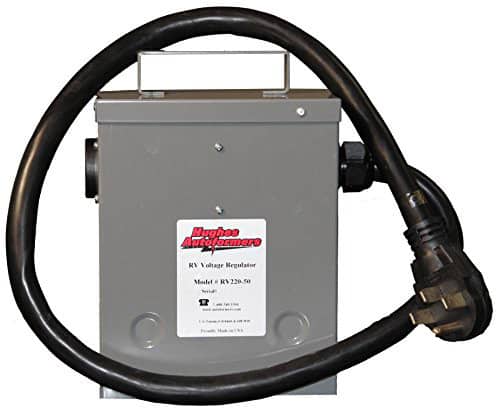
Portable surge protectors hang exposed to the elements at campground pedestals, enduring rain, dust, extreme heat, and freezing temperatures depending on the season and location. A unit with a weather-resistant housing and included protective cover will last significantly longer than one built from basic plastics without environmental sealing. UV resistance is particularly important for full-time RVers, as prolonged sun exposure degrades cheap plastic housings within a single season of continuous outdoor use.
The quality of the electrical contacts and internal wiring is equally important, though harder to evaluate from product photos alone. Reputable manufacturers like Progressive Industries and Camco use heavy-gauge internal wiring and quality terminal connections that maintain reliable contact over thousands of plug/unplug cycles. Budget protectors occasionally suffer from loose connections that can overheat under sustained loads — a safety concern that outweighs any cost savings. Our recommendation is to prioritize established brands with proven track records and responsive warranty support.
Frequently Asked Questions
What is the difference between a surge protector and an electrical management system for an RV?
A surge protector absorbs excess voltage from sudden power spikes using metal oxide varistors, preventing that energy from reaching the RV's electrical system. An electrical management system does everything a surge protector does while also continuously monitoring voltage levels, detecting wiring faults such as reverse polarity and open ground, and automatically disconnecting power when conditions fall outside safe parameters. The EMS provides substantially more comprehensive protection and is the superior choice for frequent campers.
Does an RV surge protector need to match the amperage of the RV's electrical system?
Absolutely. A 30-amp RV requires a protector with a NEMA TT-30P/TT-30R configuration, while a 50-amp RV needs a NEMA 14-50P/14-50R setup. Using a mismatched protector either prevents physical connection or introduces dangerous operating conditions. Adapters exist for connecting a 50-amp RV to a 30-amp pedestal, but the surge protector itself must always match the pedestal's output amperage to function correctly.
How long does an RV surge protector last before it needs to be replaced?
The lifespan depends on how many surges the unit absorbs over its service life, as each event depletes a portion of the MOV material inside the housing. Under normal campground conditions, a quality surge protector typically lasts three to five years or longer. Most reputable models include a surge failure indicator LED that illuminates when the protective components have been exhausted, at which point the unit should be replaced immediately regardless of its physical condition.
Can a surge protector prevent damage from a lightning strike?
No consumer-grade surge protector can fully protect against a direct lightning strike, which can deliver millions of volts and tens of thousands of amperes. However, a quality surge protector can absorb the indirect surges and voltage spikes caused by nearby lightning activity, which are far more common than direct strikes. For maximum protection during severe electrical storms, our team recommends disconnecting from shore power entirely whenever lightning is in the immediate vicinity of the campground.
Is a portable or hardwired surge protector better for full-time RV living?
For full-time RVers, a hardwired EMS unit generally offers the best combination of security and convenience. The permanent installation eliminates theft risk, keeps the protector shielded from weather, and can include a remote display panel inside the living space for continuous voltage monitoring. Many full-time RVers also keep a portable unit as a backup for situations where the hardwired unit fails or when using a secondary vehicle that lacks permanent protection.
What should an RV owner do if the surge protector shows a fault indication?
When a surge protector indicates a wiring fault at the pedestal, the RV should not be connected to that power source until the issue is resolved. The first step is to try a different pedestal at the same campground, as the problem is often isolated to a single outlet. If multiple pedestals show the same fault, the issue may lie in the RV's own wiring, and a qualified RV electrician should inspect the system before further use. Never bypass or ignore fault indicators, as doing so risks serious damage to the RV's electrical components or a potential fire hazard.
Buy on Walmart
- Progressive Industries EMS-PT30X Portable RV Surge Protector — Walmart Link
- Progressive Industries EMS-PT50X Portable RV Surge Protector — Walmart Link
- Progressive Industries EMS-HW30C Heavy Duty RV Surge Protect — Walmart Link
- CRTBETLIF RV Surge Protector 30 amp, 2026 Upgraded 13000J Su — Walmart Link
- Camco PowerGrip 30-Amp Camper/RV Circuit Analyzer Dogbone | — Walmart Link
- Camco Power Grip RV 50-Amp Voltage & Surge Protector - Featu — Walmart Link
- Progressive Industries SSP-30XL Portable RV Smart Surge Prot — Walmart Link
Buy on eBay
- Progressive Industries EMS-PT30X Portable RV Surge Protector — eBay Link
- Progressive Industries EMS-PT50X Portable RV Surge Protector — eBay Link
- Progressive Industries EMS-HW30C Heavy Duty RV Surge Protect — eBay Link
- CRTBETLIF RV Surge Protector 30 amp, 2026 Upgraded 13000J Su — eBay Link
- Camco PowerGrip 30-Amp Camper/RV Circuit Analyzer Dogbone | — eBay Link
- Camco Power Grip RV 50-Amp Voltage & Surge Protector - Featu — eBay Link
- Progressive Industries SSP-30XL Portable RV Smart Surge Prot — eBay Link
The cost of a quality RV surge protector is always less than the cost of the cheapest appliance it will save — invest in protection before the first campground trip, not after the first electrical failure.


About Jake Mercer
Jake Mercer spent twelve years behind the wheel as a long-haul trucker, covering routes across the continental United States and logging well over a million miles. That career gave him an unusually thorough education in CB radio equipment — he has tested base station antennas, magnetic mounts, coax cables, and handheld units in real-world conditions where reliable communication actually matters. After leaving trucking, Jake transitioned to full-time RV travel and has since put hundreds of RV accessories through their paces across national parks, boondocking sites, and full-hookup campgrounds from Montana to Florida. At PalmGear, he covers RV gear and accessories, CB radios, shortwave receivers, and handheld radio equipment.
You can get FREE Gifts. Or latest Free phones here.
Disable Ad block to reveal all the info. Once done, hit a button below