RV Gear ›
How to Replace an RV Refrigerator With a Standard Refrigerator
by Jake Mercer
Standard residential refrigerators pack roughly 1.5 to 4 times the cubic-foot capacity of a typical RV absorption unit, and that gap is exactly why full-timers and long-haul travelers are asking how to replace rv refrigerator with standard refrigerator in growing numbers. If you've been staring at a cramped 8-cubic-foot two-way fridge while dreaming of full shelves and a real crisper drawer, you're not alone. The swap is absolutely doable, and the RV community has refined the conversion process considerably over the years. This guide walks you through every decision point — from power planning and physical fitment to ventilation mods and the hidden gotchas — so you end up with a working kitchen rather than a half-finished project and a melted bag of groceries.
Browse our RV gear guides for more conversion and upgrade projects before you dive in. Before you start pulling panels, understand what you're signing up for. This project sits a few rungs above something like pointing your RV TV antenna for better reception on the complexity scale, but it's well within reach of a mechanically inclined owner who's willing to commit a full weekend and do the planning homework properly upfront.
Contents
- When Replacing Your RV Fridge Actually Makes Sense (and When It Doesn't)
- RV Refrigerator vs Standard Refrigerator: Side-by-Side Breakdown
- Tools and Materials You'll Need for the Swap
- What the Swap Actually Looks Like in Practice
- Mistakes That Will Cost You Time, Money, or Both
- DIY vs Hiring a Pro: An Honest Assessment
- Frequently Asked Questions
When Replacing Your RV Fridge Actually Makes Sense (and When It Doesn't)
Signs Your Absorption Unit Has Hit Its Limit
Absorption refrigerators rely on a heat-based ammonia cycle that's ingenious in theory but genuinely finicky in practice, and specific failure modes make replacement the smarter financial call over continued repair. If your fridge smells like ammonia — that sharp, eye-watering chemical odor that hits you the moment you open the door — you've got a cooling unit leak, and replacing the cooling unit alone runs $300 to $600 before labor. That figure approaches or exceeds the cost of a compact residential unit, which makes the decision obvious. Yellow or brown crystallized staining on the rear panel is another dead giveaway; that's dried ammonia residue from a slow leak weeping for months. Beyond leaks, if your unit struggles to maintain temperature when parked on a slight grade, a compressor-based residential fridge eliminates that grade-sensitivity constraint entirely and permanently.
Other solid reasons to make the switch:
- Your rig is permanently or semi-permanently parked with reliable shore power most of the time
- You need 12+ cubic feet of storage for extended trips or full-time living situations
- Your absorption unit is over 10 years old and the repair estimate is creeping toward replacement cost
- You want an ice maker or produce drawer and your fridge cavity can physically accommodate the added depth
When You Should Stick With the OEM Unit
Don't romanticize the residential fridge swap if you're primarily a weekend camper or a dedicated boondocker. Absorption refrigerators run on propane with zero power draw in gas mode, making them genuinely unbeatable for dry camping where your battery bank is already stretched running lights, a water pump, and basic appliances. A standard residential fridge pulls 100 to 400 watts of continuous compressor load — a serious hit to your 12V system unless you're running a robust lithium setup with 200 or more amp-hours. If your electrical system isn't already upgraded, the fridge swap might be only the first step in a much more expensive project than you originally planned.
Pro tip: If your absorption fridge still cools reliably on shore power, a 12V compressor fridge upgrade is often a smarter interim move — it eliminates propane dependency without requiring a full electrical system overhaul right now.
RV Refrigerator vs Standard Refrigerator: Side-by-Side Breakdown
When you're deciding whether to make this swap, a clear comparison of the two technologies prevents a lot of second-guessing and buyer's remorse after the fact. The differences between an absorption refrigerator and a compressor-based residential unit touch every aspect of daily use, from power draw and temperature consistency to how level your rig actually needs to be parked for proper operation.
| Feature | RV Absorption Fridge | Residential Compressor Fridge |
|---|---|---|
| Typical Capacity | 6–12 cubic feet | 10–22+ cubic feet |
| Power Sources | 120V AC / 12V DC / Propane | 120V AC only |
| Average Power Draw | 150–400W (AC mode) | 100–400W |
| Temperature Consistency | Fair (±5–8°F variance) | Excellent (±1–2°F) |
| Level Sensitivity | Must be within 3° of level | None |
| Cooling Speed | Slow (18–24 hrs to stabilize) | Fast (2–4 hours) |
| Off-Grid Viability | Excellent (propane mode) | Poor without solar/lithium bank |
| Noise Level | Silent | Low compressor hum |
| Typical Price Range | $800–$2,500 | $400–$2,000+ |
This comparison makes it clear why full-timers strongly prefer residential fridges once they've upgraded their electrical systems — more capacity, tighter temperature control, and a much more familiar user experience throughout the day. The trade-off is real upfront work and a power infrastructure investment, but if you're spending more nights on hookups than off-grid, the math works solidly in your favor. For a deeper look at how compressor appliance sizing decisions work, our breakdown of chest freezer vs upright freezer covers a lot of the same compressor efficiency and capacity logic that applies here when choosing your replacement unit.
Tools and Materials You'll Need for the Swap
Tools List
You don't need a professional shop to pull this off, but you do need a complete and well-organized toolkit because this job spans carpentry, electrical, and ventilation work all at once. Have everything staged before you start, because mid-project hardware store runs are how weekends turn into week-long projects:
- Cordless drill/driver with a full bit set including spade and hole-saw bits for ventilation work
- Jigsaw for cutting new ventilation openings or expanding the fridge cavity upward
- Reciprocating saw or oscillating tool for cabinetry removal without collateral damage
- Stud finder, level, and carpenter's square
- Multimeter — non-negotiable for verifying circuit continuity, polarity, and voltage before you power up
- Wire strippers, crimper, and fish tape for routing new circuits through RV wall cavities
- Full socket set and screwdrivers in multiple sizes for the variety of fasteners you'll encounter
- Pry bar and panel removal tools for trim pieces and access panels
Supplies and Materials
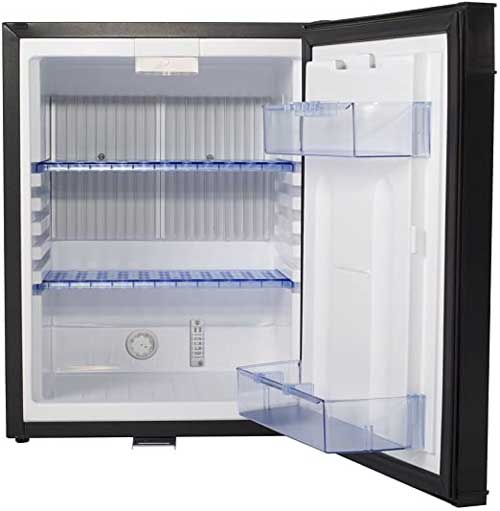
- Residential fridge sized to your cavity — measure width × height × depth before buying, at multiple heights per side
- 12-gauge wire and a dedicated 20A breaker for the new circuit run from your power center
- Wire conduit, junction boxes, and weatherproof connectors rated for RV environments
- Foam backer rod and weatherstripping tape for sealing gaps around the new unit's perimeter
- Lumber shims and blocking for leveling and securing the fridge inside the cavity
- Ventilation grille panels or sheet metal ducting if you're rerouting or blocking the old exhaust path
- Appliance anti-tip strap — non-negotiable for road safety and protecting adjacent cabinetry
- L-brackets and carriage bolts for wall anchoring the unit so it doesn't shift during travel
What the Swap Actually Looks Like in Practice
Removal, Prep, and Opening the Cavity
Cut all power and propane to the existing absorption unit before you touch a single fastener — this step is not optional or negotiable. Absorption fridges can retain residual ammonia pressure even after being completely powered down, so ventilate the area thoroughly and give it several hours if you've detected any chemical odor at all. The old unit is typically secured by a combination of floor bolts, trim screws, and a rear access panel on the exterior roadside wall, so budget time to remove all of these carefully without stripping fasteners you might need for reference measurements later.
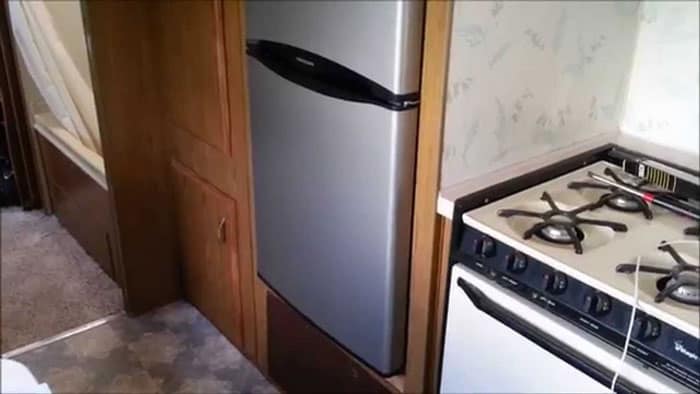
Once the old unit is out, the cavity almost certainly won't be the right size for your new residential fridge, and that's completely expected — it's the carpentry phase of the job. Most residential fridges run 28 to 36 inches wide and 67 to 70 inches tall, while a standard RV fridge cavity sits 24 to 36 inches wide and 48 to 68 inches tall. You're almost certainly cutting upward into overhead cabinetry and possibly widening the opening on one side. Reinforce every cut edge with lumber blocking before you set the new fridge in place. If you're already tearing apart the kitchen area, it's a smart time to tackle something like installing a new kitchen faucet yourself while everything is already open and accessible.
Electrical and Ventilation Modifications
This is the phase most DIYers underestimate, so go in with clear expectations and a realistic time budget. Your absorption fridge ran on 120V AC, 12V DC, and propane — your new residential fridge needs only a dedicated 120V circuit, but it needs to be a robust and properly sized one. Run a dedicated 20A circuit from your power center using 12-gauge wire on its own breaker, completely separate from other high-draw kitchen appliances like a microwave or coffee maker. Residential compressor fridges can pull up to 8 amps on startup, and sharing a circuit with other loads will trip your breaker every time — or, worse, overheat your wiring silently over months of use. While you're working in the kitchen cavity, handling other routine maintenance like clearing a clogged kitchen drain is worth doing before you button everything back up.
Ventilation is the other non-negotiable element that catches people off guard. Absorption fridges dump heat through a dedicated rear vent stack in the exterior wall — residential fridges dump heat from front-bottom condenser coils and need open airflow in front of the unit. You need at least 1 inch of clearance on both sides and the top, and you should insulate or properly block off the old rear vent to prevent cold-air infiltration in winter and hot ambient air intrusion during summer months.
Mistakes That Will Cost You Time, Money, or Both
Getting the Dimensions Wrong Before You Buy
Buying the fridge before you have fully confirmed cavity measurements — width, height, and depth verified at multiple points from floor to ceiling — is the single most expensive mistake in this entire project. RV cavities are rarely perfectly square, meaning the width at floor level can differ from the width at ceiling level by half an inch or more, and that difference absolutely matters when you're maneuvering a 150-pound appliance into a confined space with no margin for error. Measure at least three heights on both sides, account for leveling hardware and shim thickness, and confirm full door-swing clearance in the travel configuration before you commit to a purchase.
Skipping the Dedicated Circuit
Plugging a residential fridge into a shared 15A circuit that also feeds your kitchen outlets is both a fire hazard and a reliability problem that will announce itself loudly. The compressor startup surge combined with other simultaneous loads will trip your breaker repeatedly — or worse, it won't trip and you'll overheat the wiring silently. A dedicated 20A circuit is the correct specification, full stop.
Additional mistakes worth actively avoiding:
- Not securing the fridge with an anti-tip strap and wall-anchored L-brackets before your first drive — even a modest bump will shift an unsecured unit
- Capping the old propane line at the fridge connection point instead of at the manifold — always cap at the source
- Choosing a bottom-mount freezer when your slide-out door clearance prevents the freezer drawer from fully opening
- Boxing the unit in too tightly and restricting condenser coil airflow, causing the compressor to run hot and fail prematurely
- Ignoring the auto-defrost drain pan location — in a tight RV cavity, the pan needs a clear evaporation path or it overflows
If you want to see how similar appliance trade-off decisions are structured before committing to a purchase, our breakdown of air fryer vs convection oven uses the same evaluation framework and the logic translates directly to choosing the right replacement fridge model. When you're restocking an upgraded RV kitchen afterward, our comparison of Instant Pot vs Ninja Foodi covers the same capacity-versus-footprint trade-offs that define small-kitchen appliance decisions.
DIY vs Hiring a Pro: An Honest Assessment
What a Confident DIYer Can Handle
If you're comfortable with basic residential electrical work, can operate a jigsaw without anxiety, and have successfully completed multi-step RV modification projects before, you can absolutely handle this conversion yourself with a full weekend and proper preparation. The carpentry is the most time-consuming element, not the most technically demanding, and the electrical work is straightforward if you approach it methodically and verify every connection with a multimeter before powering up. Budget two full days minimum and don't start this project the night before a scheduled trip or camping reservation.
The real caveat is that confident DIY also means knowing your actual skill ceiling rather than your aspirational one. Running a new circuit from the power center is completely manageable if you've done residential wiring before; it becomes a liability if you haven't. For a practical framework on what buying criteria look like before committing to any major appliance purchase, our piece on what to look for before buying a handheld vacuum models the same systematic evaluation process you should apply when selecting your replacement fridge model and confirming it fits your specific use case.
When You Should Seriously Consider Paying Someone
Call a certified RV technician if you need to add a new circuit from the power center and you've never done residential electrical work, if your RV is still under manufacturer warranty where unauthorized modifications could void coverage, or if you discover structural rot or water damage in the cabinetry surrounding the old fridge during removal. Structural surprises are genuinely common in older rigs, and wall-cavity repairs in an RV benefit heavily from hands-on experience that a first-time DIYer simply doesn't have yet. A certified tech also knows the specific propane line capping procedures required by applicable codes, which matters both for day-to-day safety and for resale value documentation.
Professional RV appliance conversion labor typically runs $400 to $900 above the fridge cost — real money, but entirely worth it when the alternative is electrical work done incorrectly or a structural repair that quietly gets worse with every mile you drive. Go into the hiring decision honestly: assess your actual demonstrated skills, the real complexity of what you find when you open the cavity, and what a mistake in each phase of this job would actually cost to fix later.
Frequently Asked Questions
Can I use any residential refrigerator to replace my RV fridge?
Technically yes, but the fit constraints are significant in practice. Most RV fridge cavities max out at 36 inches wide and 68 inches tall, which rules out larger French-door and side-by-side models entirely. Counter-depth and apartment-size fridges in the 10–15 cubic foot range typically fit best without requiring structural modifications beyond standard cavity expansion upward into overhead cabinetry.
How much does it cost to replace an RV refrigerator with a standard one?
All-in, expect $600 to $2,500 depending on the fridge you choose and whether you DIY or hire out. A mid-range residential fridge runs $500 to $900, materials for electrical and cabinetry work add $100 to $300, and professional labor adds $400 to $900 if you outsource the conversion. Budget toward the high end on your first estimate and you won't be caught short midway through the project.
Will a residential fridge work off-grid in an RV?
It depends entirely on your battery and solar setup. A residential compressor fridge pulling an average of 150W needs roughly 50 to 70 amp-hours per day from your battery bank — a 200Ah lithium setup with 400W of solar can handle it comfortably, but a standard flooded lead-acid bank absolutely cannot sustain that load over multiple days without shore power to recharge.
Do I need to remove or cap the old propane line when swapping the fridge?
Yes — and you need to cap it at the manifold, not just at the fridge connection point. Capping at the appliance end leaves a dead section of gas line inside the wall that can develop a slow leak over time from vibration and temperature cycling. Capping or removing the line at the manifold is the correct procedure and the one any certified technician will follow.
Does replacing an RV fridge with a residential unit affect resale value?
It depends entirely on how professionally the conversion is executed. A clean, properly wired, well-fitted residential fridge conversion with documented propane line capping actually appeals to full-timers and long-term owners who view it as a genuine upgrade worth paying for. A sloppy job with visible gaps, exposed wiring, or a fridge that clearly doesn't fit the cavity will hurt your value — do it right or don't do it at all.
Key Takeaways
- Knowing how to replace rv refrigerator with standard refrigerator starts with identifying the right trigger — ammonia leaks, persistent grade-sensitivity issues, and full-time living requirements are the clearest signals the swap is worth doing.
- A dedicated 20A circuit and proper condenser coil ventilation clearance are non-negotiable requirements, not optional upgrades, for a safe and long-lasting conversion.
- Measure your cavity at multiple heights before purchasing any fridge — a half-inch discrepancy between floor and ceiling width turns a manageable weekend project into a major headache.
- DIY is completely viable for mechanically confident owners with basic electrical experience, but structural surprises and new circuit runs from the power center are legitimate reasons to call a certified RV technician instead.


About Jake Mercer
Jake Mercer spent twelve years behind the wheel as a long-haul trucker, covering routes across the continental United States and logging well over a million miles. That career gave him an unusually thorough education in CB radio equipment — he has tested base station antennas, magnetic mounts, coax cables, and handheld units in real-world conditions where reliable communication actually matters. After leaving trucking, Jake transitioned to full-time RV travel and has since put hundreds of RV accessories through their paces across national parks, boondocking sites, and full-hookup campgrounds from Montana to Florida. At PalmGear, he covers RV gear and accessories, CB radios, shortwave receivers, and handheld radio equipment.
You can get FREE Gifts. Or latest Free phones here.
Disable Ad block to reveal all the info. Once done, hit a button below