HTV Size Chart: What You Need for Shirts, Bags, and More
by Alice Davis
The first time our team decorated a batch of custom shirts, the designs came out too big on some and too small on others. The sizing felt like guesswork, and a few shirts ended up in the waste pile. That experience pushed us to seriously study the htv size chart — and once we understood it, results improved dramatically.
The htv size chart is the foundation of any successful heat transfer vinyl project. Whether the goal is a clean logo on a pocket or a bold graphic across a back panel, starting with the right dimensions saves material, time, and money. On our heat press and vinyl projects, precision has always been the difference between professional-looking results and costly do-overs.
Heat transfer vinyl behaves differently from screen print or direct-to-garment methods. Sizing decisions made at the cutting stage determine everything downstream — placement, peel performance, and long-term durability. Most people underestimate how much the size chart matters until a bad batch teaches them otherwise.
Contents
Where the HTV Size Chart Applies
The htv size chart isn't just for T-shirts. It covers a wide range of substrates and decorating scenarios. Understanding those use cases helps anyone build better habits from the very start of a project.
Apparel — The Core Application
Shirts dominate HTV use across hobbyist and commercial settings alike. Each shirt size carries different chest dimensions, and those dimensions drive the recommended design width. Most professional decorators reference a standardized chart before cutting any file — skipping this step is where sizing errors begin.
| Shirt Size | Chest Width (approx.) | Full Chest Design | Left Chest Logo |
|---|---|---|---|
| Adult Small | 16–17 in | 9–10 in | 3–3.5 in |
| Adult Medium | 18–19 in | 10–11 in | 3.5–4 in |
| Adult Large | 20–21 in | 11–12 in | 3.5–4 in |
| Adult XL | 21–22 in | 11.5–12.5 in | 4 in |
| Adult 2XL | 23–24 in | 12–13 in | 4 in |
| Youth Large | 15–16 in | 8–9 in | 2.5–3 in |
| Youth Medium | 14–15 in | 7–8 in | 2.5–3 in |
| Toddler | 10–12 in | 5–6 in | 2–2.5 in |
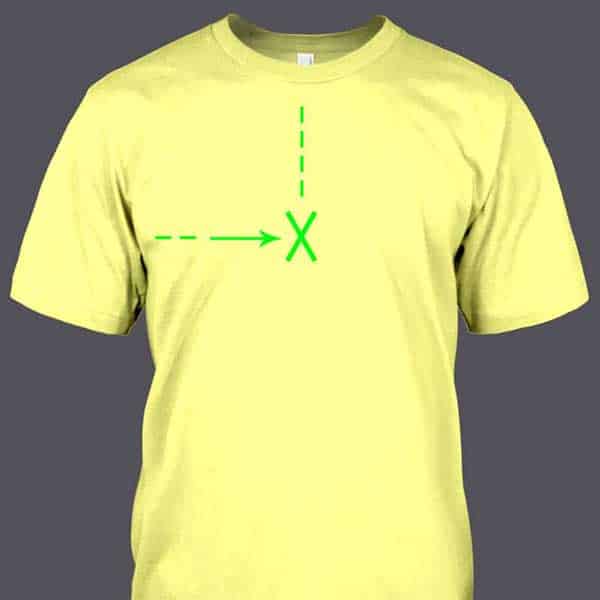
Placement zones vary by garment type. Full-chest designs differ from left-chest logos, and each has its own recommended width. A full-chest graphic on an adult large typically runs 11–12 inches wide. A left-chest logo stays between 3.5–4 inches wide and sits 3–4 inches below the collar seam.
Beyond Shirts — Other Common Substrates
Bags, hats, and home goods also accept HTV well when sized correctly. Canvas tote bags typically take designs 8–10 inches wide, centered on the front panel. Hats require smaller, precisely shaped graphics — usually 4–5 inches wide — due to the curved pressing surface. Our team has found that pressing curved items demands more sizing discipline than flat apparel, since any error in width or centering is immediately obvious on the finished piece.
Pillowcases, aprons, and wooden signs also accept HTV with the right press settings and sizing approach. Each substrate category benefits from its own reference chart rather than borrowing dimensions from apparel sizing.
Getting HTV Sizing and Placement Right
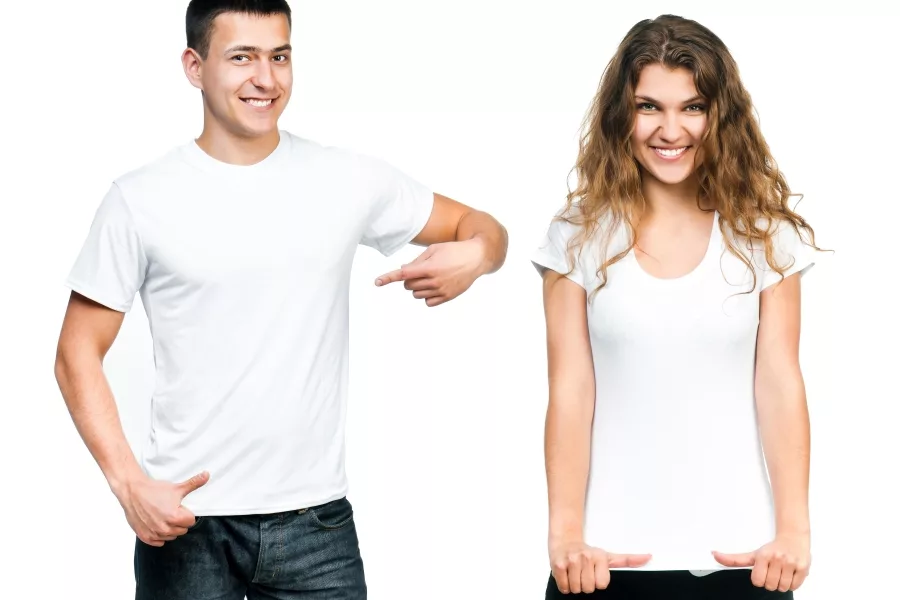
Correct sizing and correct placement are two separate challenges. Most people solve one and overlook the other. Both matter equally for a consistent, professional result across any batch.
Standard Measurements for Adult Shirts
Our team uses a consistent measuring method on every project. We lay the garment flat, measure the chest width from seam to seam, and then calculate design width as a percentage of that measurement. A full-chest design runs 40–50 percent of chest width. A left-chest logo lands at roughly 15 percent of chest width.
Vertical placement matters just as much as width. The standard center point for a full-chest design sits 3–5 inches below the collar. Most decorators mark this point with heat-resistant tape before pressing. Consistency across a batch requires measuring every shirt individually — not just the first one and then eyeballing the rest.
Children's and Youth Sizing
Smaller garments need proportionally smaller designs — not simply shrunken versions of adult layouts. A youth large takes a full-chest graphic no wider than 8–9 inches. Toddler shirts cap at 5–6 inches maximum width. Scaling the design proportionally, rather than uniformly reducing it, keeps lettering readable and maintains visual balance across the print area.
Practical Measurement Tips Most Crafters Use
A few consistent habits separate crafters who get reliable results from those dealing with constant rework. Precision at the prep stage prevents waste at every step that follows.
Design Width vs. Chest Width
The relationship between design width and chest width is the most critical ratio in the htv size chart system. Our team calculates this ratio before sending any file to the cutter. Oversized designs look stretched and unprofessional. Undersized ones look lost on the fabric and fail to communicate the intended visual message clearly.
Always cut a test piece from inexpensive vinyl before committing to the final material — one sacrificed inch saves far more than a ruined shirt.
Centering tools make placement repeatable across a run. Most heat press tables have a center line marked on the platen. Folding the garment in half and lightly pressing creates a temporary crease that serves as a reliable reference line before positioning the transfer.
Working With a Vinyl Cutter
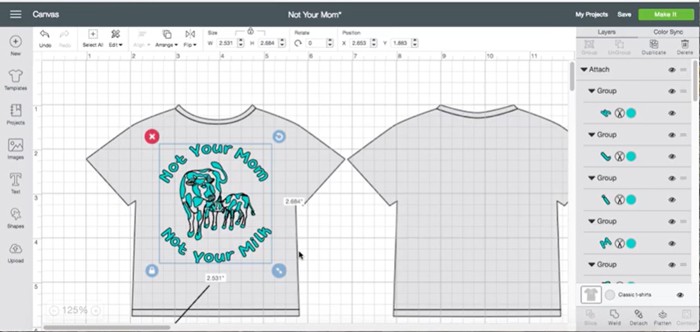
Software like Cricut Design Space or Silhouette Studio displays dimensions before cutting begins. Our team double-checks the canvas size against the design size every single time. Setting the correct document size prevents scaling errors — a design built on an 8.5×11 canvas cuts differently than one built on a 12×12 canvas, even when the artwork itself is identical in both files.
For anyone working through their first HTV project, the detailed walkthrough on how to use and cut with a vinyl cutter like Cricut covers setup steps that head off most beginner sizing errors before they happen.
Caring for HTV Transfers Over Time
Even perfect sizing fails if the garment isn't handled correctly after pressing. Longevity depends on both application quality and consistent post-press care. Most people focus entirely on the press cycle and overlook what happens during laundering.
Washing Instructions That Protect Transfers
Most HTV manufacturers recommend washing decorated garments inside-out in cold water. High heat from dryers stresses the vinyl bond over time and causes edges to lift earlier than expected. Air drying preserves transfers noticeably longer, especially on performance fabrics with inherent stretch.
Our team has tested both approaches across multiple fabric types. Air-dried shirts retained sharper transfer edges after 50 washes compared to machine-dried equivalents. Bleach degrades the vinyl's top coating and causes color shifts. Fabric softener weakens adhesion over repeated cycles — most HTV care guidelines recommend avoiding both entirely on decorated garments.
Long-Term Storage Tips
Folding HTV-decorated shirts with the design facing inward reduces surface abrasion during storage. Stacking too many garments compresses the vinyl and can cause surface embossing over time. Our team stores sample pieces flat in archival bags when long-term preservation matters. For everyday working inventory, standard hanging works fine.
Diagnosing HTV Sizing Problems
When a transfer looks wrong after pressing, the cause often traces back to sizing or placement decisions made earlier in the workflow. Identifying which error produced which symptom saves significant time during diagnosis.
Transfer Looks Off After Pressing
A design that looks unbalanced on the finished garment usually wasn't centered correctly at the placement stage. The htv size chart assumes accurate measurement as a starting baseline. Skipping the measurement step — or estimating by eye — introduces variability that compounds across any production batch.
If a design looks stretched horizontally, the cut dimensions likely didn't match the intended output. File scaling errors in cutter software account for most of these cases. Our team exports a PDF proof at 100 percent scale and measures it against the shirt before cutting any material — a step that catches canvas size mismatches before they cost vinyl.
Edges Lifting or Peeling
Peeling edges indicate an adhesion issue, but sizing contributes indirectly. Designs that exceed the fabric's stretch tolerance peel at the edges as the material flexes during wear. Keeping designs within the recommended width limits for each garment reduces mechanical stress on the bond substantially. The detailed breakdown on how to fix heat transfer vinyl that is peeling covers diagnosis and repair steps for most common scenarios in clear sequence.
According to Wikipedia's overview of heat-transfer vinyl, adhesion depends heavily on temperature, pressure, and peel timing — all of which interact with design size and substrate type to determine final transfer durability.
Sizing Errors That Damage Projects
The most predictable HTV sizing mistakes appear consistently across experience levels. Most people encounter them early in their craft journey and correct them through iteration and careful observation.
Ignoring Fabric Stretch
Stretch fabrics — spandex blends, athletic knits, and moisture-wicking polyester — expand significantly under tension. A design that fits perfectly on a relaxed garment looks distorted when worn. Our team accounts for stretch by sizing designs slightly smaller than flat measurements suggest. This matters most for performance wear, yoga apparel, and athletic jerseys where the fabric moves constantly throughout the day.
A useful working rule: size designs at least 10 percent narrower on high-stretch fabrics compared to equivalent woven cotton at the same chest width. That one adjustment prevents a disproportionate share of post-production complaints.
Skipping the Mock-Up Step
Printing a paper mock-up at actual design dimensions and laying it against the garment takes two minutes. Most people skip this step and encounter sizing errors they could have caught earlier. A paper proof reveals problems before any vinyl is cut or pressed. Our team treats this as a non-negotiable part of the workflow for any new design, regardless of how confident the software preview looks on screen.
Comparing HTV Sizing Approaches
Different methods exist for calculating and confirming HTV dimensions. Each suits different workflows, production volumes, and levels of design complexity.
Manual Measuring vs. Software Tools
Manual measurement with a ruler and flexible tape is reliable and costs nothing extra. Software-based sizing — using the design canvas in Cricut Design Space or Silhouette Studio — handles complex shapes more accurately and speeds up batch work considerably. For low-volume home projects, manual measurement works consistently well. For production runs, software reduces human error at scale by locking in dimensions before the cutting session begins.
Which Approach Works Best
Our team uses both in combination. We start with software for layout and scaling, then confirm with a physical ruler before cutting. That combination catches errors that either method alone misses — software misconfigured canvases, and manual checks catch them. Neither approach is universally superior. The right choice depends on batch size, substrate variety, and how much dimensional variation exists across a given order. Both approaches, applied consistently, produce reliable htv size chart compliance across any project type.
Frequently Asked Questions
What is the standard HTV size for a full chest design on an adult shirt?
For most adult sizes, a full chest design measures between 9 and 12 inches wide depending on the specific shirt size. Adult large typically accommodates 11–12 inches. Most decorators calculate design width at 40–50 percent of the chest's seam-to-seam measurement, which keeps the htv size chart proportions consistent across different garment styles.
How far below the collar should HTV be placed on a shirt?
Most decorators place the center of a full-chest design 3–5 inches below the collar seam. Left-chest logos typically sit 3–4 inches below the collar and align with the chest pocket area. Consistent vertical placement across a production batch requires measuring each garment individually rather than estimating position by eye.
Can the same HTV size chart be used for bags and hats?
Not directly. Bags generally accept designs 8–10 inches wide, while hats cap at 4–5 inches due to the curved pressing surface. Each substrate type requires its own sizing reference rather than adapting shirt-based dimensions to fundamentally different items. Our team maintains separate references for each major substrate category used in regular production.
Does fabric type affect HTV sizing recommendations?
Yes, significantly. Stretch fabrics like spandex blends require smaller designs — typically 10 percent narrower than flat measurements suggest — to prevent distortion when worn. Woven cotton holds dimensions predictably. Performance knits and athletic fabrics need the most conservative sizing adjustments due to their high elongation rates under tension.
What causes HTV to peel at the edges after washing?
Edge peeling usually results from insufficient press temperature, pressure, or peel timing — but oversized designs on stretch fabrics also contribute substantially. When a design exceeds the fabric's natural stretch capacity, mechanical stress concentrates at the transfer edges and breaks the adhesive bond gradually over repeated wash cycles. Sizing within recommended limits reduces that stress considerably.
How should HTV-decorated garments be washed to preserve the transfer?
Most HTV manufacturers recommend washing inside-out in cold water without bleach or fabric softener. Air drying is preferred over machine drying, as dryer heat stresses the vinyl bond progressively over time. Our team's testing shows air-dried shirts maintain sharper transfer edges after 50 or more wash cycles compared to dryer-finished garments of the same fabric type.
The htv size chart isn't a suggestion — it's the difference between a project that looks made and one that looks attempted.


About Alice Davis
Alice Davis is a crafts educator and DIY enthusiast based in Long Beach, California. She spent six years teaching textile design and applied arts at a community college, where she introduced students to everything from basic sewing techniques to vinyl cutting machines and heat press printing as practical, production-ready tools. That classroom experience means she has put more sewing machines, embroidery setups, Cricut systems, and heat press units through real project work than most reviewers ever will. At PalmGear, she covers sewing machines and embroidery tools, vinyl cutters, heat press gear, Cricut accessories, and T-shirt printing guides.
You can get FREE Gifts. Or latest Free phones here.
Disable Ad block to reveal all the info. Once done, hit a button below