RV Gear ›
How to Point an RV TV Antenna for Better Reception
by Jake Mercer
Over 40 million Americans travel in recreational vehicles each year, yet broadcast signal surveys consistently show that poor antenna alignment accounts for more than half of all in-rig reception complaints — a figure that drops dramatically once proper pointing technique is applied. Understanding how to point rv tv antenna for better quality is the single highest-impact adjustment available to any RV owner, delivering free over-the-air channels without subscription fees or satellite data caps. Most factory-installed antennas — the Winegard Sensar and its closest competitors — are capable of receiving stations from 40 to 70 miles away under favorable conditions, but only when correctly oriented toward active broadcast towers. Before attempting any signal optimization, confirming the hardware is properly connected is the essential first step; the PalmGear guide on how to hook up a TV to an RV antenna covers that foundation in full. The variables governing reception quality include tower azimuth, terrain obstruction, coaxial cable integrity, and the specific gain characteristics of the antenna head itself.
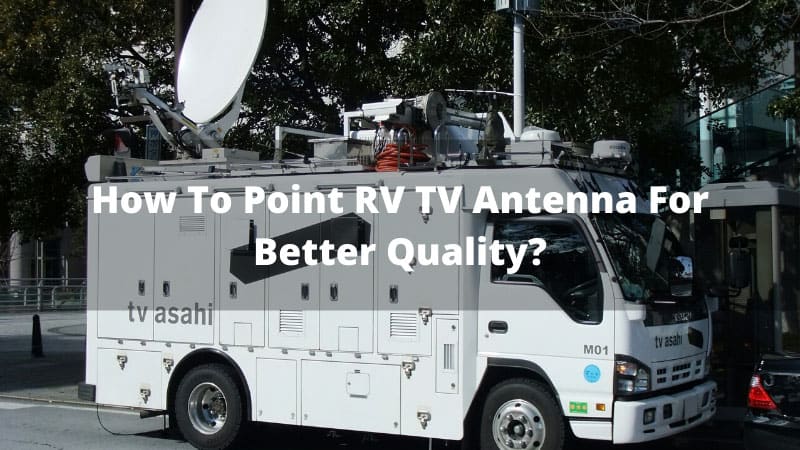
This guide, part of PalmGear's comprehensive RV gear resource library, breaks down every layer of the alignment process — from the mechanics of manual rotation to the nuances of signal amplification and persistent interference diagnosis.
Contents
- How to Point an RV TV Antenna for Better Quality: Core Techniques
- Essential Tools for Accurate Antenna Alignment
- From Basic Rotation to Advanced Signal Optimization
- Antenna Upgrade Costs: Budget to Premium
- Omnidirectional vs. Directional Antennas: Honest Tradeoffs
- When the Signal Still Fails: Diagnosing Persistent Problems
How to Point an RV TV Antenna for Better Quality: Core Techniques
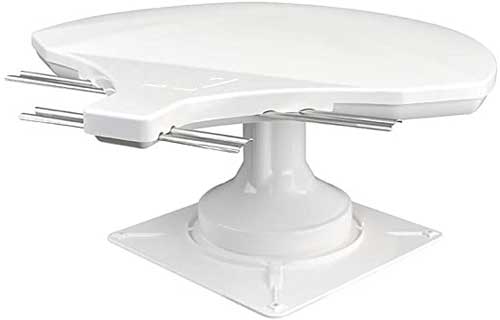
The foundational principle is deceptively simple: the antenna must face the direction of the broadcast towers, not merely be elevated off the roof. Most RV owners extend the antenna and assume omnidirectional coverage handles the rest, but directional antennas — including the Winegard Sensar Pro and most flat-panel designs — have a distinct front gain lobe that must be aimed deliberately at the tower cluster bearing to deliver full performance.
Using a Compass and Signal Maps
The most reliable starting point for antenna alignment is the FCC's DTV reception maps, which display every licensed broadcast tower's location and bearing relative to any entered GPS coordinate. The procedure is direct and repeatable:
- Enter the campsite's GPS coordinates into the FCC map tool to generate a full local tower list
- Note the azimuth — the compass bearing in degrees — for each tower cluster
- Use a physical compass or a reliable phone compass app to establish that bearing at the rig's current orientation
- Rotate the antenna to face that heading, keeping the antenna head level on its horizontal axis
- Perform a fresh channel scan on the TV after each significant rotation, allowing at least 30 seconds for results to populate
When towers cluster in multiple directions — common near mid-sized cities — the antenna should be aimed at the densest cluster first, then rescanned after rotating 15 to 20 degrees in each direction to capture outlying stations along secondary azimuths.
Pro tip: Always perform a fresh channel scan after every antenna adjustment; cached scan data from a previous campsite will not reflect the current signal environment and will produce misleading results.
Manual vs. Powered Antenna Rotation
Factory RV antennas typically use a manual crank — a handle mounted inside the rig that rotates the antenna head through 360 degrees from the comfort of the living space. Powered models, such as the Winegard ConnecT or the King Jack HD, add a motor that allows rotation from a wall switch or a smartphone app, eliminating the need to climb onto the roof or reach for a handle at inconvenient angles. Powered rotation is the clear preference for full-timers and frequent travelers whose sites change daily; manual cranks remain acceptable for occasional weekend use where the campsite location stays fixed for multiple nights. The one practical advantage of manual systems is tactile feedback — users can feel resistance from a frozen or obstructed mechanism before it becomes a costly failure point that a motorized system would simply burn out against.
Essential Tools for Accurate Antenna Alignment
Achieving reliable, repeatable results when learning how to point rv tv antenna for better quality requires more than instinct and a TV channel scan — specific tools eliminate the guesswork and dramatically reduce the time spent rotating by trial and error at each new campsite.
Signal Meters and Spectrum Analyzers
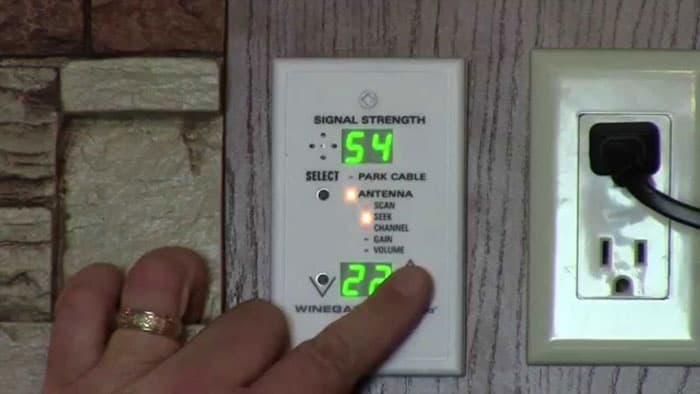
An inline ATSC signal meter — installed between the antenna cable and the TV's coaxial input — provides a real-time signal strength reading during rotation, enabling precise alignment in under two minutes rather than waiting through a full TV rescan cycle after each adjustment. Entry-level meters like the ANTOP AT-760 display relative signal strength on an LED bar graph, while professional-grade spectrum analyzers display per-frequency signal levels and noise floor data with the granularity needed for interference diagnosis. For most RV owners, a mid-range meter in the $40–$80 range delivers all the necessary resolution without professional-grade cost. RV owners who mount additional rooftop hardware — such as those documented in this roundup of the best RV security cameras — often run coaxial and camera cables through the same roof penetration during a single work session, making a signal meter doubly useful as a verification tool after the job is complete.
Online Tower Locator Resources

Beyond the FCC map, tools like TVFool and AntennaWeb provide terrain-adjusted signal predictions that factor in hills, tree canopy, and building obstructions with greater precision than a basic line-of-sight model. The critical data points to extract from any tower locator tool include:
- Azimuth bearing — the compass direction to each active tower cluster from the current position
- Distance — stations beyond 70 miles require amplification or near-ideal topography to receive reliably
- Signal strength prediction — green, yellow, and red ratings indicate reception probability under typical conditions
- Channel frequency band — UHF (470–698 MHz) vs. VHF (54–216 MHz) affects antenna type selection and pre-amplifier choice
From Basic Rotation to Advanced Signal Optimization
What Beginners Consistently Get Wrong
The most common beginner error in RV antenna alignment is treating the process as a one-time setup rather than a site-specific calibration performed at every new location. Reception conditions change completely between a mountain campground, a coastal RV park, and a flat Midwest fairground — the antenna bearing that captured 28 channels at the previous stop will capture zero at the next one if rotated to the identical position without reassessment. A secondary and equally costly error is ignoring cable quality entirely: many RV owners replace the antenna head while leaving the original RG-59 factory cabling in place, undermining the upgrade's performance before it even begins. Just as understanding the variables governing an RV propane system requires learning its site-specific pressure and flow conditions, antenna performance demands a fresh calibration approach at each location rather than a set-and-forget assumption.
Warning: Never move the rig with the antenna in the raised position — even a brief low-clearance encounter will shear the mast and can compromise the roof penetration seal, leading to water intrusion damage far costlier than the antenna itself.
Pre-Amplifier Placement and Gain Strategy
Pre-amplifiers installed at the antenna head amplify the signal before it travels down the coaxial run, preserving signal-to-noise ratio across long cable lengths and through splitters; distribution amplifiers installed near the TV correct for coaxial losses but cannot recover noise already added by an unamplified long cable run, making head-mounted pre-amp placement the technically superior choice in any installation with more than 25 feet of coaxial cable between the roof and the TV. Winegard's LNA-200 and the Channel Master CM-7778HD represent the dominant options in this category, both delivering approximately 20 dB of gain without significant noise figure penalties under normal conditions. Like a quality dedicated RV GPS unit that consistently outperforms phone apps in complex terrain, a correctly placed pre-amplifier outperforms boosters installed at the wrong point in the signal chain regardless of the booster's rated gain specification.
Antenna Upgrade Costs: Budget to Premium
Entry-Level vs. High-Performance Options
The RV antenna market spans a wide and genuinely meaningful cost range, with performance differences that justify the step-up at each tier. The table below reflects current retail pricing across the most common upgrade paths:
| Product Type | Example Model | Price Range | Max Range | Best Use Case |
|---|---|---|---|---|
| Factory OEM Replacement | Winegard Sensar Pro | $60–$90 | 45 miles | Budget-conscious occasional campers near metro areas |
| Flat HDTV Antenna | King Jack OA8300 | $80–$130 | 65 miles | Full-timers camping within range of major markets |
| Motorized Omnidirectional | Winegard ConnecT 2.0 | $150–$220 | 50 miles | Frequent movers who prefer no-climb convenience |
| High-Gain Directional | Channel Master CM-4228HD | $80–$110 + mount | 80+ miles | Rural full-timers with stable, long-duration campsites |
| Pre-Amplifier Add-On | Winegard LNA-200 | $30–$50 | Gain device | Any setup with cable runs exceeding 25 feet |
Hidden Costs Most RV Owners Miss
Beyond the antenna itself, a realistic upgrade budget must account for several line items that dealers rarely mention at the point of sale:
- RG-6 coaxial cable replacement — factory RVs frequently ship with RG-59, which introduces measurable signal loss on runs longer than 15 feet and should be replaced entirely during any antenna upgrade
- Compression-fit F-connectors — crimp connectors degrade faster under RV road vibration; compression fittings maintain weathertight integrity significantly longer and are the only acceptable choice for a permanent installation
- Roof sealant — any roof penetration disturbed during antenna work requires fresh Dicor self-leveling lap sealant to prevent water intrusion into the roof structure
- Signal meter — a one-time $40–$80 investment that pays back immediately in time saved during alignment at every subsequent campsite
The total cost of a proper upgrade — new antenna, pre-amplifier, quality RG-6 cabling, and compression connectors — typically lands between $150 and $350 depending on the antenna tier selected, a one-time expenditure that eliminates subscription costs entirely for local broadcast channel access.
Omnidirectional vs. Directional Antennas: Honest Tradeoffs
When Each Type Wins
The omnidirectional vs. directional debate in the RV antenna space is resolved more clearly than most product comparisons suggest: directional antennas win on peak performance in rural areas with sparse tower geography and lose on convenience for mobile travelers changing sites every day or two. Omnidirectional antennas — the Winegard Sensar, King Jack, and similar flat-panel designs — capture signals from all compass directions simultaneously, eliminating rotation entirely at the cost of approximately 10–15 dB of forward gain compared to a directional design aimed at the same tower. The practical implication is that an omnidirectional antenna picks up 20 channels from towers within 40 miles without any user adjustment, while a directional antenna may capture 32 channels from the same cluster but requires deliberate pointing on arrival. Diagnosing why either type underperforms follows the same systematic logic applied to other RV subsystems — just as a methodical approach resolves an RV water heater not heating faster than random part replacement, antenna failures resolve quickest when checked from antenna to TV in a structured sequence.
Insider note: In campgrounds with dense tree canopy, omnidirectional antennas frequently outperform directional designs, because the broadcast signal arrives scattered via multipath reflections from multiple directions simultaneously rather than along a clean line-of-sight azimuth.
The Amplifier Trap and When to Skip It
Adding an amplifier to an antenna already receiving a strong signal introduces noise and can actually degrade reception by overloading the TV's tuner input — a counterintuitive failure mode that catches experienced RV owners near major metro areas off guard. The correct decision rule is blunt: amplification is appropriate only when the unamplified signal strength on the meter reads below 50 percent of full scale, and it should never be the first response to poor reception without first ruling out cable faults and poor antenna aim as the root cause. An RV owner near a city center with clean cable runs and a correctly aimed antenna gains nothing from amplification and risks introducing distortion artifacts that register as picture breakup indistinguishable from a weak-signal condition — making the problem harder to diagnose rather than easier. The same diagnostic discipline that prevents costly mistakes when handling an RV tire blowout — verify the simple causes before assuming catastrophic failure — applies directly to every amplification decision in the antenna signal chain.
When the Signal Still Fails: Diagnosing Persistent Problems
Cable and Connector Failures
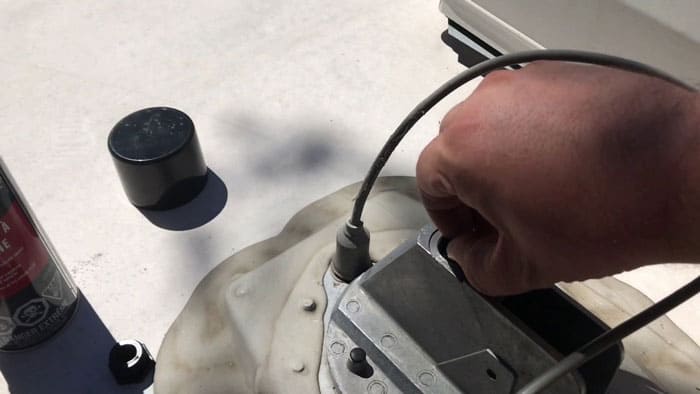
Cable and connector degradation is the single most underdiagnosed cause of RV antenna signal failure, responsible for an estimated 60 percent of poor-reception complaints that new hardware purchases would not resolve. Road vibration, thermal cycling between seasons, and moisture infiltration combine to work crimp connectors loose at the antenna head junction over two to three seasons of regular travel, dropping signal by 6–12 dB and erasing the gain advantage of any pre-amplifier in the system. The diagnostic procedure for cable faults is direct and requires only a multimeter:
- Disconnect the coaxial cable at both the antenna head and the TV wall plate before any inspection
- Inspect the center conductor for green tinting, which confirms moisture has entered the connector body
- Verify the center pin extends the correct 5/16 inch beyond the connector's outer body — a recessed pin creates an intermittent contact failure
- Measure continuity with a multimeter — resistance above 1 ohm on the center conductor confirms cable damage requiring full replacement
- Replace any RG-59 factory cable with RG-6 quad-shield and install compression-fit F-connectors at both termination points
Location-Specific Interference
Certain campsite locations produce signal environments that no antenna adjustment will fully resolve: deep valleys below the broadcast tower horizon, sites within 500 feet of LTE cell towers that produce intermodulation interference in the 700 MHz band adjacent to UHF TV channels, and forested mountainsides where multipath reflections arrive from unpredictable directions. When a confirmed location-specific interference pattern is identified by trying a different campsite with dramatically better results, the practical options are accepting a reduced channel count, relocating the rig to a more favorable position within the campground, or investing in a filtered LTE-rejection pre-amplifier like the Winegard LNA-200 Boost XT, which includes a 700 MHz bandpass filter rejecting the LTE band entirely. The proactive maintenance mindset that prevents an RV toilet clog from becoming a campsite emergency — addressing small warning signs before they compound — transfers directly to antenna system care, where a quarterly cable inspection catches connector corrosion before it translates into a season of degraded reception.
Frequently Asked Questions
What direction should an RV TV antenna point?
The antenna should point toward the nearest cluster of broadcast towers, determined by entering the campsite's GPS coordinates into the FCC's DTV reception map tool, which generates precise compass bearings to every licensed tower within range of the current position.
Why does the RV antenna get fewer channels at some campgrounds?
Terrain features including valleys, ridges, dense tree canopy, and nearby structures block or scatter broadcast signals, reducing the number of receivable towers regardless of antenna orientation; campgrounds on open, elevated ground consistently outperform those in low or wooded settings.
Does a signal amplifier always improve RV antenna reception?
Not always — amplifiers improve weak signals in rural areas with distant towers but can overload tuner inputs in urban areas with strong nearby towers, introducing noise and distortion that degrades picture quality rather than improving it.
How often should the RV antenna coaxial cable be inspected?
Coaxial cable and connectors should be inspected at the start of every camping season, with full replacement recommended every four to six years or any time the center conductor shows corrosion or green discoloration indicating moisture ingress.
What is the practical difference between omnidirectional and directional RV antennas?
Omnidirectional antennas capture signals from all directions without requiring manual pointing, while directional antennas concentrate their gain in a narrow beam that must be aimed at a specific tower cluster, offering higher peak channel counts at the cost of deliberate alignment at each new campsite.
Can a pre-amplifier be added to any existing RV rooftop antenna?
Yes — most rooftop pre-amplifiers are universal and compatible with any antenna using a standard F-connector coaxial output; the unit installs inline at the antenna head, and a DC power injector at the TV end of the coaxial run supplies the operating voltage through the center conductor.
Why does the RV antenna perform well in one region but fail in another?
Broadcast tower density varies dramatically by region — some areas have towers clustered within 30 miles while others have only distant low-power translators — and checking the FCC DTV map before arriving at a new campsite allows realistic expectations to be set and the correct antenna orientation to be prepared in advance.
The antenna that receives nothing is always pointing the wrong direction — correct the aim first, verify the cable second, and only then decide whether the hardware itself is the problem.


About Jake Mercer
Jake Mercer spent twelve years behind the wheel as a long-haul trucker, covering routes across the continental United States and logging well over a million miles. That career gave him an unusually thorough education in CB radio equipment — he has tested base station antennas, magnetic mounts, coax cables, and handheld units in real-world conditions where reliable communication actually matters. After leaving trucking, Jake transitioned to full-time RV travel and has since put hundreds of RV accessories through their paces across national parks, boondocking sites, and full-hookup campgrounds from Montana to Florida. At PalmGear, he covers RV gear and accessories, CB radios, shortwave receivers, and handheld radio equipment.
You can get FREE Gifts. Or latest Free phones here.
Disable Ad block to reveal all the info. Once done, hit a button below