RV Gear ›
RV EMS Vs Surge Protector: What's the Difference?
by Jake Mercer
A campground in the Ozarks at midnight. The pedestal read 132 volts on one leg and 97 on the other. The rig two spots over had no protection — just a straight plug-in. By morning, the air conditioner compressor was seized and the microwave inverter was dead. That scenario plays out at campgrounds across the country every season, and it is precisely why the rv ems vs surge protector debate deserves a serious answer, not a shrug. These devices are not interchangeable. They solve fundamentally different problems, and choosing the wrong one — or skipping protection entirely — invites expensive, entirely preventable damage.
For anyone serious about protecting a rig, this breakdown covers exactly what each device does, where each belongs, and how to build an electrical protection strategy that holds up over years of hard use. Additional context on complementary RV gear is worth reviewing alongside this guide.
Contents
What Each Device Actually Does
The rv ems vs surge protector question starts with a technical distinction that most buyers gloss over. A surge protector defends against one specific threat. An EMS — Electrical Management System — monitors and responds to a much wider range of campground electrical hazards. They are not the same device. One is a defensive tool; the other is a full-time electrical guardian.
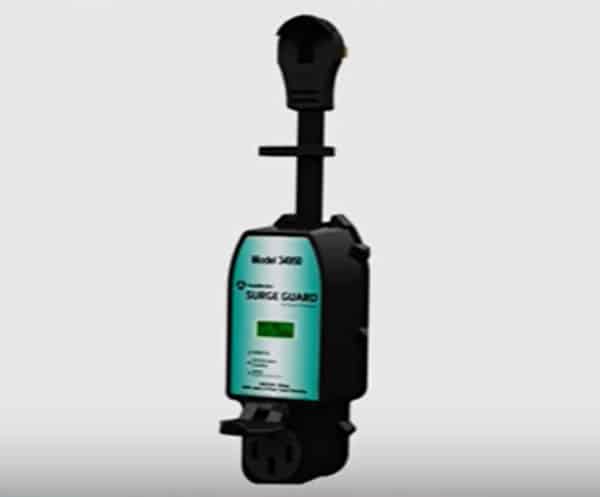
Surge Protectors Explained
An RV surge protector monitors incoming voltage and clamps transient overvoltage events — spikes that typically last microseconds to a few milliseconds. The clamping mechanism relies on Metal Oxide Varistors (MOVs) that absorb excess energy and shunt it to ground. Once the spike passes, the circuit restores and power flows normally. MOVs degrade with each hit, which is why joule rating matters: a higher joule rating means more total absorption capacity before the MOVs are spent and the device offers no protection at all.
Key technical characteristics:
- Responds to high-voltage transients caused by lightning, grid switching, and motor load drop-off
- Response time measured in nanoseconds — faster than any electromechanical relay
- Joule rating indicates cumulative absorption capacity before failure
- No onboard diagnostics, no delay timers, no voltage monitoring between surges
- Available in 30-amp and 50-amp pedestal configurations
The critical limitation: surge protectors do nothing against sustained high voltage, low voltage brownouts, open neutral faults, reverse polarity, or miswired pedestals. Those are EMS territory.
EMS Units Explained
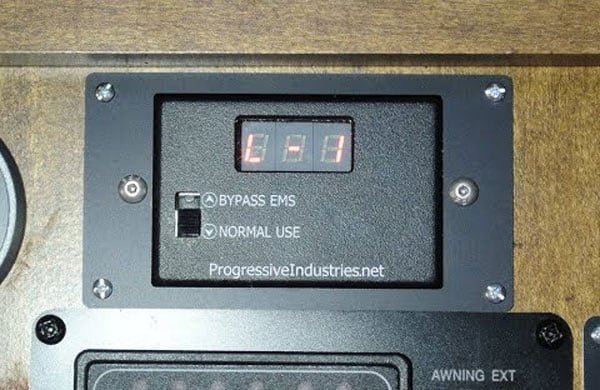
An EMS continuously monitors multiple electrical parameters. When any reading exits safe tolerances, it cuts power entirely and holds the disconnect until conditions normalize — typically after a 120–136 second reconnect delay designed to protect compressor motors from short-cycling on restart.
Parameters a quality EMS monitors:
- High voltage — typically trips above 132V
- Low voltage — typically trips below 102V
- Open neutral — a dangerous fault condition on 50A service where one hot leg loses its return path
- Reverse polarity — hot and neutral swapped at the pedestal
- Miswired 50A outlet — incorrect leg assignments at the receptacle
- Surge events — same protection as a standalone surge protector
- Frequency abnormalities
An EMS is a surge protector plus a continuous electrical watchdog. It does not absorb a damaging event after the fact — it prevents the event from reaching the rig in the first place. For full-time RV living, that distinction is everything.
When Each Device Makes Sense in the Field
Both devices have legitimate use cases. The mistake is assuming one size fits all camping situations. Campground electrical infrastructure varies wildly — from modern 50A pedestals at premium RV resorts to aging 30A panels at state parks that haven't been serviced in a decade. Matching the protection device to the actual risk profile of typical camping destinations is the right framework.
Weekend Campers and Occasional Users
For the occasional weekender who stays at well-maintained private campgrounds with modern electrical infrastructure, a quality surge protector provides meaningful protection at a reasonable price point. The threat profile at a modern resort campground tilts heavily toward transient events — lightning-induced spikes, utility switching surges — rather than chronic wiring faults.
A 30A or 50A surge protector with a 3,580+ joule rating, indicator LEDs for ground and polarity status, and a weatherproof housing handles that environment effectively. The polarity and ground indicators are non-negotiable — they catch the two most common pedestal faults that a surge protector can at least flag, even if it cannot disconnect automatically.
Full-Timers and High-Value Rigs
Full-time RV residents and owners of diesel pushers or fifth wheels loaded with residential appliances are in a different risk category entirely. Campground hopping means plugging into dozens of unknown pedestals per month. Municipal parks, older KOA sites, and rural fairgrounds routinely harbor wiring faults — open neutrals especially — that would destroy a rig's entire electrical system in minutes.
For this group, an EMS is not optional. It is the baseline. The AC system alone — already a source of noise issues documented in guides like RV air conditioner noise reduction troubleshooting — will fail faster under sustained voltage stress than any other system. An EMS prevents that stress before it starts.
Never plug a high-end rig into an unfamiliar pedestal without first checking polarity and ground status — the 30 seconds spent verifying can prevent a compressor replacement costing ten times the price of an EMS.
Strengths and Weaknesses, Side by Side
A direct comparison reveals why the rv ems vs surge protector debate is not really a contest for most serious RV owners. The differences in protection scope are not marginal — they are categorical. The table below summarizes the key distinctions.
| Protection Feature | Surge Protector | EMS Unit |
|---|---|---|
| Voltage spike / surge | Yes | Yes |
| Sustained high voltage (>132V) | No | Yes — disconnects automatically |
| Low voltage / brownout (<102V) | No | Yes — disconnects automatically |
| Open neutral detection | No | Yes — disconnects automatically |
| Reverse polarity detection | Indicator only (on better models) | Yes — disconnects automatically |
| Miswired pedestal detection | No | Yes (50A models) |
| Compressor protection delay | No | Yes — 120–136 second reconnect delay |
| Automatic reconnect after fault clears | N/A | Yes |
| Typical price range (30A) | $30–$80 | $120–$300 |
| Typical price range (50A) | $60–$120 | $200–$450+ |
What Surge Protectors Handle Well
Surge protectors are fast, passive, and reliable for their specific purpose. MOV-based clamping reacts in nanoseconds — faster than any relay-based disconnection mechanism. For spike protection, a surge protector is technically superior at the moment of the event. They also require zero configuration, have no moving parts, and are straightforward to replace when MOVs degrade. The low price point makes them accessible for any budget. For a rig parked at a trusted campground with verified electrical infrastructure, a surge protector is a practical and reasonable choice.
Where EMS Units Pull Ahead
The EMS advantage is breadth. Open neutral faults — where one leg of a 50A service loses its return path — are among the most destructive electrical conditions an RV can encounter, and a surge protector is completely blind to them. Low voltage from overloaded campground circuits causes motor windings to overheat in the air conditioner, refrigerator compressor, and slide motor — none of which a surge protector will stop. An EMS catches all of it and cuts power before damage occurs. The reconnect delay also protects compressors from short-cycling, which is a separate failure mode that costs as much as the damage from voltage problems.
How to Connect RV Electrical Protection at the Pedestal
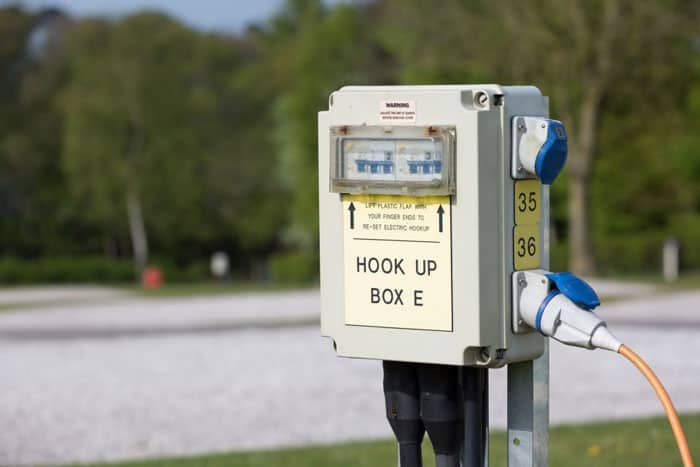
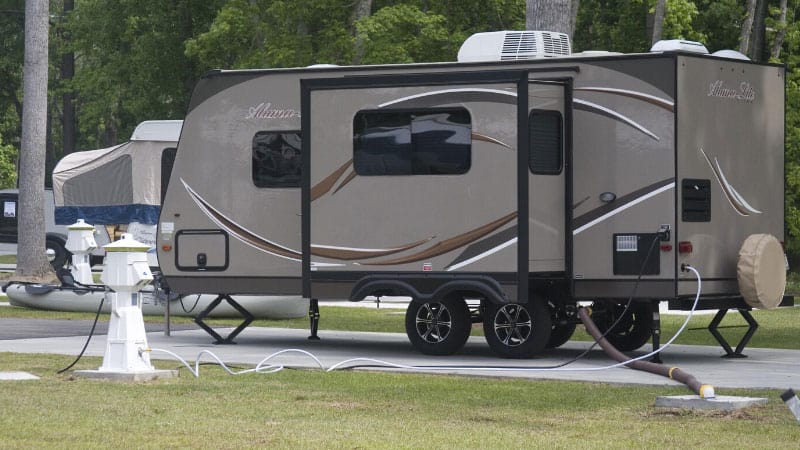
Installation for both device types follows a straightforward process, but the sequence matters. Powering up a pedestal before connecting the protection device defeats the purpose entirely — if the pedestal has a fault, the brief connection window during hookup can still cause damage.
Installing a Surge Protector
- Turn off the pedestal breaker before touching the outlet.
- Inspect the pedestal outlet for visible corrosion, burn marks, or physical damage. If present, request a different site.
- Plug the surge protector into the pedestal outlet firmly — loose connections cause arcing.
- Turn on the pedestal breaker and read the indicator LEDs. Confirm ground present and polarity correct before connecting the RV shore power cord.
- Plug the RV shore power cord into the surge protector output receptacle.
- Verify the shore power connection inside the rig before drawing load.
Installing an EMS Unit
- Turn off the pedestal breaker.
- Plug the EMS input into the pedestal outlet.
- Turn on the pedestal breaker. The EMS will run its diagnostic sequence — allow 30–60 seconds for initial readings.
- Read the display. Voltage on both legs, frequency, and fault status should all show nominal before proceeding. If the EMS trips and holds, note the fault code and request a different pedestal or site.
- Once the EMS shows all-clear, plug the RV shore power cord into the EMS output.
- The EMS reconnect delay (typically 120–136 seconds) will count down before allowing power to flow to the rig.
- Confirm shore power status inside the rig before powering on major appliances.
Problems with the air conditioner cycling erratically after hookup — a separate but related issue — are covered in depth in the RV air conditioner keeps turning on and off fix guide. Verify the electrical protection device cleared before diagnosing the AC system itself.
Field-Tested Tips for Maximum Protection
Device selection matters. Habits matter more. The best EMS money can buy offers reduced protection if the installation process is rushed or the unit is not maintained. These are the practices that separate RV owners who never have electrical problems from those who learn the hard way.
Campground Electrical Habits
- Always arrive with the pedestal breaker off. Connecting to a live, faulted pedestal while the protection device is still in hand defeats every protection mechanism.
- Read every fault code before dismissing it. An EMS that trips on arrival at a site is doing exactly what it is supposed to do. Moving to a different pedestal is the correct response, not resetting the unit and hoping for the best.
- Carry a plug-in outlet tester as a backup. A $10 outlet tester confirms polarity and ground independently of the protection device — useful when campground staff dispute a fault reading.
- Do not share pedestal circuits. When two rigs share a 50A pedestal through an unauthorized splitter, the effective ampacity drops and voltage sag increases under combined load. An EMS will trip repeatedly in that environment.
- During thunderstorms, unplug shore power entirely. No MOV-based surge protector absorbs a direct lightning strike. Physical disconnection is the only certain protection against a direct hit.
Maintenance and Inspection
Surge protectors require periodic replacement whether or not they have absorbed a noticeable hit. MOVs degrade silently — a device that has absorbed several smaller surges may show no visible damage while providing zero protection. Units with a sacrificial fuse indicator or joule-remaining display remove the guesswork. Without that feature, replacing the surge protector every one to two seasons of active camping is the conservative but correct approach.
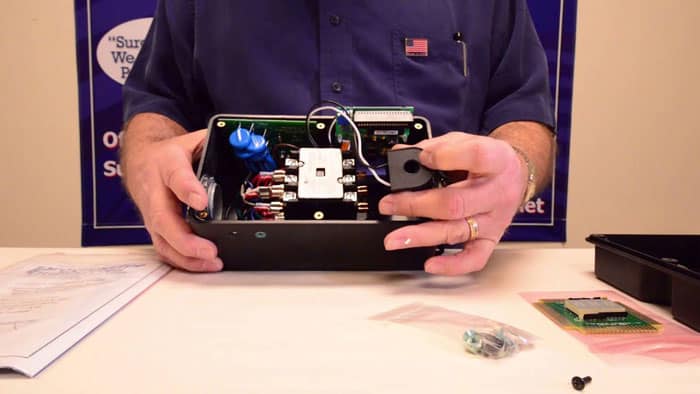
EMS units have fewer consumable components but warrant inspection of the power cord, connectors, and enclosure for corrosion or heat damage. Many quality EMS units log fault events — reviewing that history after a season reveals patterns about which campgrounds have chronic electrical problems. That data is worth keeping.
The complete RV accessories guide covers additional protective gear worth pairing with electrical protection, including surge-rated power strips for internal use and inline ammeters for monitoring load.
The Real Cost of Getting This Wrong
The rv ems vs surge protector decision is ultimately a financial calculation as much as a technical one. Framing it purely as a device purchase price comparison misses the actual stakes — the downside of inadequate protection is not the cost of the protection device, it is the cost of whatever the protection device would have prevented.
Device Costs vs. Repair Bills
Common repair costs resulting from campground electrical faults:
- RV air conditioner compressor replacement: $600–$1,400
- Residential refrigerator compressor or control board: $300–$800
- Inverter/charger replacement: $800–$2,500
- Slide motor and controller: $400–$900
- Multiple appliance damage from open neutral event: $2,000–$8,000+
Against those numbers, a premium hardwired EMS at $350–$450 installed is not a luxury purchase. It is cheap insurance. The math is not close. Even a $200 portable EMS pays for itself the first time it trips on a faulted pedestal and prevents a single compressor failure.
Long-Term Value Analysis
Surge protectors at the $60–$120 price point require replacement every one to two seasons for active campers — call it $50–$80 per year amortized. A quality EMS with no consumable components has a useful service life of eight to twelve years. The per-year cost of an EMS is lower over a decade of use, even before accounting for the incidents it prevents. The perception that an EMS is the expensive option evaporates under that lens.
Additionally, insurance claims for RV electrical damage carry deductibles — typically $500–$1,500 — and can affect renewal rates. An EMS prevents the claim entirely. The actuarial math strongly favors comprehensive protection from the outset. According to the NFPA's RV fire safety resources, electrical faults represent a significant portion of RV fire incidents — a risk that extends well beyond appliance replacement costs.
Choosing a Protection Strategy That Lasts
The right protection strategy is not a one-time purchase decision — it evolves with the rig, the owner's camping habits, and the electrical threat landscape. Building a durable strategy means thinking past the initial device selection and considering the full protection architecture over the life of the RV.
Hardwired vs. Portable Units
Both surge protectors and EMS units come in portable and hardwired configurations. The trade-offs are real.
Portable units:
- Plug into the pedestal outlet directly — no installation required
- Can be moved between rigs
- Exposed at the pedestal — subject to theft and weather exposure
- Add a connection point (one more potential failure point) between pedestal and shore cord
Hardwired units:
- Installed inside the RV's electrical compartment — protected from theft and weather
- Monitor the entire electrical system from the main shore power inlet
- Require a qualified RV technician for installation — one-time cost
- Cannot be forgotten on the pedestal, which happens more than owners admit
For full-timers and any rig worth more than $30,000, a hardwired EMS is the definitive answer. Portable units are acceptable for part-time campers who understand the theft and exposure trade-offs.
RV air conditioning problems arising from voltage irregularities — such as the air conditioner leaks when it rains scenario — can sometimes be traced back to underlying electrical stress that an EMS would have interrupted. Protecting the electrical foundation protects every system that depends on it.
Layering Protection Over Time
The optimal protection architecture layers multiple defenses rather than relying on a single device. A practical layered approach:
- Primary: Hardwired EMS at the shore power inlet — covers all campground fault types and provides continuous monitoring.
- Secondary: Surge-rated power strips for internal circuits powering sensitive electronics — computers, TVs, audio equipment — add a second layer of transient protection inside the rig.
- Tertiary: Portable surge protector or outlet tester kept in the travel kit as a diagnostic tool and backup when the primary device is being serviced.
This layered approach acknowledges that no single device is infallible. It also provides diagnostic redundancy — if an internal surge-rated strip triggers while the EMS does not, that points to an internal wiring issue rather than a campground fault. Layering creates information, not just protection.
Frequently Asked Questions
Can an RV EMS fully replace a surge protector?
Yes. A quality EMS includes surge protection as one of its monitored parameters, in addition to high voltage, low voltage, open neutral, reverse polarity, and miswired pedestal detection. Buying a separate surge protector alongside an EMS is redundant — the EMS handles the surge threat and every other threat the surge protector would have addressed.
What voltage levels cause an EMS to disconnect?
Most EMS units trip on high voltage above 132V and low voltage below 102V, though exact thresholds vary by manufacturer and model. Some premium units allow user-adjustable thresholds within a defined range. The reconnect delay after a fault clears is typically 120–136 seconds, designed to protect compressor motors from short-cycling.
Do surge protectors work on both 30-amp and 50-amp RV service?
Surge protectors and EMS units are amperage-specific. A 30A device plugs into a standard TT-30 outlet and is incompatible with 50A service, and vice versa. Adapters exist for plugging a 50A shore cord into a 30A pedestal, but the protection device must be rated for the pedestal outlet being used, not the rig's inlet amperage.
How often should a portable surge protector be replaced?
For active campers using shore power regularly, replacing a portable surge protector every one to two seasons is the conservative standard. MOVs degrade silently with each absorbed event and provide no visual indication of failure. Units with a sacrificial fuse indicator or joule-remaining display extend replacement intervals by removing the guesswork about MOV condition.
Is a hardwired EMS worth the additional installation cost over a portable unit?
For full-time RV residents and owners of high-value rigs, a hardwired EMS is absolutely worth the installation cost. It cannot be stolen from the pedestal, cannot be forgotten when breaking camp, and protects the entire electrical system from the shore power inlet inward. The one-time installation cost is typically $100–$200 in labor — a trivial amount against the protection provided over a decade of use.
Next Steps
- Identify the shore power amperage of the rig — 30A or 50A — and confirm which protection device configuration is needed before purchasing anything.
- Assess camping habits honestly: if the rig connects to more than a dozen different campgrounds per season or stays at older state parks and municipal sites, budget for an EMS rather than a surge protector.
- Pull the existing surge protector (if one is in use) and inspect the MOV indicator or check the purchase date — if it has been in service more than two seasons of regular use, replace it immediately.
- Get a quote from an RV service center for hardwired EMS installation — compare that one-time cost against the portable EMS price and the likely service life to make the final format decision.
- Add a plug-in outlet tester to the travel kit as a quick verification tool, independent of whatever primary protection device is installed.


About Jake Mercer
Jake Mercer spent twelve years behind the wheel as a long-haul trucker, covering routes across the continental United States and logging well over a million miles. That career gave him an unusually thorough education in CB radio equipment — he has tested base station antennas, magnetic mounts, coax cables, and handheld units in real-world conditions where reliable communication actually matters. After leaving trucking, Jake transitioned to full-time RV travel and has since put hundreds of RV accessories through their paces across national parks, boondocking sites, and full-hookup campgrounds from Montana to Florida. At PalmGear, he covers RV gear and accessories, CB radios, shortwave receivers, and handheld radio equipment.
You can get FREE Gifts. Or latest Free phones here.
Disable Ad block to reveal all the info. Once done, hit a button below