RV Gear ›
RV Air Conditioner Keeps Turning On and Off Repeatedly – How to Fix It
by Jake Mercer
Roughly 40% of RV owners list HVAC failure as their most frustrating maintenance problem — and short-cycling is the top culprit. When the rv ac on off fix is applied correctly and promptly, it prevents compressor burnout, restores cabin comfort, and saves hundreds in repair costs. Most short-cycling problems trace back to a handful of identifiable causes — none of which require an HVAC license to address. This guide covers every root cause, every practical fix, and every diagnostic mistake to avoid. Browse the full RV gear section on PalmGear for more hands-on coverage of RV appliances and accessories.
Contents
How RV Air Conditioners Actually Work
The Cooling Cycle Explained
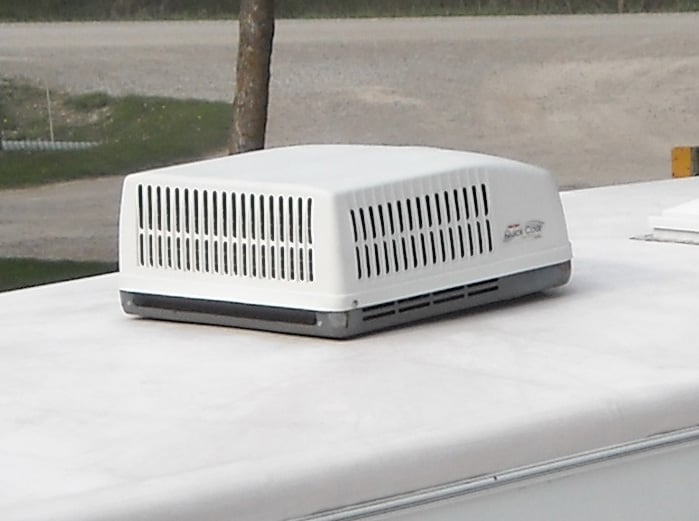
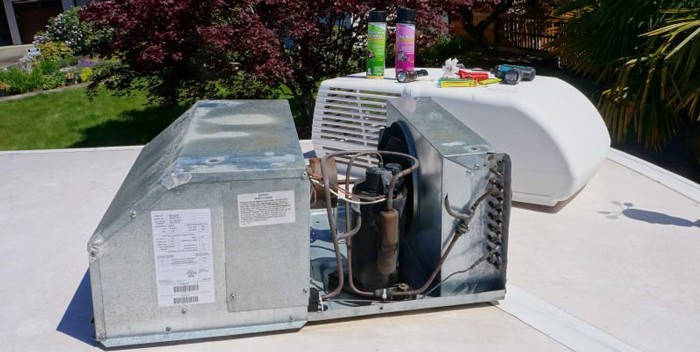
RV air conditioners use the same vapor-compression refrigeration cycle as residential units — compressed into a single rooftop housing. The four core components are the compressor, condenser coils, expansion valve, and evaporator coils. Hot cabin air passes over the cold evaporator coils. Refrigerant absorbs that heat and carries it outside through the condenser, where the heat dissipates into the outdoor air.
Most RV units are self-contained rooftop designs — everything lives in one housing bolted above the ceiling. Dometic, Coleman-Mach, and Advent are the three most common brands. According to the U.S. Department of Energy, air conditioning is one of the most energy-intensive systems in any living space, including mobile ones.

Why Short-Cycling Is Destructive
Short-cycling is when the AC unit starts, runs for only a few minutes, shuts off, and repeats without completing a proper cooling cycle. It's not a quirk — it's a failure mode. Here's why it matters:
- Compressor stress: Each startup draws 3–5× the normal running amperage. Frequent starts accelerate wear faster than hours of steady operation.
- Poor dehumidification: Short cycles never run long enough to pull moisture from cabin air. Humidity stays high even when temperature drops slightly.
- Unstable temperatures: The cabin never reaches the thermostat setpoint. The unit quits before the job is done.
- Wasted power: Startup surges strain generators and shore power hookups, increasing fuel consumption and electricity draw.
Left unaddressed, a short-cycling AC can fail completely within one camping season. Compressor replacement — the most expensive outcome — typically costs $300–$600 in parts alone, not counting labor.
Diagnosing and Applying the RV AC On Off Fix
Root Causes by Category
Most short-cycling problems fall into three categories: electrical supply issues, mechanical or refrigerant problems, and thermostat or control board failures. The table below maps each cause to its symptoms and whether it's a DIY repair.
| Root Cause | Key Symptom | DIY Fix? | Estimated Cost |
|---|---|---|---|
| Low shore power / under-voltage | Trips within seconds of startup | Yes — check with multimeter | $0–$30 |
| Failed start or run capacitor | Hum then shutdown; struggles to start | Yes — replace capacitor | $10–$40 |
| Clogged air filter | Ice on coils; short runs of 10–20 min | Yes — wash and reinstall | $0 |
| Dirty condenser coils | Warm output air; high-pressure trips | Yes — brush or rinse coils | $0–$15 |
| Faulty thermistor or thermostat | Random cycling; wrong temperature reads | Yes — replace sensor | $15–$50 |
| Refrigerant leak | Warm air; oil stains near refrigerant lines | No — EPA certification required | $150–$400+ |
| Undersized or unstable generator | Trips on startup; fluctuating power | Yes — upgrade or load-shed | $0–$800+ |
The Fix Process Step by Step
Work through these steps in order — most cases resolve before reaching step 5.
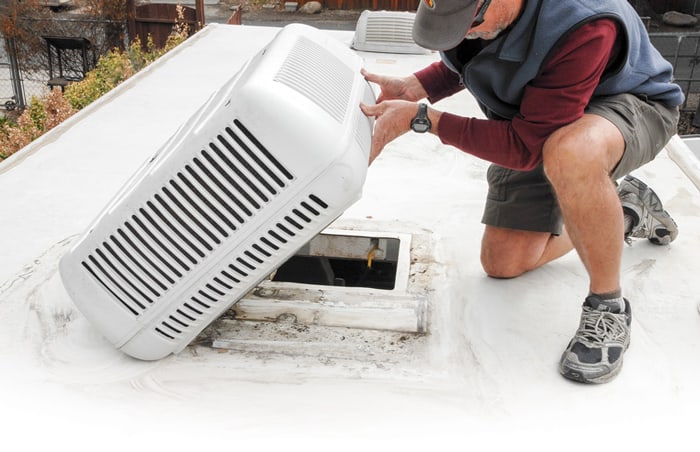
- Clean the air filter. Remove the ceiling assembly. Pull the foam filter. Wash with warm water and mild soap. Let it dry completely before reinstalling. This alone fixes roughly 25% of short-cycling cases.
- Measure shore power voltage. Use a multimeter at the pedestal outlet. Healthy range is 108–126V. Anything below 105V trips the thermal overload protector. Contact the campground or switch pedestals if voltage is low.
- Inspect and clean condenser coils. Power off the unit. Access the roof housing. Use a soft brush to remove debris from the condenser fins. Rinse gently with a garden hose. Never use a pressure washer — it bends fins and reduces airflow permanently.
- Wait for a full thermal reset. After any shutdown, wait at least 3 minutes before restarting. The thermal overload protector needs time to reset. Immediate restarts trigger another trip cycle.
- Test and replace the capacitor. With power completely off, locate the capacitor inside the rooftop housing — a small cylindrical component. Test capacitance with a multimeter. A reading significantly below the rated µF value printed on the capacitor body confirms failure. Replacement capacitors cost $10–$40 and take under 30 minutes to swap.
- Check the thermistor. Unplug the two-wire sensor clipped near the evaporator coils. Test resistance at room temperature — most read 10,000–12,000 ohms at 77°F. A wildly off reading means replacement is needed.
Mistakes That Make Short-Cycling Worse
Ignoring Early Warning Signs
Short-cycling rarely starts severe. It usually begins as occasional brief shutdowns that grow more frequent over weeks. Most RV owners ignore it until the compressor fails completely — and the cost gap between early and late intervention is enormous.
Early warning signs to watch for:
- AC runs for under 10 minutes before shutting off
- Cabin temperature never reaches the thermostat setpoint
- Unusual humming or clicking sounds on startup
- Circuit breaker tripping during AC startup
- Generator fuel consumption noticeably higher than usual
RV appliance issues often cluster around shared root causes. If the AC is short-cycling, it's worth auditing other electrical systems too. Similar low-voltage problems can affect the refrigerator — PalmGear's guide on an RV refrigerator not cooling while the freezer still works covers the same diagnostic logic applied to a different appliance.
Pro Tip: Always measure shore power voltage before assuming any RV AC component has failed — low campground voltage triggers more than 60% of all short-cycling complaints, and the fix costs nothing.
Wrong Diagnostic Order
Jumping straight to refrigerant checks or control board replacements wastes money. The correct diagnostic sequence goes from cheap and accessible to expensive and complex — always.
- Air filter inspection — 2 minutes, zero cost
- Shore power voltage measurement — 5 minutes, under $30 for a meter
- Condenser coil cleaning — 30 minutes, minimal cost
- Capacitor testing — 15 minutes with a multimeter
- Thermistor resistance check — 20 minutes
- Thermostat placement and calibration review
- Control board inspection — requires electronics background
- EPA-certified technician for refrigerant issues only
Tools Needed for Diagnosis and Repair
Diagnostic Tools
Having the right equipment transforms the rv ac on off fix from guesswork into a methodical process. These tools are worth owning permanently — they pay for themselves on the first repair.
- Digital multimeter: Tests voltage, capacitance, resistance, and continuity. Quality units run $20–$60 and handle every diagnostic step on this list.
- Non-contact voltage tester: Confirms live circuits safely without probing bare terminals. Essential for working inside the rooftop housing. Cost: under $20.
- Clamp meter (optional): Measures running amperage draw without breaking the circuit — useful for identifying overloaded compressor motors.
- Infrared thermometer: Checks supply air temperature at the ceiling register. A healthy RV AC unit delivers air 15–20°F below ambient temperature.
The same multimeter used for AC diagnostics applies across all the electrical gear in an RV setup. RV owners who run a mobile office or networking equipment will recognize the overlap — the same voltage-checking skills that fix an AC also help troubleshoot situations like a wireless adapter failing to connect due to power delivery issues at USB hubs or switches.
Repair and Cleaning Tools
- Fin comb: Straightens bent condenser fins for restored airflow. Bent fins reduce efficiency by up to 30%.
- Coil cleaner spray: No-rinse foam cleaner dissolves grease and debris from evaporator and condenser coils without water damage risk.
- Soft-bristle brush: For dry debris removal around the fin array before applying foam cleaner.
- Insulated screwdrivers: Essential near capacitors — stored charge can cause a shock even with power off.
- Capacitor discharge resistor: Bleeds stored voltage from capacitors safely before handling. Many DIYers skip this step. That's how accidents happen.
- Replacement capacitor: Match the microfarad (µF) and voltage ratings exactly. Carrying a spare on road trips is smart — capacitor failure is sudden and common.
Routine maintenance prevents most breakdowns before they happen. This principle holds for any mechanical or electromechanical device. The same discipline behind proper upkeep of tools — like the maintenance procedures covered in PalmGear's roller heat press maintenance guide — applies directly to RV systems: clean regularly, inspect connections, replace wear parts proactively.
DIY Fixes vs. When to Call a Pro
What Most Owners Can Handle
The vast majority of rv ac on off fix cases are fully within reach of any RV owner comfortable with basic tools. No HVAC certification is required for these repairs:
- Cleaning filters, evaporator coils, and condenser fins
- Identifying and addressing low voltage at the pedestal
- Replacing a failed capacitor (with proper discharge procedure)
- Swapping a faulty thermistor
- Repositioning or replacing a thermostat
- Allowing frozen coils to thaw and addressing the airflow root cause
First-timers should start with the filter and voltage checks. These two steps alone resolve a large proportion of short-cycling problems — sometimes in under 15 minutes. For anyone new to working with electromechanical systems, the structured approach outlined in guides like beginner instructions for heat press machines illustrates the same principle: understand how the system works before touching components.
When a Technician Is Required
Some repairs require professional certification or specialized recovery equipment. Attempting them without proper training creates safety hazards and legal liability.
- Refrigerant handling: In the United States, handling refrigerants legally requires EPA Section 608 certification. This is federal law, not a suggestion.
- Compressor replacement: Requires refrigerant recovery prior to disassembly. An uncertified attempt creates environmental liability and voids any remaining warranty.
- Control board replacement on modern units: Some current Dometic and Coleman boards require firmware pairing via proprietary tools unavailable to consumers.
- Active warranty repairs: Opening sealed components on units still under warranty voids coverage immediately. Contact the manufacturer first.
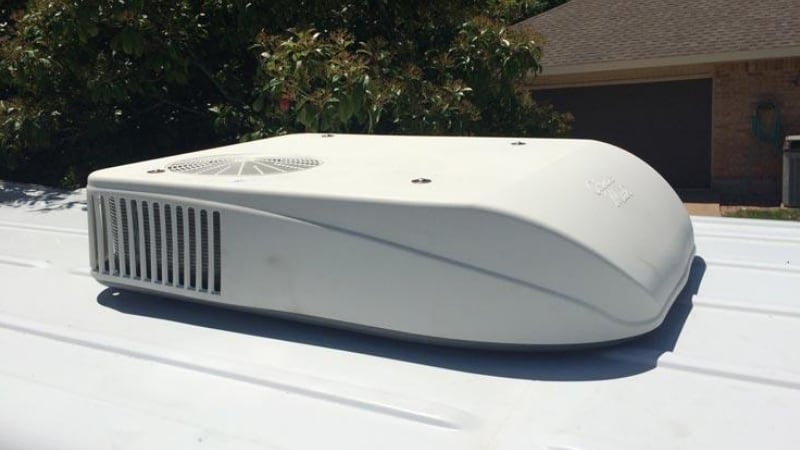
When hiring a technician, specifically request someone experienced with self-contained rooftop RV units. Residential HVAC technicians sometimes lack hands-on experience with Dometic or Coleman-Mach models — the installation geometry and service access differ significantly from split-system home units.
RV AC Myths That Need to Die
Myths About Basic Operation
Bad information spreads fast on RV forums and Facebook groups. These persistent myths lead owners to misdiagnose problems, skip the real fix, and spend money on things that don't help.
Myth 1: "Short-cycling is normal for RV AC units."
False. No properly functioning RV air conditioner cycles off within 5–10 minutes of startup under normal conditions. Short runs are always a symptom of a fault.
Myth 2: "Running AC on a generator damages the unit."
False — with a properly sized generator. A 3,000W+ generator with stable voltage regulation runs an RV AC safely and indefinitely. The problem is undersized generators or units with poor voltage regulation, not generators as a category.
Myth 3: "Setting the thermostat to 60°F cools the RV faster than 72°F."
False. The compressor runs at full capacity regardless of the setpoint. A lower setting just extends runtime. On a short-cycling unit, lower thermostat settings accelerate compressor failure — not comfort.
Myths About Repairs
Myth 4: "Adding refrigerant fixes most AC short-cycling problems."
False. RV AC systems are sealed at the factory with a precise refrigerant charge. Low refrigerant means there's a leak in the sealed system. Topping off without finding and repairing the leak is a temporary patch — and requires EPA-certified handling regardless.
Myth 5: "A brand-new unit won't short-cycle."
False. A new unit installed at a campground pedestal delivering 100V will short-cycle immediately. Unit age is irrelevant when the power supply is inadequate.
Myth 6: "The display showing 'ON' means the unit is running correctly."
False. Control board displays only report thermostat state and run commands. A capacitor approaching failure, coils beginning to ice, or a thermistor reading 15°F off produces zero error codes on most RV AC models. The display is not a health monitor.
Consistent maintenance schedules are the best defense against all of these failure modes. RV owners who manage other precision equipment on the road — whether that's keeping mechanical devices properly lubricated or maintaining networking gear — already understand the core principle: regular inspection catches small problems before they become expensive ones.
For RV owners who also use their rigs as mobile workspaces and need to keep all connected devices running reliably, it's also worth exploring PalmGear's coverage of wireless adapter troubleshooting — the same voltage and connectivity root causes that trip an AC can affect network hardware powered through the same shore power circuit.
Frequently Asked Questions
Why does the RV AC keep turning on and off every few minutes?
This behavior is called short-cycling. The most common causes are low shore power voltage (below 105V), a failed start or run capacitor, frozen evaporator coils from restricted airflow, or a faulty thermistor sending inaccurate temperature data to the control board. The air filter and voltage supply should always be checked first — those two steps alone resolve the majority of cases.
How do RV owners know if the capacitor is bad?
Classic symptoms include a humming or buzzing sound when the AC tries to start, the unit running for only a few seconds then cutting out, or the fan running normally while the compressor fails to engage. Confirming failure requires a multimeter set to capacitance mode — a reading significantly below the µF rating printed on the capacitor body indicates it needs replacement.
Can campground shore power cause short-cycling?
Yes — and it's one of the most frequent culprits. During peak afternoon hours, campground pedestals routinely drop below 105V as multiple rigs run AC simultaneously. This low voltage trips the AC's thermal overload protector. RV owners should always measure pedestal voltage with a multimeter before assuming any component is faulty. Requesting a different site or pedestal often resolves the problem instantly.
How often should the RV air conditioner filter be cleaned?
During active camping use, the foam filter should be cleaned every one to two weeks at minimum. In dusty environments — desert campsites, gravel roads, or high-pollen areas — weekly cleaning is appropriate. A blocked filter causes frozen evaporator coils and short-cycling within hours of restricted operation. Filter cleaning is the cheapest and fastest first step in any rv ac on off fix process.
What generator size is needed to run an RV air conditioner reliably?
Most standard RV rooftop AC units require 1,500–2,500W to sustain operation and 2,500–4,000W during compressor startup surge. A 2,000W generator is undersized for most units and causes repeated low-voltage shutdowns. A 3,000–4,000W generator with stable voltage regulation is the practical minimum for consistent, reliable RV AC operation without short-cycling.
What causes the RV AC evaporator coils to freeze up?
Frozen coils result from restricted airflow across the evaporator. Without adequate warm cabin air moving over the coils, refrigerant temperature drops below 32°F and ice accumulates. The unit then trips off on thermal protection. The fix is to power down completely, allow full ice melt over 30–60 minutes, clean the air filter, clear any coil debris, and restart. If freezing recurs, dirty coils or a refrigerant issue may be involved.
When should a professional be called for RV AC short-cycling?
Professional service is required for any refrigerant handling — EPA Section 608 certification is legally mandatory in the United States. Compressor replacement also requires certified refrigerant recovery before disassembly. For units still under manufacturer warranty, contacting the brand before opening sealed components is essential to preserve coverage. All other common causes — capacitors, filters, coils, thermistors, and voltage issues — are within reach of a competent DIY repair.
Key Takeaways
- Low shore power voltage and clogged air filters are responsible for the majority of RV AC short-cycling problems — always check these first before replacing any components.
- A failed capacitor is the most common mechanical cause of short-cycling and is a straightforward DIY repair costing under $40 with basic tools.
- Refrigerant handling and compressor replacement require EPA Section 608 certification — these are the only tasks that legally and practically require a professional technician.
- Cleaning the foam filter every one to two weeks during active use is the single most effective preventive measure against the rv ac on off fix situation arising in the first place.


About Jake Mercer
Jake Mercer spent twelve years behind the wheel as a long-haul trucker, covering routes across the continental United States and logging well over a million miles. That career gave him an unusually thorough education in CB radio equipment — he has tested base station antennas, magnetic mounts, coax cables, and handheld units in real-world conditions where reliable communication actually matters. After leaving trucking, Jake transitioned to full-time RV travel and has since put hundreds of RV accessories through their paces across national parks, boondocking sites, and full-hookup campgrounds from Montana to Florida. At PalmGear, he covers RV gear and accessories, CB radios, shortwave receivers, and handheld radio equipment.
You can get FREE Gifts. Or latest Free phones here.
Disable Ad block to reveal all the info. Once done, hit a button below