RV Gear ›
10 Best RV Backup Camera Reviews 2026 - Buying Guide
by Jake Mercer
You're standing in a campground parking lot, trying to back a 35-foot Class A into a narrow pull-through site while your partner waves frantically from behind. That moment alone justifies every dollar you'll spend on a quality RV backup camera. The technology has come a long way in 2026 — wireless systems now push reliable signals past 500 feet, 1080p resolution is standard, and multi-camera setups let you cover rear, sides, and blind spots from a single monitor.
Whether you're full-timing across the country or weekend warrior-ing at state parks, the right backup camera system eliminates the guesswork from reversing, hitching, and lane changes. We've tested and reviewed the top options available right now to help you pick the system that matches your rig, your budget, and your comfort level with installation. If you're upgrading other parts of your RV gear setup at the same time, a backup camera should be near the top of your list.

We evaluated each system on signal reliability, image clarity, night vision performance, ease of installation, and multi-camera expandability. Some of these units are wireless plug-and-play; one is a wired option for those who want zero signal concerns. Here's what made the cut.
Contents
Top Rated Picks of 2026
- #PreviewProductRating
- Bestseller No. 1
 Rating:

- Bestseller No. 2
 Rating:
 - Bestseller No. 3
 Rating:
- Bestseller No. 4
 Rating:
 - Bestseller No. 5
 Rating:
 - Bestseller No. 6
 Rating:
 - Bestseller No. 7
 Rating:
Full Product Breakdowns
1. Furrion Vision S Wireless RV Backup Camera System — Best for Pre-Wired RVs
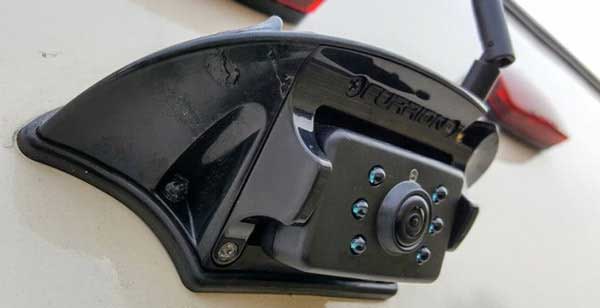
The Furrion Vision S remains one of the most popular RV backup cameras for a reason — most newer RVs come pre-wired for it. If your rig already has the Furrion prep, installation takes about 15 minutes. The sharkfin camera mounts cleanly on the rear and delivers 720x480 resolution through a compact 4.3-inch monitor. It's not the sharpest screen on this list, but the image quality is more than adequate for backing and hitching.
Signal reliability is where Furrion earns its reputation. The proprietary wireless connection holds steady at highway speeds up to 100 feet and stretches to 492 feet in open spaces. The IP65 waterproof rating handles rain, road spray, and dust without issue. Infrared night vision kicks in automatically in low light, and there's a built-in microphone for audio monitoring — a handy feature if you have a spotter calling directions.
The trade-off is the smaller monitor and lower resolution compared to newer competitors. If you want a bigger screen or 1080p, you'll need to step up to the Vision S+. But for a straightforward, reliable rear-only system at a reasonable price point, the Vision S is hard to beat.
Pros:
- Plug-and-play on Furrion pre-wired RVs — minimal installation effort
- Rock-solid wireless signal with no lag at highway speeds
- IP65 waterproof with automatic IR night vision
- Built-in microphone for audio from behind the rig
Cons:
- 720x480 resolution feels dated next to 1080p competitors
- 4.3-inch monitor is small for full-time use
- Not compatible with Vision S+ systems — no upgrade path

2. AUTO-VOX Wireless RV Backup Camera System — Best Multi-Camera Coverage
The AUTO-VOX system is purpose-built for RV owners who want complete situational awareness, not just a rear view. It ships with three cameras — rear plus both sides — feeding into a large 7.2-inch HD monitor. The triple split-view mode displays all three angles simultaneously, which is a game-changer when backing into tight campsites or lining up with hookups. Switch to full-screen mode while cruising on the highway, then flip to split view when you need precision.
Wireless range is impressive at 500 feet, backed by dual antennas that keep the signal stable across long rigs. Even on 60-foot-plus setups, the picture holds. The 1080P resolution delivers genuinely crisp video during the day, and the IR night vision handles late-night arrivals and poorly lit campground parking. DVR recording is built into the monitor, so you've got footage if anything happens.
The downside is complexity. Three cameras mean more mounting, more alignment, and more potential wireless interference points. It's also a larger investment than single-camera systems. But if you're serious about eliminating blind spots — especially on a big Class A or fifth wheel — the AUTO-VOX delivers coverage that single-camera systems simply can't match.
Pros:
- Three-camera system covers rear and both sides from one monitor
- 500-foot wireless range with dual antennas — handles long rigs
- 7.2-inch HD display with split-screen and full-screen modes
- Built-in DVR recording for incident documentation
Cons:
- Three cameras increase installation time and complexity
- Higher price point than single-camera alternatives
3. Furrion Vision S+ RV Observation System — Best Premium Upgrade
If you've outgrown the basic Vision S or want the Furrion ecosystem with real teeth, the Vision S+ is the answer. This system pairs a 7-inch monitor with a 1080p sharkfin rear camera and left/right side cameras that double as LED marker lights. That's a clever design choice — the side cameras replace your existing marker lights, so installation doesn't add extra holes or hardware to your rig.
The rear sharkfin camera offers a 140-degree wide-angle view with IR night vision and IP65 waterproofing. Side cameras provide 65-degree viewing angles, which is the sweet spot for lane-change monitoring. Furrion's 2.4 GHz proprietary wireless keeps things lag-free at highway speeds up to 100 feet and reaches 492 feet in open areas. The 7-inch monitor is bright, responsive, and a massive step up from the Vision S's 4.3-inch screen. If you're also outfitting your rig with a quality TV mount, this monitor complements the interior nicely with its clean design.
Compatibility is broad — this works on RVs, motorhomes, trucks, semi-trailers, and buses. The premium price tag reflects the three-camera setup and higher resolution. It's worth every penny if you're running a larger rig and want the peace of mind that comes with full perimeter visibility.
Pros:
- 1080p rear camera with 140-degree viewing angle — sharp and wide
- Side cameras replace existing marker lights for clean installation
- 7-inch monitor is bright and easy to read in daylight
- Furrion pre-wired compatibility simplifies setup
Cons:
- Premium pricing — most expensive option on this list
- Side cameras limited to 65-degree angle (sufficient, not panoramic)
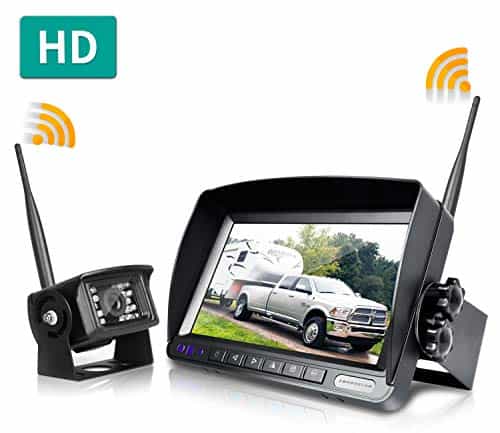
4. Haloview MC7108 Wireless RV Backup Camera System — Best for Multi-Camera Expansion
The Haloview MC7108 is built for expandability. It ships with one camera and a 7-inch LCD monitor, but the system supports up to four wireless camera inputs. That means you can start with a rear camera and add side or front cameras over time without replacing the monitor. The 10-32V wide voltage input makes it compatible with virtually any vehicle, from a Class B van to a commercial box truck.
The built-in DVR records in real time with playback capability — useful for reviewing incidents or checking what happened at a campsite while you were away. Viewing modes include split-screen, auto-scan, and single display. You can also flip, mirror, or rotate the image, which is essential when mounting the camera in non-standard positions. The 120-degree viewing angle is adequate, though narrower than some competitors. Wireless range tops out at an impressive 984 feet line-of-sight.
Where the MC7108 falls short is image resolution. It doesn't match the 1080p clarity of the AUTO-VOX or Furrion S+, and the monitor brightness can be challenging in direct sunlight. Still, for buyers who want a system that grows with their needs and don't mind adding cameras over time, the Haloview's four-channel architecture is the most flexible option here.
Pros:
- Supports up to 4 wireless cameras — best expansion potential
- 984-foot wireless range is the longest on this list
- Built-in DVR with real-time recording and playback
- 10-32V input works with virtually any vehicle
Cons:
- Resolution doesn't match 1080p competitors
- Monitor brightness struggles in direct sunlight
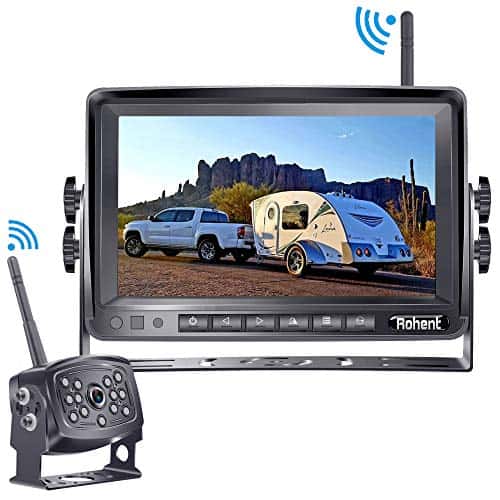
5. AMTIFO A7 RV Backup Camera — Best Furrion Replacement
Here's the play if your RV is pre-wired for Furrion but you don't want to pay Furrion prices. The AMTIFO A7 comes with a Furrion mounting bracket adapter plate and pigtail wire, so it's genuine plug-and-play on pre-wired rigs. You get a significantly larger 7-inch HD touch-key monitor, 1080P resolution, and DVR recording — features that would cost considerably more in the Furrion ecosystem.
The 2.4 GHz wireless system uses upgraded dual antennas for stable signal transmission. Range hits 825 feet in open areas and works at vehicle distances under 320 feet — solid numbers for towing. The 4-channel split-screen capability means you can run up to four cameras simultaneously. Want to add a license plate camera on your toad or a camera inside your horse trailer? Just pair additional cameras and view them all on one screen.
Build quality is where things get interesting. The camera carries an IP69K waterproof rating — the highest on this list. That's pressure-wash resistant. Night vision is competent, and the touch-key interface on the monitor feels responsive. The included accessories and adapters make this the most installation-friendly option for Furrion-prepped RVs. If you're boosting connectivity in your rig, you might also consider pairing this with a quality cell phone booster for complete mobile coverage.
Pros:
- True plug-and-play for Furrion pre-wired RVs
- IP69K waterproof rating — highest protection level available
- 4-channel support with 7-inch HD monitor and DVR
- Significant cost savings over genuine Furrion systems
Cons:
- Signal range shorter than Haloview at vehicle distances (320 ft)
- Third-party Furrion compatibility — not officially endorsed
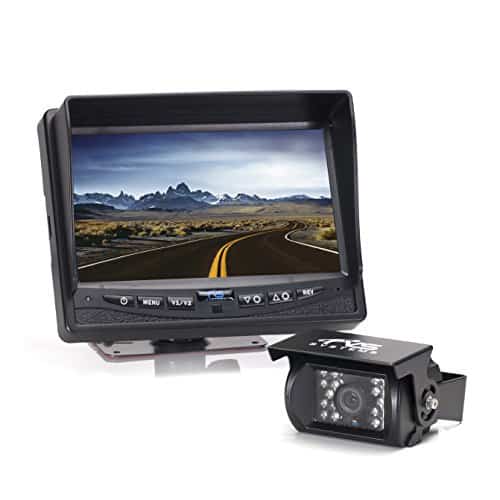
6. TadiBrothers 1080P Wireless RV Backup Camera — Best American-Made Option
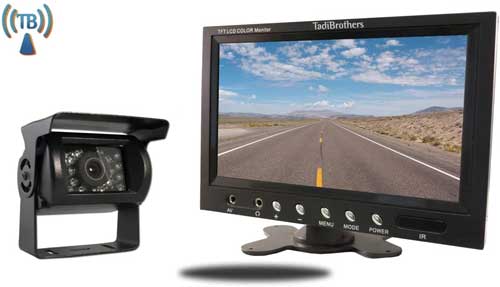
TadiBrothers is a US-based company that's been making vehicle camera systems for years, and their support reflects it. This system pairs a 1080P camera with a 7-inch HD monitor and backs it all with a 1-year warranty and domestic customer service. The 300-foot wireless range isn't the longest here, but TadiBrothers claims their digital signal stays interference-free even in extreme weather — a bold statement that their track record supports.
The 120-degree wide-angle camera delivers a full rear view with enough peripheral coverage to catch obstacles and pedestrians at the edges of your frame. Night vision is functional, and the overall image quality is clean and detailed at 1080p. The monitor supports multiple camera feeds with single, split-screen, and quad-screen viewing modes, so you can expand the system with side or front cameras down the road.
Honestly, the 300-foot range is the limiting factor here. If you're running a rig over 40 feet or towing a long trailer, you're cutting it close. But for Class C motorhomes, shorter Class A rigs, and travel trailers, the range is perfectly adequate. The combination of US-based support, solid build quality, and clean 1080P imaging makes this a strong pick for buyers who value reliability and service over maximum specs.
Pros:
- American-based company with responsive customer support
- True 1080P resolution with 120-degree wide-angle lens
- Interference-free digital signal even in bad weather
- Expandable to quad-screen with additional cameras
Cons:
- 300-foot wireless range is the shortest among wireless options here
- Premium pricing for a single-camera kit
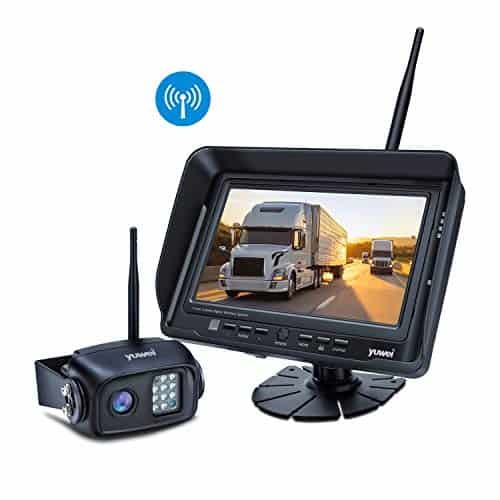
7. Yakry Y14 RV Backup Camera — Best Wired Alternative
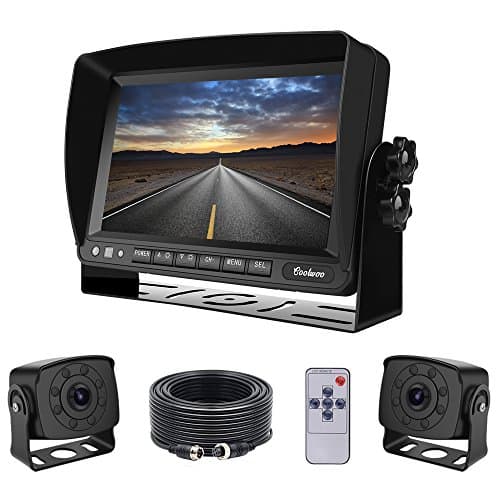
If wireless signal reliability gives you anxiety, the Yakry Y14 eliminates the problem entirely. This is a wired system with a 66-foot cable connecting the camera directly to the 7-inch HD monitor. No signal drops, no interference, no lag — ever. The camera and monitor share a single power supply, so you just connect the monitor to a cigarette lighter adapter or ACC wire, run the cable, and you're done in about 8 minutes according to Yakry.
The 150-degree viewing angle is the widest non-fisheye option on this list. That's a meaningful distinction — fisheye lenses distort the edges, making it harder to judge distances. Yakry's lens gives you a genuinely wide, undistorted view. True IR night vision performs well in near-total darkness, and the 1080P resolution on the 7-inch monitor is sharp and responsive. The 2-channel system supports adding a second camera without a monitor upgrade.
The obvious drawback is running 66 feet of cable through your RV. On a pre-wired rig, wireless is far more convenient. But for older RVs without Furrion prep, for trailers where wireless signals can be flaky through metal walls, or for anyone who's been burned by a wireless system that drops signal at the worst moment — the Yakry Y14 is the most reliable camera on this list, period. While you're running cable, it might be worth checking our guide on RV vent fans if your rig's ventilation needs an upgrade too.
Pros:
- Wired connection eliminates all signal reliability concerns
- 150-degree wide-angle lens without fisheye distortion
- Single power supply for camera and monitor — simple wiring
- True IR night vision for complete darkness visibility
Cons:
- 66-foot cable requires routing through the RV
- No wireless convenience — installation takes more effort
How to Pick the Best RV Backup Camera in 2026
Wired vs. Wireless: Which Setup Fits Your Rig?
Wireless systems dominate this market for good reason — no cable routing, faster installation, and clean aesthetics. But wireless isn't universally better. If your RV has metal walls between the camera and monitor, or if you've experienced signal drops with previous wireless devices, a wired system like the Yakry Y14 guarantees zero interference. For Furrion pre-wired rigs, wireless is the obvious choice since the infrastructure is already there. For older RVs or trailers without pre-wiring, weigh the convenience of wireless against the reliability of wired based on your tolerance for occasional signal hiccups.
Monitor Size and Resolution
Monitor size matters more than you'd think. A 4.3-inch screen works for quick backing maneuvers, but if you use the camera for continuous highway monitoring, a 7-inch display reduces eye strain significantly. Resolution follows the same logic:
- 720x480 — Acceptable for backing, hard to read details at distance
- 1080P — Current standard. Clear enough to read license plates and spot small obstacles
- Split-screen capable — Essential if you plan to add side cameras later
If you're going to glance at the monitor while driving — and you will — get 1080P on a 7-inch screen minimum.
Wireless Range and Signal Stability
Manufacturers advertise maximum line-of-sight range, but real-world performance depends on obstacles between camera and monitor. Here's how to interpret the numbers:
- Under 300 feet — Fine for travel trailers and Class C rigs under 35 feet
- 300-500 feet — Covers most Class A motorhomes and fifth wheels
- 500+ feet — Necessary for towing long trailers or commercial setups
Dual antennas (like the AUTO-VOX) and proprietary frequencies (like Furrion's 2.4 GHz system) generally outperform single-antenna setups. If you're running a rig over 45 feet total, prioritize systems advertising 500+ feet of range. According to the National Highway Traffic Safety Administration, backup cameras have been mandatory on all new vehicles under 10,000 pounds since 2018 — but RVs over that weight still rely on aftermarket solutions like these.
Night Vision and Weatherproofing
Every camera on this list includes infrared night vision, but quality varies. Look for cameras that specify "true IR" rather than just low-light enhancement. For waterproofing, the IP rating tells you everything:
- IP65 — Protected against water jets. Handles rain and road spray
- IP67 — Can survive temporary submersion. Good for rear-mounted cameras that catch splash
- IP69K — Pressure-wash resistant. The gold standard (AMTIFO A7)
If you camp in the desert, IP65 is fine. If you travel in the Pacific Northwest or wash your rig frequently, aim for IP67 or higher.
Questions Answered
Do I need a wireless or wired RV backup camera?
Wireless is the right choice for most RV owners in 2026, especially if your rig is pre-wired for Furrion. Installation is faster and cleaner. Choose wired only if you've had persistent wireless signal issues, your RV has heavy metal construction between the camera and cab, or you want absolute zero-lag reliability. The Yakry Y14 is the best wired option on this list.
How far does the wireless signal reach on RV backup cameras?
Advertised ranges vary from 300 feet (TadiBrothers) to 984 feet (Haloview). Real-world range is typically 40-60% of the advertised maximum due to walls, metal, and interference. For rigs under 35 feet total, 300 feet of advertised range is sufficient. For larger setups, look for 500+ feet. Dual-antenna systems like the AUTO-VOX perform more consistently at longer distances.
Can I add more cameras to my RV backup camera system later?
Most 7-inch monitor systems support 2-4 camera inputs. The Haloview MC7108 supports up to 4 wireless cameras, the AMTIFO A7 handles 4 channels, and the AUTO-VOX ships with 3 cameras included. If expandability matters to you, check the channel count before buying. The Furrion Vision S (4.3-inch monitor) does not support additional cameras.
What IP rating do I need for an RV backup camera?
IP65 is the minimum acceptable rating for an RV-mounted camera. It handles rain, dust, and road spray. IP67 adds protection against temporary water submersion. IP69K (featured on the AMTIFO A7) withstands high-pressure washing. If you frequently wash your rig or travel in heavy rain, prioritize IP67 or higher. Desert and fair-weather campers can get by with IP65.
Do RV backup cameras work at night?
Yes, all cameras on this list include infrared (IR) night vision that activates automatically in low light. IR night vision illuminates the area behind your RV with infrared LEDs invisible to the human eye, producing a black-and-white image on the monitor. Quality varies — true IR systems like the Yakry Y14 and AUTO-VOX perform noticeably better in complete darkness than basic low-light enhancement modes.
Is it worth getting a backup camera with DVR recording?
DVR recording is a genuinely useful feature for RV owners. It provides footage for insurance claims if someone backs into you at a campground, documents road incidents while towing, and lets you review what happened behind your rig when you weren't watching the monitor. The Haloview MC7108, AMTIFO A7, and AUTO-VOX all include built-in DVR. It's not essential, but it adds meaningful peace of mind for a small price premium.
Buy on Walmart
- Furrion Vision S Wireless RV Backup Camera System with 4.3-I — Walmart Link
- AUTO-VOX Wireless RV Backup Camera System: Rear and Side Cov — Walmart Link
- Furrion Vision S+ RV Observation System with 7" Monitor, Lef — Walmart Link
- Haloview MC7108 Wireless RV Backup Camera System 7'' Monitor — Walmart Link
- RV Backup Camera Wireless Easy Install: Plug & Play for Furr — Walmart Link
- TadiBrothers 1080P Wireless RV Backup Camera & 7” HD Monitor — Walmart Link
- Yakry RV Backup Camera Plug and Play - No Delays 7 Inch HD 1 — Walmart Link
Buy on eBay
- Furrion Vision S Wireless RV Backup Camera System with 4.3-I — eBay Link
- AUTO-VOX Wireless RV Backup Camera System: Rear and Side Cov — eBay Link
- Furrion Vision S+ RV Observation System with 7" Monitor, Lef — eBay Link
- Haloview MC7108 Wireless RV Backup Camera System 7'' Monitor — eBay Link
- RV Backup Camera Wireless Easy Install: Plug & Play for Furr — eBay Link
- TadiBrothers 1080P Wireless RV Backup Camera & 7” HD Monitor — eBay Link
- Yakry RV Backup Camera Plug and Play - No Delays 7 Inch HD 1 — eBay Link
Key Takeaways
- The AMTIFO A7 is our top pick for Furrion pre-wired RVs — it delivers 1080P, 4-channel support, and IP69K waterproofing at a fraction of genuine Furrion pricing.
- For complete blind spot elimination, the AUTO-VOX triple-camera system covers rear and both sides on one 7.2-inch screen with 500-foot range.
- If wireless signal reliability worries you, the Yakry Y14 wired system guarantees zero drops with a 150-degree non-fisheye lens and dead-simple installation.
- Buyers planning to expand over time should start with the Haloview MC7108 — its 4-channel wireless architecture and 984-foot range offer the most room to grow.


About Jake Mercer
Jake Mercer spent twelve years behind the wheel as a long-haul trucker, covering routes across the continental United States and logging well over a million miles. That career gave him an unusually thorough education in CB radio equipment — he has tested base station antennas, magnetic mounts, coax cables, and handheld units in real-world conditions where reliable communication actually matters. After leaving trucking, Jake transitioned to full-time RV travel and has since put hundreds of RV accessories through their paces across national parks, boondocking sites, and full-hookup campgrounds from Montana to Florida. At PalmGear, he covers RV gear and accessories, CB radios, shortwave receivers, and handheld radio equipment.
You can get FREE Gifts. Or latest Free phones here.
Disable Ad block to reveal all the info. Once done, hit a button below