How Much Profit Does a T-shirt Business Make in a Year?
by Alice Davis
Industry surveys put the annual net profit of a solo custom t-shirt operation between $30,000 and $100,000 — and mid-size screen printing shops routinely clear $150,000 to $300,000 when volume and margins align. The question of how much profit does a t shirt business make in a year has no single answer, but the variables that determine the outcome are well-documented: blank cost, decoration method, order volume, platform fees, and customer acquisition spend. None of those numbers are fixed. The gap between a struggling side hustle and a six-figure print shop most often comes down to decisions made in the first operating year. Operators in heat press and vinyl crafts — a segment covered in depth at PalmGear's heat press and vinyl section — face a distinct cost structure that rewards volume and design efficiency above all else.
This analysis draws on publicly available industry data, operator benchmarks, and cost surveys to map the profit landscape across every major business tier. The breakdowns below are calibrated for working operators, not optimistic projections.
Contents
How Much Profit Does a T-shirt Business Make in a Year: Operation-by-Operation Breakdown
The t-shirt business spans one of the widest profit ranges of any small manufacturing category. A first-year print-on-demand operator might net $5,000 to $15,000 annually. A heat press operator running 50 to 100 shirts per week for local clients can push annual net profit to $40,000 to $70,000. Established screen printing shops serving commercial accounts routinely report $150,000 to $300,000 per year. The tier a business occupies is not determined by ambition — it is determined by the efficiency of its cost structure and the quality of its customer relationships.

Solo DTG and Heat Press Operators
Solo operators working with direct-to-garment printers or heat press machines typically land in the $25,000 to $75,000 annual net profit range once equipment is paid off. Startup investment in a quality heat press machine runs $300 to $3,000 — a figure explored in depth in PalmGear's guide to heat press machine costs — and is recovered relatively quickly at local retail pricing of $18 to $28 per shirt. The ceiling for solo operators is usually time, not demand. Heat press production caps out around 150 to 200 shirts per week without adding help.
Key profit drivers for solo operators:
- Local niche pricing for sports teams, schools, and events commands premium margins with minimal marketing spend
- Home-based operations eliminate commercial rent — often the single largest overhead item for shops
- Design reuse across repeat orders reduces per-job time significantly, improving effective hourly rate
- Minimum order policies (typically 12 shirts) improve per-unit economics on every run
Mid-Size Screen Printing Shops
Mid-size screen printing operations — defined as shops with 2 to 6 employees and at least one automatic press — typically generate $100,000 to $250,000 in annual gross profit before overhead. Net profit after rent, equipment debt service, and payroll frequently lands between $60,000 and $150,000. The custom apparel industry has grown consistently year over year, with branded merchandise and promotional wear sustaining commercial account volumes even as consumer discretionary spending fluctuates. Screen printing's cost per unit falls below $1.50 at 500-unit runs, which drives the superior margins that define this tier.
Online Storefronts and Print-on-Demand Models
Online-only t-shirt businesses — Etsy, Shopify, Merch by Amazon, Redbubble — present a structurally different profit profile. Print-on-demand models eliminate inventory risk but compress margins to $3 to $8 per shirt after platform fees and base printing costs. Operators running their own Shopify storefront with a local or contracted printer can achieve $10 to $18 per shirt margins, but customer acquisition costs via paid advertising frequently consume $4 to $10 per order. Annual net profit for online operations ranges from under $10,000 for hobby-scale stores to over $200,000 for operations with established organic search traffic and strong repeat purchase rates.
The Cost Structure Behind Every T-shirt Sold
Answering how much profit does a t shirt business make in a year requires mapping costs with precision. Most operators underestimate variable costs and overestimate pricing power — particularly in competitive niches where race-to-bottom pricing erodes margins before volume can compensate. The benchmarks below reflect industry surveys, not projections.

Fixed vs. Variable Costs
Fixed costs remain constant regardless of production volume: equipment payments, design software subscriptions, studio rent, business insurance, and web hosting. Variable costs scale with each order: blank garments, ink or transfer materials, packaging, shipping, and platform transaction fees.
For a heat press operator, the cost to decorate a single shirt runs $1.50 to $4.00 in materials — heat transfer vinyl, transfer paper, or sublimation ink depending on the method. Screen printing drops below $1.50 per shirt at 200-unit runs but requires $25 to $80 per screen in setup fees. DTG printing costs $2.00 to $6.00 per shirt in ink and pretreatment, with no setup fees, making it cost-effective for short runs but inefficient at scale. PalmGear's breakdown of t-shirt printing costs by method provides the full per-unit cost tables operators need for accurate job quoting.
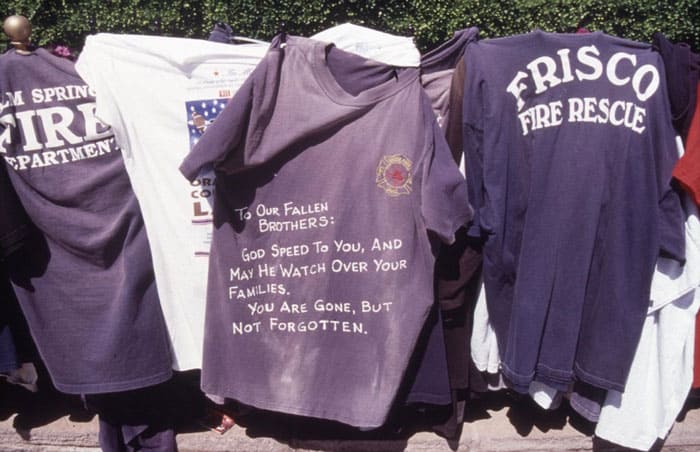
Print Method Cost Comparison
Print method selection is the single largest lever on annual profitability. The table below compares the four dominant decoration methods across the cost and margin dimensions that matter most to operators making equipment decisions.
| Print Method | Equipment Cost | Cost/Shirt (50 units) | Cost/Shirt (500 units) | Retail Price Range | Typical Gross Margin |
|---|---|---|---|---|---|
| Heat Press (HTV) | $300–$3,000 | $3.50–$6.00 | $2.50–$4.00 | $18–$30 | 55–70% |
| Screen Printing | $2,000–$15,000 | $8.00–$14.00 (incl. setup) | $2.00–$4.50 | $12–$25 | 50–75% |
| DTG Printing | $10,000–$30,000 | $5.00–$10.00 | $4.00–$8.00 | $20–$40 | 45–65% |
| Print-on-Demand | $0 | $12.00–$18.00 | $10.00–$16.00 | $20–$35 | 20–35% |
These margins assume retail pricing to end consumers. Wholesale and corporate account pricing compresses gross margin by 10 to 20 percentage points but increases order volume, which can improve aggregate net profit when production efficiency is high enough to offset the per-unit reduction.

Tactics That Push Margins Higher
Across profitable t-shirt operations, a consistent set of practices separates businesses that grow from those that plateau. These are not theoretical improvements. They appear repeatedly in operator case studies, industry forums, and small business profitability surveys.
Design Software and Workflow Efficiency
Design time is an invisible cost that most operators fail to account for accurately. A design that takes four hours to complete for a 12-shirt order adds $25 to $50 per shirt in effective labor cost at a modest $50 per hour valuation — frequently erasing the entire margin on the job. Operators who invest in design workflow systems and template libraries consistently report higher effective hourly rates and more predictable profitability.
- Vector-based tools — Adobe Illustrator, Inkscape, CorelDRAW — produce scalable artwork that works across all decoration methods without rework
- Template libraries for recurring order types (sports teams, corporate events, school organizations) dramatically cut per-order design time
- Digital order intake forms with built-in approval workflows reduce back-and-forth email time per job
- Pre-built mockup platforms allow faster client proofing and fewer revision cycles
Operators evaluating design options can consult PalmGear's roundup of the best free and paid apps for t-shirt print design, which covers both beginner-friendly and production-grade tools. The decoration method chosen also affects design workflow directly — screen printing requires color separations, while heat press and DTG accept full-color files without additional preparation steps.
Choosing the Right Sales Channel Mix
Channel selection produces a direct and measurable impact on annual net profitability. Local direct sales typically yield the highest effective margin — no platform fees, no shipping cost absorption, faster payment cycles, and lower return rates. Online marketplaces offer reach but extract 15 to 30% in fees and commissions before the operator receives payment.
- Local B2B accounts (gyms, restaurants, schools, nonprofits): predictable repeat orders, minimal marketing spend, near-zero return rate
- Event and market sales (craft fairs, pop-ups, trade shows): high margin per unit, high setup effort, seasonally concentrated revenue
- Branded online storefronts (Shopify, WooCommerce): scalable, requires sustained marketing investment or SEO development
- Third-party marketplace listings (Etsy, Amazon Merch, Redbubble): low barrier to entry, high competition, lowest net margins
Most consistently profitable operators run two or three channels simultaneously. Local B2B provides a revenue floor with predictable cash flow. Online channels provide growth upside and geographic reach. Operators who depend on a single channel report significantly higher revenue volatility and lower average annual net profit than those running hybrid distribution models.
Building a T-shirt Business That Compounds Over Time
The profitability trajectory of a t-shirt business is rarely linear. Year one typically covers equipment costs and establishes the first client base. Years two and three show the steepest profit growth as fixed costs are fully absorbed and repeat orders begin delivering operational efficiency gains. By year four or five, well-managed operations frequently report net margins of 30 to 45% — a level rarely approached in the first year regardless of how much the operator hustles.
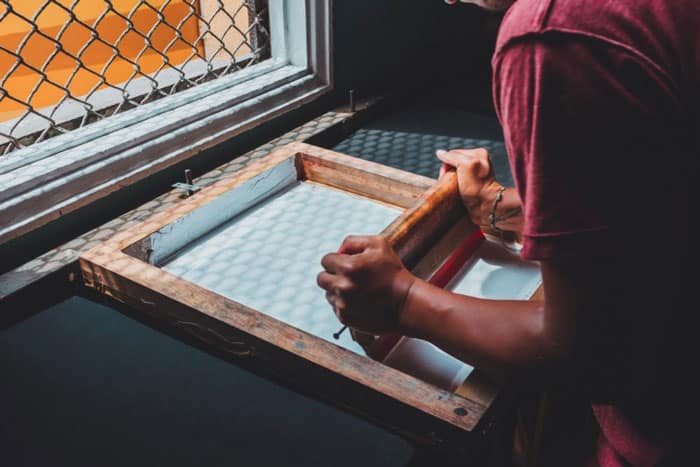
Repeat Customers and Brand Loyalty
Repeat customer revenue is the strongest single predictor of long-term profitability in the decorated apparel business. A sports league that orders 200 shirts per season and returns for three consecutive seasons generates more net profit than three separate first-time clients ordering the same quantity — because the second and third orders carry no design rework cost, no client education overhead, and no new quoting effort. The margin on a repeat order is structurally higher than an equivalent new order.
Strategies that drive repeat business:
- Quality consistency — customers return reliably when the delivered product matches the approved proof exactly
- Artwork file retention — keeping customer design files on record removes the primary friction from reordering
- Seasonal proactive outreach — contacting repeat accounts before their ordering window opens captures orders before competitors can bid
- Simple referral programs — a $15 credit toward a future order costs less than one hour of prospecting time on most platforms
Maintaining print quality on delivered garments directly influences referral volume. PalmGear's guide on retaining graphics on t-shirts covers the production practices and care instructions that keep customer shirts looking print-quality through repeated washing — a documented driver of word-of-mouth referrals.
Expanding the Product Line
T-shirt businesses that expand into adjacent decorated apparel — hoodies, hats, tote bags, aprons, socks — consistently report higher average order values without proportional increases in overhead. The decoration equipment is shared; the design assets are already produced; the customer relationship already exists. For heat press operators specifically, the same press that decorates t-shirts handles hoodies, bags, and flat substrates with minor fixture changes. The primary investment is additional blank inventory, not new capital equipment.
Operators tracking order value data report average increases of 20 to 40% after adding two or more adjacent product categories to their menu. The incremental cost to quote and produce a hoodie alongside a t-shirt order is minimal — the upsell success rate for existing customers typically runs between 30 and 50% when the pitch is made at order confirmation. The equipment requirements for specialty items like heat press socks follow the same shared-tooling logic. PalmGear's breakdown of heat press sock business equipment details what additional tooling that specific expansion requires.
Profit Myths the Industry Keeps Getting Wrong
Several persistent misconceptions about t-shirt business profitability circulate through online communities, beginner guides, and social media business content. These myths reliably lead operators to miscalculate their expected returns and make poor capital decisions in the startup phase.
The "Low Cost Equals High Profit" Fallacy
The assumption that cheaper blank garments automatically produce higher profits is one of the most costly errors in the custom apparel industry. Budget blanks often carry hidden costs: higher defect rates, customer complaints, reprint requests, and long-term brand erosion that reduces repeat order rates. The per-unit margin gained on a $1.50 cheaper blank is typically consumed within two or three reprints per 100 shirts produced.
Industry reporting consistently shows that operators using mid-tier blanks — Bella+Canvas, Next Level, Comfort Colors — report fewer customer complaints and meaningfully higher reorder rates than those using budget alternatives. The correlation between blank quality and long-term profitability is more significant than the correlation between blank cost and per-unit margin. Operators should also evaluate whether their equipment selection creates unnecessary costs. Questions such as whether a vinyl cutter is necessary for heat press operations are worth answering before purchasing — the wrong equipment combination can add fixed cost without adding production capability.
Online-Only Is Not Always Cheaper
The assumption that online-only t-shirt businesses carry lower overhead than local shops is frequently inaccurate at scale. A local shop paying $800 per month in studio rent runs at lower effective cost per shirt than an online store spending $1,500 per month on paid advertising to maintain equivalent revenue. The rent is fixed; the advertising cost scales with every order and rises with competitive pressure in the niche.
- SEO-driven online stores avoid per-click advertising costs — but require 12 to 24 months to build meaningful organic traffic volume
- Marketplace fees across Etsy transaction, payment processing, and advertising routinely reach 25 to 30% of the sale price
- Return rates on online apparel orders average 20 to 30%, substantially higher than local custom orders which typically run under 3%
- Free shipping expectations, now standard on most platforms, compress already thin online margins further and shift cost to the operator
For any complete analysis of how much profit does a t shirt business make in a year, the online versus local cost comparison must include all channel-specific costs — not just the absence of commercial rent. The net profit difference between a well-run local operation and a well-run online store is frequently smaller than new operators expect, and the local operation typically carries significantly less revenue volatility quarter over quarter.
Frequently Asked Questions
How much profit does a t shirt business make in a year on average?
The average solo t-shirt operation using a heat press or DTG printer generates between $30,000 and $75,000 in annual net profit after accounting for equipment costs, materials, and any platform fees. Mid-size screen printing shops with two to four employees typically clear $80,000 to $200,000 annually. These figures vary considerably based on print method, customer mix, geographic market, and whether the operator sells locally, online, or through a hybrid of both channels.
What is a good profit margin for a t-shirt business?
A gross margin of 50 to 70% is achievable for heat press and screen printing operations selling at retail pricing. Print-on-demand models typically yield 20 to 35% gross margin before platform fees. Net profit margin — after all overhead, labor, and marketing costs are deducted — typically lands between 20 and 40% for well-run operations. Operators consistently running below 20% net margin should audit their pricing structure, channel mix, or production efficiency before attempting to grow volume.
How many t-shirts does an operator need to sell annually to generate a living wage?
At an average net profit of $8 to $15 per shirt after all costs, an operator needs to sell between 3,300 and 6,200 shirts per year to generate $50,000 in annual net income. At 100 shirts per week — a realistic target for a full-time heat press or screen printing operator — that threshold is reachable within the first full operating year. Operators focused on higher-margin local and corporate accounts can reach the same income level with fewer shirts sold, since local pricing commands a 20 to 40% premium over online marketplace pricing.
The t-shirt business does not reward the cheapest setup or the most aggressive pricing — it rewards the operator who knows their real cost per shirt and builds every decision outward from that number.


About Alice Davis
Alice Davis is a crafts educator and DIY enthusiast based in Long Beach, California. She spent six years teaching textile design and applied arts at a community college, where she introduced students to everything from basic sewing techniques to vinyl cutting machines and heat press printing as practical, production-ready tools. That classroom experience means she has put more sewing machines, embroidery setups, Cricut systems, and heat press units through real project work than most reviewers ever will. At PalmGear, she covers sewing machines and embroidery tools, vinyl cutters, heat press gear, Cricut accessories, and T-shirt printing guides.
You can get FREE Gifts. Or latest Free phones here.
Disable Ad block to reveal all the info. Once done, hit a button below