RV Gear ›
RV Decorating Ideas to Make Your RV Feel Like Home
by Jake Mercer
Over 11 million U.S. households own an RV, and the average full-timer spends more than 150 nights per year inside one. That makes rv decorating ideas far more than an aesthetic exercise — your rig's interior directly affects sleep quality, productivity, and daily comfort on the road. The right upgrades transform a cramped rolling box into a functional, personalized living space. Whether you're outfitting a Class A motorhome or a compact travel trailer, browse our RV gear coverage for the full accessory picture. This guide covers every major surface, system, and storage zone — with hard comparisons, real examples, and the specific mistakes that cost owners the most time and money.

Contents
- What Every RV Owner Should Know Before Decorating
- The Best RV Decorating Ideas for Every Space
- Tools and Materials That Make RV Decor Projects Easier
- DIY vs. Store-Bought: A Direct Comparison
- Pros and Cons of Popular RV Decorating Choices
- RV Decorating Mistakes You Cannot Afford to Make
- Troubleshooting Interior Problems Before You Redecorate
What Every RV Owner Should Know Before Decorating
RV interiors operate under constraints that standard residential design ignores entirely. Before you buy a single throw pillow or wall panel, understand the structural and environmental limits your rig imposes. Skipping this step is how decorating projects turn into expensive do-overs.
Weight Limits and Load Capacity
Every RV has a Gross Vehicle Weight Rating (GVWR) printed on the driver's door jamb sticker. Decorative additions count against your payload budget. Heavy furniture, ceramic fixtures, and dense flooring materials all eat into that number directly.
- Calculate your current payload margin — GVWR minus current loaded weight — before purchasing any large decor item
- Prioritize materials rated under 2 lbs per square foot for all wall and ceiling treatments
- Use foam-core panels instead of MDF for lightweight partition walls or feature walls
- Replace factory-installed booth dinettes and bulky sofas with lighter custom-built alternatives to free up payload for other upgrades
- Weigh every significant purchase before installation — a simple bathroom scale eliminates guesswork
Moisture and Ventilation Constraints
RV walls are typically 2–3 inches thick. Moisture infiltration is the leading cause of interior deterioration. Any wall treatment you apply must allow vapor to pass or be fully sealed — half-measures accelerate rot faster than doing nothing at all.
- Avoid fabric wall treatments in humid climates unless rated mold-resistant
- Use closed-cell spray foam or foil-backed insulation behind any new wall panels
- Install a compact dehumidifier if you park in areas with relative humidity consistently above 60%
- Seal all cut edges of wood panels with water-based polyurethane before installation
Pro insight: Always resolve existing water damage before applying new surface treatments. Decorating over compromised substrate guarantees repeat failure within one season — and the repair cost doubles.
The Best RV Decorating Ideas for Every Space
The most effective rv decorating ideas treat the interior as three distinct zones: surfaces (walls, ceilings, floors), furniture and layout, and storage systems. Tackle them in that order — surface work first, furniture placement second, storage optimization third. This sequence prevents you from rearranging furniture twice.
Walls and Ceilings
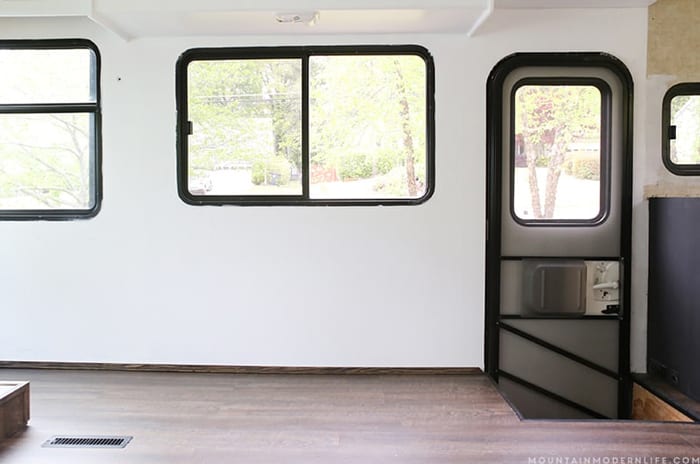
Painting delivers the highest return on investment of any surface upgrade. Factory wall panels are typically luan or thin MDF wrapped in vinyl — a substrate that accepts paint and adhesive equally well when properly prepared. Your three primary options:
- Peel-and-stick wallpaper: Repositionable, no primer needed, handles the slight curves of most RV wall panels. Cost: $0.50–$2.50 per square foot. Edges require a touch of clear contact adhesive in high-heat zones.
- Latex paint over vinyl: Requires a bonding primer (Zinsser BIN shellac-based or equivalent). Lightly scuff-sand the surface first, prime, then apply two coats of low-VOC interior latex. Dries hard enough to resist vibration cracking at highway speeds.
- Shiplap or tongue-and-groove panels: Hides damaged surfaces completely. Use 1/4-inch poplar or PVC trim boards — both are lightweight and dimensionally stable across humidity swings.
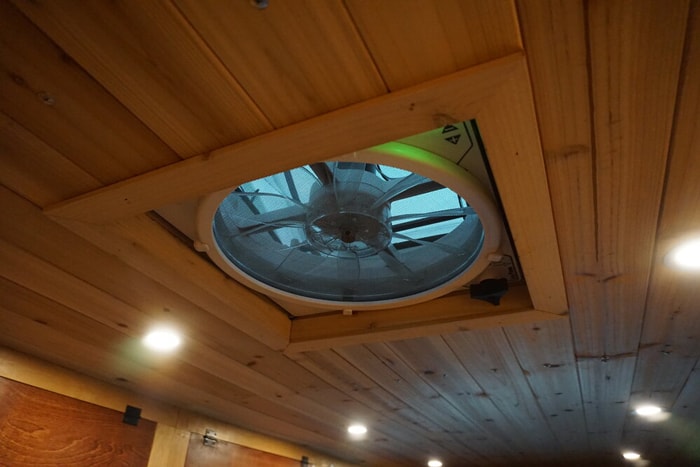
Ceiling treatments demand extra attention to weight. Beadboard panels at 1/8-inch thickness, painted white or cream, expand perceived headroom dramatically. Recessed LED strip lighting along ceiling perimeters achieves the same visual effect without adding any ceiling mass whatsoever.
Furniture and Layout
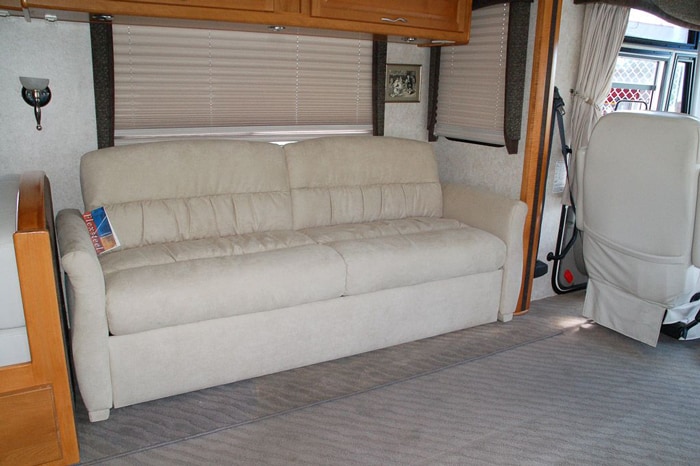
Factory dinettes and sofas consume disproportionate floor space relative to their utility. The single most effective layout change available: remove the booth dinette and replace it with a freestanding table and two lightweight folding chairs. You recover 8–12 square feet of usable floor area instantly — the equivalent of adding a small bedroom in residential terms.
- Use murphy-style beds or convertible sofa beds to collapse sleeping areas during the day
- Mount flat-screen TVs to articulating wall arms — eliminate entertainment center cabinets entirely
- Install floating shelves at eye level for books, plants, and display items
- Choose furniture with legs rather than platform bases — cleaning underneath stays manageable, and the room reads as larger
- Use ottomans with internal storage in place of coffee tables to capture hidden cubic footage
Kitchen and Storage
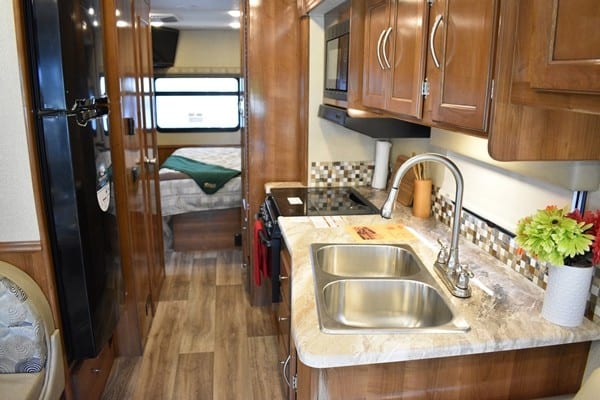
RV kitchen storage is notoriously underengineered from the factory. The fix is systematic:
- Install tension-rod dividers inside cabinet doors to hold cutting boards, pot lids, and baking sheets upright
- Add pull-out drawer organizers to base cabinets — friction-fit units require zero drilling
- Mount magnetic knife strips on backsplash walls to free drawer space for other tools
- Hang a pegboard panel above the counter for utensils, small pans, and modular spice racks
- Replace traditional cabinet hardware with flat pulls that don't protrude into walkways
For a curated list of storage accessories and kitchen upgrades that complement these rv decorating ideas, the roundup of best RV accessories covers 41 items across every zone of the rig.
Tools and Materials That Make RV Decor Projects Easier
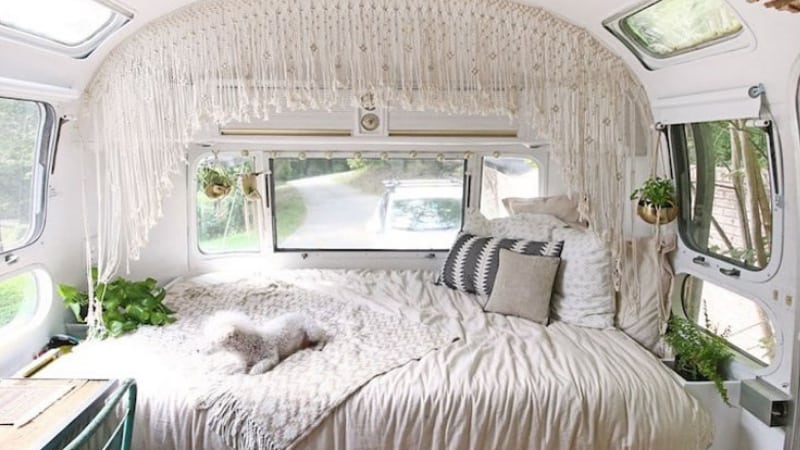
Professional results come from purpose-matched tools. RV interiors involve curved surfaces, thin substrates, and vibration-prone joints — the tool set differs from residential renovation in meaningful ways.
Adhesives and Fasteners
- 3M VHB tape (1/16-inch foam core): The most reliable adhesive for RV wall applications. Rated for 50 lbs per square inch. Survives −40°F to 300°F temperature cycling without delamination.
- Liquid Nails LN-950 (construction adhesive): Use for heavier panel work where mechanical fasteners can't penetrate the substrate safely
- Stainless steel Command screw hooks: Hang artwork, mirrors, and organizers without drilling into water lines or electrical runs hidden behind thin panels
- Stainless Phillips screws (#8, 1-inch): For structural fastening into metal ribs — avoid zinc-coated screws in humid environments where corrosion accelerates
- Fiberglass mesh tape + elastomeric caulk: Seal all seams at wall-to-ceiling and wall-to-floor transitions to block the moisture infiltration points that travel vibration opens over time
Vinyl and Craft Tools
Vinyl wall decals, custom cabinet wraps, and personalized signage rank among the most cost-effective rv decorating ideas per dollar spent. A cutting machine unlocks an entire category of DIY options that store-bought equivalents can't match for personalization. If you're new to vinyl craft work, the guide on how to apply heat transfer vinyl step by step covers the foundational technique. For projects using a Cricut machine — including custom RV interior decals and patterned cabinet wraps — the walkthrough on how to use a Cricut for heat transfer projects applies directly.
- Cricut Maker 3 or Silhouette Cameo 5 for precision cutting of adhesive vinyl and decorative film
- Weeding tool set for removing negative space from intricate cuts cleanly
- Medium-tack transfer tape for repositionable application of wall decals without surface damage
- Hard rubber squeegee for bubble-free application of large-format vinyl wraps on cabinet fronts and accent walls
DIY vs. Store-Bought: A Direct Comparison of RV Decor Approaches
The decision between doing it yourself and buying pre-made solutions affects cost, quality, installation time, and resale value. This table covers the most common categories head-to-head.
| Decor Category | DIY Approach | Ready-Made Solution | Cost Delta | Recommended Route |
|---|---|---|---|---|
| Wall treatment | Peel-and-stick wallpaper, painted panels | Pre-cut RV wall panel kits | DIY saves 40–65% | DIY — requires only a utility knife and level |
| Window coverings | Tension-rod curtains with blackout liner | RV-specific pleated shades | DIY saves 30–50% | Ready-made for slide-out windows (complex geometry) |
| Flooring | Peel-and-stick vinyl plank | Interlocking LVP with underlayment | DIY saves 25–45% | Ready-made LVP for high-traffic full-time rigs |
| Cabinet fronts | Adhesive vinyl wrap or spray paint | Replacement RV cabinet door sets | DIY saves 60–80% | DIY — factory dimensions are straightforward to match |
| Lighting | 12V LED strip retrofit | RV-specific fixture replacements | DIY saves 35–55% | Ready-made if not comfortable with 12V DC wiring |
| Storage systems | Friction-fit organizers, custom shelf builds | RV-branded storage products | DIY saves 20–40% | Ready-made for under-bed and slide-out cavity systems |
Pros and Cons of Popular RV Decorating Choices
Not every rv decorating idea delivers equal results across all rig types. Here is an honest, category-by-category assessment of the most popular options on the market.
Peel-and-Stick Wallpaper
- Pros: No primer required, repositionable for 30–60 days after installation, works on curved RV wall panels, wide design selection, easy to replace individual panels
- Cons: Edges lift in sustained heat above 85°F, requires a smooth substrate (factory vinyl seams telegraph through), premium brands cost $2+ per square foot
Vinyl Plank Flooring (LVP)
- Pros: Waterproof core, handles the temperature cycling of seasonal RV use, reads as premium, individual planks replace without full floor removal
- Cons: Adds 2–5 lbs per square foot — significant payload impact in smaller rigs. Requires a flat subfloor; RV floors commonly develop soft spots that need repair before installation.
12V LED Lighting Upgrades
- Pros: Largest atmosphere-to-cost ratio of any single upgrade ($15–$60 per zone), zero weight penalty, dimmable and color-tunable options widely available at 12V DC
- Cons: Requires basic 12V wiring knowledge, low-quality strips fail within 6–12 months, color temperature selection (warm vs. daylight) affects livability more than buyers anticipate
Warning: Never mount curtain rods or wall hardware directly into RV wall panel seams — fasten into structural studs or use tension systems exclusively. Seam-mounted hardware fails under travel vibration within weeks.
RV Decorating Mistakes You Cannot Afford to Make
The most expensive rv decorating ideas are the ones that require undoing. These errors show up repeatedly in RV forums, Facebook groups, and repair shop intake logs. They are preventable with basic due diligence.
Overloading with Heavy Decor
- Ceramic tile backsplashes — at 4+ lbs per square foot, a 12-square-foot backsplash adds 48 lbs before adhesive or grout. Use peel-and-stick subway tile instead (0.3 lbs per square foot).
- Solid wood floating shelves loaded with books — always calculate shelf weight plus maximum expected contents before wall-mounting
- Porcelain sink replacements — fiberglass or acrylic composite is the correct material class for RV wet areas
- Full-size residential appliances swapped in without payload verification — confirm the manufacturer's weight specs against your remaining margin before purchase
Ignoring Moisture Barriers
- Applying wallpaper directly to original vinyl without sealing cut edges — moisture wicks under unsealed edges, and delaminated substrate follows within one winter
- Using standard drywall joint compound for any patching — it's not rated for the movement and humidity cycles an RV experiences across seasons
- Skipping caulk at wall-to-floor transitions — this joint opens and closes with temperature cycling and becomes a primary water infiltration vector
- Choosing standard interior paint without a bonding primer on vinyl surfaces — paint adhesion fails within the first season without proper prep chemistry
Troubleshooting Interior Problems Before You Redecorate
No cosmetic rv decorating project succeeds long-term over unresolved mechanical or structural problems. Identify and fix these issues first — then redecorate on a solid foundation.
Climate Control Issues
An RV with a noisy, leaking, or unreliable air conditioner is an RV that's uncomfortable to live in regardless of how well the interior is finished. Resolve HVAC problems before surface work begins — otherwise you're opening walls you just decorated.
- If your rooftop unit rattles excessively at highway speeds or when running, work through the complete diagnostic in the RV air conditioner noise reduction guide before assuming full replacement is necessary
- Water staining on the ceiling near the rooftop unit indicates a gasket or flange seal failure — the RV air conditioner leaks when it rains guide covers every seal point and their specific failure modes
- If the unit cycles on and off irregularly without reaching set temperature, the RV A/C on-off cycling fix covers every likely cause from thermostat calibration drift to low refrigerant charge
Appliance and Kitchen Issues
Kitchen decor upgrades applied over a malfunctioning refrigerator are cosmetic patches over a structural problem. If your freezer runs normally but the fresh-food compartment doesn't cool, the fault is almost always the thermistor, cooling unit baffle, or absorption circuit — the full diagnostic is in RV refrigerator not working but freezer is. Resolve it before planning any kitchen refresh that involves moving the unit or rebuilding surrounding cabinetry.
Appliance issues also affect your decor timeline directly. A refrigerator that runs warm creates condensation. A leaking A/C creates ceiling staining. Fix the mechanical layer first, then design around what you have.
Next Steps
- Audit your RV's current payload margin using the GVWR sticker on the driver's door jamb — subtract your current loaded weight and establish exactly how many pounds of decorative material you can safely add before purchasing anything.
- Inspect all wall-to-ceiling and wall-to-floor seams with a moisture meter. Probe any visually soft or discolored areas. Repair compromised substrate completely before applying any surface treatment over it.
- Resolve any active HVAC or appliance issues documented in this guide — use the linked diagnostics for your specific symptom. Surface upgrades installed over mechanical problems require expensive removal and reinstallation.
- Choose one zone — kitchen, living area, or bedroom — and complete it fully before moving to the next. Partial improvements across multiple zones deliver lower satisfaction and higher total material cost than a fully finished single space.
- Photograph your interior before any work begins, and diagram all stud locations, wire runs, and plumbing lines on a reference sheet you keep on file — every future repair and upgrade will depend on this information.


About Jake Mercer
Jake Mercer spent twelve years behind the wheel as a long-haul trucker, covering routes across the continental United States and logging well over a million miles. That career gave him an unusually thorough education in CB radio equipment — he has tested base station antennas, magnetic mounts, coax cables, and handheld units in real-world conditions where reliable communication actually matters. After leaving trucking, Jake transitioned to full-time RV travel and has since put hundreds of RV accessories through their paces across national parks, boondocking sites, and full-hookup campgrounds from Montana to Florida. At PalmGear, he covers RV gear and accessories, CB radios, shortwave receivers, and handheld radio equipment.
You can get FREE Gifts. Or latest Free phones here.
Disable Ad block to reveal all the info. Once done, hit a button below