5 Sewing Quotes and Their Meaning for Beginners
by Alice Davis
A pile of tangled thread, a skipped stitch on a seam that should have been clean, a beginner on the verge of quitting — that scenario plays out in sewing rooms everywhere. What pulls those beginners back is rarely a new tutorial. It is a single, well-timed sentence. Understanding sewing quotes and their meaning gives beginners a mental framework that technical instructions alone cannot provide. This guide examines five of the most cited phrases in the sewing world, unpacks what they actually mean at the machine, and shows how to translate that wisdom into real, repeatable skill.
For a broader look at this craft, the PalmGear sewing and crafts section covers everything from basic stitching to advanced heat transfer and vinyl projects.
Contents
Instant Takeaways from Classic Sewing Quotes and Their Meaning
The most useful sewing quotes do not describe advanced techniques. They address mindset — the attitude that determines whether a beginner persists past early frustration or abandons the craft entirely. Each of the five quotes examined here maps directly to a repeatable, practical behavior at the machine.
"Measure Twice, Cut Once" — The Preparation Principle
The oldest adage in the craft is not about scissors or fabric. It is about the cost of impatience. Most beginner mistakes — crooked seams, wasted yardage, misaligned pieces — trace back to a single skipped step: the second measurement.
- Mark cutting lines with tailor's chalk before picking up shears
- Re-measure pattern pieces on the actual fabric, not just on paper
- Double-check grain line alignment before the first cut
- Verify that seam allowance markings on the fabric match pattern instructions exactly
That extra thirty seconds of verification routinely saves hours of seam ripping. Every experienced sewist has a horror-story cut that one additional measurement would have prevented. The quote is not poetry — it is a pre-flight checklist.
"A Bad Workman Blames Their Tools" — The Accountability Principle
This phrase appears in every skilled trade, and sewing is no exception. Beginners frequently attribute failed projects to their machine when the actual culprits are tension settings, needle choice, or bobbin winding technique. Developing a solid grasp of sewing machine tension adjustment is one of the first practical steps that puts this quote into action — correcting operator inputs before blaming the equipment.
The pattern is consistent among new sewists: the machine worked fine last session, now it is not. In most cases, something changed in setup — not in the machine itself. Debugging the operator is always the first diagnostic step.

The Equipment That Backs Up the Wisdom
Understanding sewing quotes and their meaning is only half the equation. The other half is having the right gear to act on that wisdom consistently. Inspiration without proper tooling produces frustration, not finished projects.
Matching Tools to the Task
Foundational equipment every beginner should have before starting a serious project:
- Quality sewing machine with adjustable tension and variable speed control
- Rotary cutter and self-healing mat — significantly more accurate than scissors for straight cuts
- Seam ripper — not optional, standard issue for every skill level
- Correctly wound bobbins — overfilled bobbins are a leading cause of thread jams and false tension readings
- Fabric-specific needles — universal needles dull quickly on dense weaves and stretch fabrics
- Pressing iron and seam roll — pressing open seams at each stage prevents compounding errors in garment assembly

Machine Maintenance as Applied Wisdom
The quote "take care of your tools and your tools will take care of you" applies directly to the sewing machine. Skipped cleaning cycles cause lint buildup that mimics tension problems, sending sewists down the wrong diagnostic path for hours. Consistent sewing machine repair and maintenance prevents the vast majority of issues beginners attribute to bad settings or inferior thread.
A practical maintenance schedule:
- Clean the bobbin area after every project — not just monthly
- Oil the machine per the manufacturer's cycle, typically every 8–10 hours of use
- Replace needles every 8 hours of sewing time or after each major project
- Inspect the presser foot alignment and throat plate for burrs monthly
- Store the machine covered to prevent dust accumulation in feed dog channels
Pro tip: A dull needle punches rather than pierces fabric. Skipped stitches on otherwise correct tension settings point to a needle problem first — not a thread or machine malfunction.
Separating Sewing Folklore from Fact
Several widely repeated phrases in the sewing community have been distorted into myths that actively harm beginner progress. Identifying these misconceptions is as valuable as absorbing the useful ones.
Myth: Only Talented People Can Sew Well
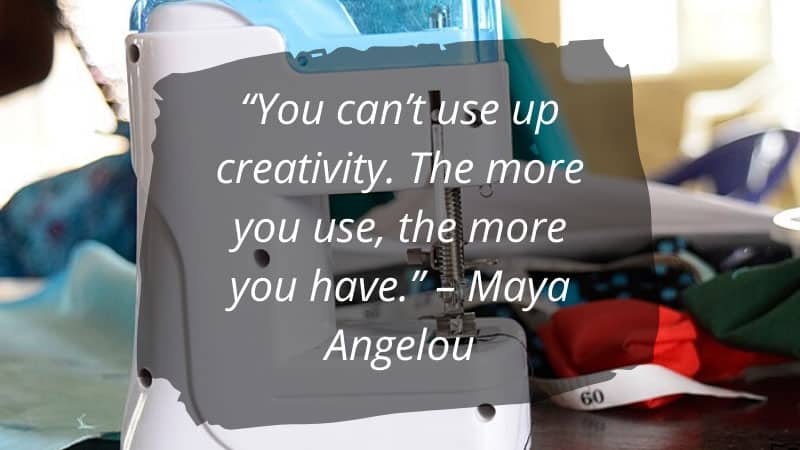
This is the most damaging misconception in beginner sewing circles. Sewing is a mechanical skill, not an artistic gift. Talent accelerates learning; it does not replace it. The Maya Angelou quote that circulates widely in crafting communities — "You can't use up creativity. The more you use, the more you have" — directly counters this myth: creative capacity grows through use, not through waiting for it to arrive naturally.
Research on skill development, including work covered in Wikipedia's overview of deliberate practice, consistently shows that focused, corrective repetition outperforms raw aptitude in producing competence. Sewing is no exception.
What actually predicts sewing progress:
- Hours of deliberate practice with specific, measurable technique goals per session
- Willingness to rip out and redo — not pushing through clearly bad work
- Practicing on varied fabric types to build genuine adaptability
- Following patterns precisely before attempting free-form modifications
Myth: Expensive Machines Produce Better Results
A $2,000 machine in the hands of someone who does not understand thread tension produces worse results than a $200 machine in the hands of someone who does. Understanding sewing quotes and their meaning always points back to the operator. High-end machines offer genuine convenience — automatic needle threading, wider stitch libraries — but they do not compensate for skipped fundamentals.
| Machine Category | Price Range | Best For | Key Limitation |
|---|---|---|---|
| Entry-Level Mechanical | $100–$200 | Basic garments, learning core stitches | Limited stitch variety |
| Mid-Range Computerized | $300–$600 | Quilting, diverse fabric types | Steeper initial learning curve |
| Advanced Computerized | $700–$1,500 | Embroidery, high-volume home use | Overkill for most beginners |
| Industrial | $1,500+ | High-volume production, thick materials | Not suited for home use |

Warning: Upgrading equipment before mastering the current machine delays skill development. Most sewists who believe they "need" a better machine actually need more focused hours at the one they already own.
Applying Sewing Quotes and Their Meaning to Daily Practice
The gap between knowing a sewing quote and benefiting from it is bridged by consistent, structured practice. Motivation from a well-chosen quote lasts hours; the habits it inspires last years.
Building a Repeatable Practice Routine
Deliberate practice — not casual stitching — produces measurable skill. A focused thirty-minute session with a defined goal outperforms two hours of unfocused project work almost every time.
- Set a single technique goal per session: consistent seam allowance, smooth curved cuts, or even topstitching
- Sew sample swatches before working on final project fabric — always
- Keep a fabric scrap journal: stitch test squares with machine settings noted directly on the swatch in permanent marker
- Review finished seams under good task lighting before advancing to the next step
- End each session with a two-minute cleanup: lint removal, needle check, bobbin rewind if needed
For sewists who also work in vinyl and iron-on crafts, the same discipline applies across tools. Layering heat transfer vinyl for multi-color designs demands the same patience and test-before-commit approach that mastering seam work requires. Anyone working on personalized garments also benefits from understanding glitter HTV versus regular HTV — material choice shapes the entire project outcome, just as fabric choice shapes every sewing decision from the start.
Documenting Progress Effectively
Consistent documentation separates hobbyists from those who steadily improve. A simple project log — fabric type, machine settings, problems encountered, solutions found — creates a personal reference that no external tutorial can replicate.
Over time, clear patterns emerge: which tension settings cause puckering on stretch fabric, which needle sizes handle denim without skipping, which thread brands behave differently at higher speeds. That log becomes the most useful single sewing resource in the room. No tutorial is personalized; a personal log is nothing but.

When Good Sewing Advice Leads to Common Mistakes
Even accurate sewing quotes and their meaning can be misapplied. The wisdom is always contextual — what holds true for one situation breaks down in another, and knowing the difference is itself a form of skill.
Misapplying "Just Keep Going"
Perseverance is a genuine virtue in sewing — until it becomes an excuse to ignore a visible, diagnosable problem. Beginners who push through obvious tension issues, hoping the fabric will compensate, embed the error deeper into the project. A crooked seam at inch three does not straighten by inch ten.
Common signals that stopping is smarter than continuing:
- Consistent thread bunching on the underside — a bobbin tension issue, not a temporary anomaly
- Fabric puckering on straight seams — presser foot pressure or needle size mismatch
- Skipped stitches every few inches — needle replacement needed, not repositioning
- Thread breaking repeatedly at the same point in the stitch cycle — a burr on the needle plate or tension disc
For recurring machine problems that resist the obvious fixes, a methodical diagnostic approach similar to the framework used for common heat press problems works well — isolate one variable at a time, test, document the result. The logic transfers directly whether the tool is a press or a sewing machine. Anyone who has also worked through Cricut heat transfer projects recognizes the same principle: chase variables one at a time, never two at once.
Over-Relying on "Good Enough"
"Done is better than perfect" motivates creative momentum in many contexts. In sewing, applying it to structural elements causes long-term problems. A "good enough" tension setting that works on cotton fails on satin. A "good enough" seam allowance that holds on straight hems collapses on curves under any stress.
The same standard applies when branching into complementary crafts. Reviewing a solid heat press pressure settings guide before pressing a garment is the same discipline as rechecking tension before sewing a final seam — precise inputs produce professional results. Approximate inputs produce returns.
Insight: Reserve "good enough" for decorative and aesthetic decisions. On structural seams, thread tension, and cutting accuracy, precision is the baseline — not a perfectionist ideal reserved for competition work.
Frequently Asked Questions
What is the most famous sewing quote?
"Measure twice, cut once" remains the most widely recognized sewing quote, and its meaning is direct: preparation prevents costly mistakes. It applies not just to cutting fabric but to every decision made before the machine starts running — tension checks, needle selection, and grain line verification included.
Why do sewing quotes and their meaning matter for beginners?
Beginners encounter discouragement before they develop enough skill to see clear forward progress. Sewing quotes provide a compact mental framework that keeps practitioners focused on long-term habits rather than short-term frustration. They function as compressed wisdom from experienced sewists, passed forward in a form that sticks.
How does "practice makes perfect" apply to sewing specifically?
In sewing, the phrase means deliberate, focused repetition on specific techniques — not mindless repetition. Practicing the same incorrect tension setting for hours reinforces a mistake. Targeted practice with immediate feedback, such as swatch tests with varied settings and documented results, is what produces measurable improvement session over session.
Can sewing wisdom transfer to heat press and vinyl crafts?
Directly. The discipline of measuring before cutting, testing before committing to final materials, and diagnosing problems methodically applies equally to heat transfer work. Many crafters find that strong foundational habits from sewing make learning heat press techniques faster and significantly less error-prone from the start.
What does Maya Angelou's creativity quote mean for sewists?
"You can't use up creativity. The more you use, the more you have" counters the fear that making mistakes depletes creative potential. In sewing, it encourages experimentation without anxiety. Every flawed project builds knowledge and confidence rather than subtracting from some finite creative reserve.
Is machine maintenance actually connected to the wisdom in sewing quotes?
Directly. The principle "take care of your tools and your tools will take care of you" has concrete practical implications for sewing machines. Regular cleaning and oiling prevent the majority of mid-project failures that beginners attribute to bad luck, inferior thread, or operator error when the real cause is a dirty feed dog or lint-packed bobbin case.
How should beginners respond when a sewing project goes wrong mid-seam?
Stop, isolate the specific problem, and correct it before continuing. Pushing through visible issues embeds errors deeper into the project and makes them harder to diagnose later. Seam rippers exist for a reason — using one at the right moment is a mark of skill, not a sign of failure.
What is the most effective way to apply sewing wisdom from quotes to real projects?
Translate each quote into a concrete, repeatable behavior. "Measure twice, cut once" becomes a pre-cut checklist. "Practice makes perfect" becomes a dedicated swatch session before every project. Attaching abstract wisdom to specific behaviors is what makes sewing quotes and their meaning actionable rather than merely decorative.
The best sewing quote is the one that gets translated into a daily habit — wisdom that stays on the wall changes nothing; wisdom that moves to the workbench changes everything.


About Alice Davis
Alice Davis is a crafts educator and DIY enthusiast based in Long Beach, California. She spent six years teaching textile design and applied arts at a community college, where she introduced students to everything from basic sewing techniques to vinyl cutting machines and heat press printing as practical, production-ready tools. That classroom experience means she has put more sewing machines, embroidery setups, Cricut systems, and heat press units through real project work than most reviewers ever will. At PalmGear, she covers sewing machines and embroidery tools, vinyl cutters, heat press gear, Cricut accessories, and T-shirt printing guides.
You can get FREE Gifts. Or latest Free phones here.
Disable Ad block to reveal all the info. Once done, hit a button below