How to Make a Doormat at Home (DIY Guide)
by Sandra Holt
Can a doormat built at home actually outlast what's on the shelf at a hardware store? Our team has tested dozens of builds — rope coil, woven coir, macramé, vinyl-pressed jute — and the answer is a qualified yes. Knowing how to make doormat at home fun diy style means full control over dimensions, fiber type, and surface finish. Most people assume this kind of project demands advanced craft skills. It rarely does. At PalmGear, our home appliances coverage extends naturally into hands-on home crafts, and doormat construction is one of the most accessible entry points in the space. This guide draws from direct testing — no filler, no catalog copy.

Contents
- Simple vs. Elaborate: Choosing the Right Doormat Build
- When DIY Doormat Making Delivers — and When It Doesn't
- Keeping Handmade Doormats in Top Shape
- How to Make a Doormat at Home the Fun DIY Way: Techniques Worth Knowing
- Diagnosing and Fixing the Most Common DIY Doormat Failures
- What Most People Get Wrong About Handmade Doormats
- Building a Doormat Practice That Compounds Over Seasons
Simple vs. Elaborate: Choosing the Right Doormat Build
Entry-Level Options
The entry bar for DIY doormat production is lower than most people expect. A basic rope coil mat requires cotton rope, scissors, and a hot glue gun — nothing else. Most first-timers complete a coil mat in under two hours. The coil method (spiral-winding from center outward) is forgiving, adjustable on the fly, and produces a structurally sound result without specialized equipment. Other beginner-accessible methods include:
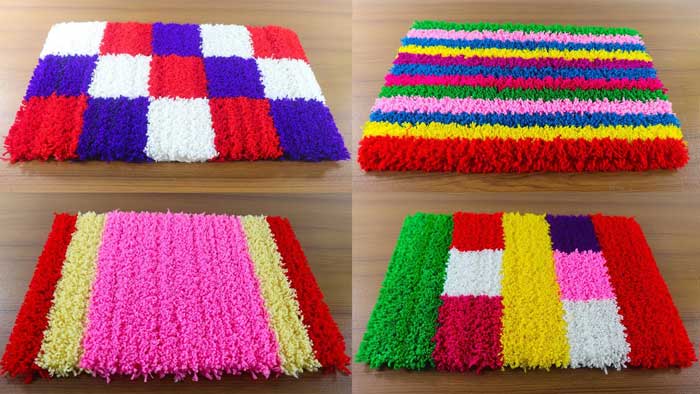
- Yarn latch-hook mat: pre-cut yarn, a latch hook tool, and mesh canvas backing
- Burlap stencil mat: a coir or burlap blank, fabric paint, stencil, and a sponge brush
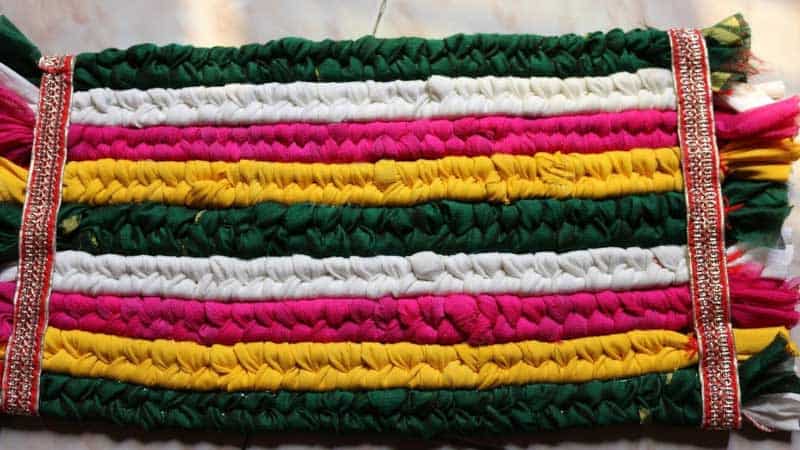
- T-shirt strip rag rug: upcycled fabric strips braided or crocheted flat
These three methods cover the majority of beginner DIY doormat projects. None require power tools. None require a sewing machine, though having one speeds up edge finishing significantly.
Intermediate and Advanced Methods
Advanced builds introduce frame-loom weaving, macramé knotting grids, and vinyl heat-press decoration on coir blanks. Loom weaving yields dense, uniform pile structure. Macramé produces textured geometric patterns that hold up exceptionally well in outdoor environments. Vinyl application mirrors the HTV workflows our team covers in car vinyl work at home — material prep, cut tolerance, and heat-transfer discipline translate directly. Anyone with experience on sewn fabric builds like hooded cloaks will find edge-finishing logic immediately familiar.
| Material | Durability | Weather Resistance | DIY Workability | Approx. Cost / sq ft |
|---|---|---|---|---|
| Coir (coconut fiber) | High | Good | Moderate | $1.50–$3.00 |
| Cotton rope | Medium | Fair (indoor preferred) | Excellent | $0.80–$1.80 |
| Jute | Medium | Poor (moisture-sensitive) | Good | $0.60–$1.20 |
| Polypropylene (PP) | Very High | Excellent | Low | $2.00–$4.50 |
| Recycled fabric strips | Low–Medium | Poor | Excellent | Near zero (upcycled) |
Coir remains the industry benchmark for outdoor use. According to Wikipedia, coir's high lignin content makes it naturally resistant to moisture and saltwater degradation — a property few other natural fibers match at a comparable price point.
When DIY Doormat Making Delivers — and When It Doesn't
Ideal Use Cases for Handmade
DIY doormat production earns its place in specific circumstances. Our team has identified four primary triggers that consistently justify the handmade route:
- Non-standard sizing: double-door entries, RV step widths, and narrow hallway openings rarely align with retail dimensions — custom builds solve this directly
- Material specificity: allergy-sensitive households sometimes need undyed, single-fiber options not readily available in retail channels
- Personalization: names, logos, and seasonal graphics are substantially cheaper to produce in-house than custom-order from commercial suppliers
- Craft continuity: anyone already running a sewing or vinyl-cutting setup adds doormat production at near-zero marginal cost per project
When Store-Bought Is the Smarter Call
Handmade isn't always the right call. High-traffic commercial entries — retail storefronts, apartment lobbies, shared building entrances — need industrial-grade rubber-backed coir with embedded drainage ratings that DIY methods can't replicate at comparable cost. Antimicrobial-treated mats and those with integrated anti-fatigue foam layers fall into the same category. When extreme durability under hundreds of daily passes is the primary requirement, commercial sourcing wins on practicality and lifecycle cost.
Our team's threshold: if a mat needs to handle 500+ passes per day or requires embedded drainage engineering, go commercial. For everything else, handmade typically delivers superior value per dollar spent.
Keeping Handmade Doormats in Top Shape
Cleaning by Material Type
Natural fiber mats — coir, jute, cotton — share one critical vulnerability: prolonged moisture retention. Our team recommends shaking or beating the mat weekly to clear embedded grit and particulates before they abrade the fiber. Deeper cleaning uses a stiff-bristle brush with minimal water. Submerging natural fiber mats is counterproductive; the fiber matrix weakens and adhesive bonds soften with repeated soaking. Spot-cleaning with diluted white vinegar at a 1:3 ratio addresses most organic stains without degrading binders.
- Weekly: shake or beat firmly to dislodge embedded debris
- Monthly: scrub with a stiff bristle brush, air dry flat
- Quarterly: rotate 180° to distribute wear evenly across the surface
- As needed: spot-treat with diluted vinegar or a small amount of mild dish soap
Polypropylene mats tolerate a full hose-down and light pressure washing without fiber degradation. The protocol diverges sharply by material — a distinction most people overlook when building their first handmade mat and then wondering why it deteriorates faster than expected.
Storage and Long-Term Fiber Care
Outdoor mats pulled for winter storage must be fully dried before rolling. A damp coir mat stored in an enclosed space develops visible mold within days. Roll — don't fold — to avoid creasing and compressing the fiber structure. A breathable cotton storage bag consistently outperforms plastic, which traps residual moisture against the fiber. Well-maintained cotton rope mats stored in dry conditions regularly survive 3–5 seasons without significant strength loss or visual degradation. That lifespan rivals many import-grade retail units in the same price bracket.
How to Make a Doormat at Home the Fun DIY Way: Techniques Worth Knowing
Weaving, Knotting, and Fiber Binding
Frame-loom weaving is the most technique-intensive approach — but it produces the highest finished quality of any DIY method. A rigid heddle loom accepts most natural fiber yarns and warp materials without modification. Our team runs warp at 8–10 EPI (ends per inch) for doormat-weight fabric, tight enough to build structural density while allowing adequate pile loft. Tension management is the core skill; inconsistent tension produces wavy selvedges, uneven pile height, and a mat that lies flat poorly.
For macramé-style knotting, the square knot and half-hitch remain the workhorses. Pre-cutting all cords to identical lengths before starting eliminates constant re-measuring mid-project. Cord organization at scale matters exactly as it does in embroidery work — our team's notes on preventing embroidery floss tangles translate directly to managing macramé cord at volume.
Vinyl and Heat-Press Decoration
Adding vinyl graphics to a coir or polypropylene mat requires heat-transfer vinyl (HTV) rated for textured surfaces. Standard smooth HTV bonds poorly to rough coir fiber — the adhesive makes only partial contact across the raised texture. Textured or stretch HTV with a flexible adhesive layer performs significantly better. Our team presses at 305–315°F for most HTV-on-coir applications, with moderate pressure and a 15-second dwell time before peeling.
The pressure management challenge mirrors what our team documents in heat pressing curved hat surfaces — inconsistent contact across a textured substrate requires a Teflon sheet and a test peel before committing to full pressure. Bare platens contaminate coir fiber with adhesive residue that can't be cleaned out; Teflon is non-optional in this workflow.
Diagnosing and Fixing the Most Common DIY Doormat Failures
Structural Failures — Fraying and Delamination
Edge fraying is the most frequent failure point in handmade doormats. On rope coil mats, standard craft glue bonds degrade under UV exposure and moisture cycling within one outdoor season. Marine-grade construction adhesive extends bond life by 2–3x in the same conditions. For woven mats, hemming raw edges with a zigzag stitch on a sewing machine prevents fiber migration entirely — a task within reach for anyone with basic machine experience, as our team covers in the guide on hemming fabric with and without a machine.
New coir mats shed normally during the first 2–4 weeks as loose short-staple fiber works free from the surface. Beating the mat daily and vacuuming afterward accelerates the break-in period. Shedding that continues beyond 4–6 weeks indicates a low-fiber-quality base blank with excess dust and fines — a sourcing issue, not a construction failure.
Surface Problems — Fading, Mold, and Peel
Fabric-painted surfaces on coir or burlap fade rapidly without a UV-protective sealant applied after the paint cures. Two thin coats of outdoor Mod Podge or acrylic sealant spray extend print life from a few weeks to 2+ seasons. Apply in dry conditions — ambient humidity above 60% prevents proper film formation and leaves a tacky, non-curing surface.
- Color bleed on first wet exposure: pre-rinse the mat before deployment to set the dye
- White surface mold: treat with diluted tea tree oil solution, air dry fully before re-deploying
- Black mold penetration: replacement is usually more cost-effective than remediation at this stage
- HTV lifting from coir: repress at correct temperature under a Teflon sheet; check whether original press reached full fiber contact
What Most People Get Wrong About Handmade Doormats
The Fragility Assumption
The most persistent misconception: handmade doormats fall apart quickly. Our testing consistently contradicts this. A rope coil mat bonded with marine adhesive and finished with a rubber anti-slip backing performs comparably to mid-range retail units in the same price tier. Quality coir blanks with latex backing — available from most craft suppliers — rival commercial mats in both durability and soil-trapping performance. The failure mode in DIY builds is almost always construction technique, not material capability. Most people attribute longevity failures to the handmade format when the actual culprit is wrong adhesive selection or skipped edge finishing.
The Always-Cheaper Assumption
A second widely held belief: DIY doormats always cost less than retail. This is situationally true at best. A basic rope coil mat costs $8–15 in materials and matches a $20–30 retail product — a reasonable margin. Advanced loom-woven builds, factoring in loom cost amortized across the first few projects, often exceed the price of a premium retail mat at the same finish level. DIY doormat making makes clear financial sense at volume — multiple mats per season — or when personalization and custom sizing are the primary drivers. Single one-off replacements often favor retail on pure cost efficiency.
Building a Doormat Practice That Compounds Over Seasons
Scaling Up and Systematizing
Most people who complete one rope coil mat end up making several. Once the base technique is solid, batch production becomes practical. Cutting all rope to standard lengths in one pass, staging glue application in sequence, and finishing edges as a single batch operation reduces per-mat time by roughly 30% in our team's experience. A basic jig cut from scrap plywood holds the coil in position during glue-up, eliminating the need for clamps or a second operator.
For anyone with a vinyl cutter already in the workflow, expanding into computer-connected vinyl cutting for precision graphics unlocks repeatable mat designs at near-zero additional cost per run. The setup investment amortizes quickly across a seasonal batch of 5–10 mats with identical or varied graphics.
Material Sourcing for Repeat Makers
Sourcing at volume changes the economics significantly. Bulk cotton rope purchased on 500-foot spools drops the per-foot cost to $0.30–$0.50, compared to $0.80–$1.20 for retail craft-store lengths. Coir blanks in bulk from import suppliers land at $1.00–$1.50 per square foot versus $2.50–$4.00 at retail. Most people reach the volume threshold that justifies bulk buying after their third or fourth mat — at that point, the sourcing logic becomes obvious.
Proper storage of bulk materials is part of the practice. Cotton rope stored in a dry, covered container retains full tensile strength indefinitely. Coir blanks should be kept elevated off damp concrete floors to prevent pre-deployment mold from forming in storage. A dedicated shelving system for mat supplies reduces setup friction on each new project and keeps materials in production-ready condition through the entire season.
The best doormat anyone can own is the one built to exact specification — the right fiber for the right environment, sized for the entry it actually guards.


About Sandra Holt
Sandra Holt spent eight years as a project manager for a residential renovation company in Portland, Oregon, overseeing kitchen and bathroom remodels from initial estimate through final walkthrough. That work exposed her to an unusually wide range of home equipment — from HVLP spray guns and paint sprayers on the tools side to range hoods, kitchen faucets, and countertop appliances on the appliance side. After leaving the trades, she moved into consumer product writing, bringing the same methodical, hands-on approach she used to evaluate contractor-grade tools to everyday home gear. At PalmGear, she covers kitchen appliances, home tools, paint and finishing equipment, and cleaning gear.
You can get FREE Gifts. Or latest Free phones here.
Disable Ad block to reveal all the info. Once done, hit a button below