Is It Possible To Have a Double-Sided (T-shirt) Quilt?
by Alice Davis
What happens when two equally meaningful shirt collections compete for the same quilt? Is it possible to have a double sided t shirt quilt that fully showcases both without sacrificing structural integrity? The answer is a definitive yes. Double-sided construction places two complete graphic quilt tops around a single batting core, producing a reversible textile that reads as fully finished on both faces. The technique demands more precision than standard single-sided builds, but the result — a wearable archive of two separate personal histories — justifies every added step. Explore the full sewing and crafts category for companion guides on preparation, materials, and machine setup.
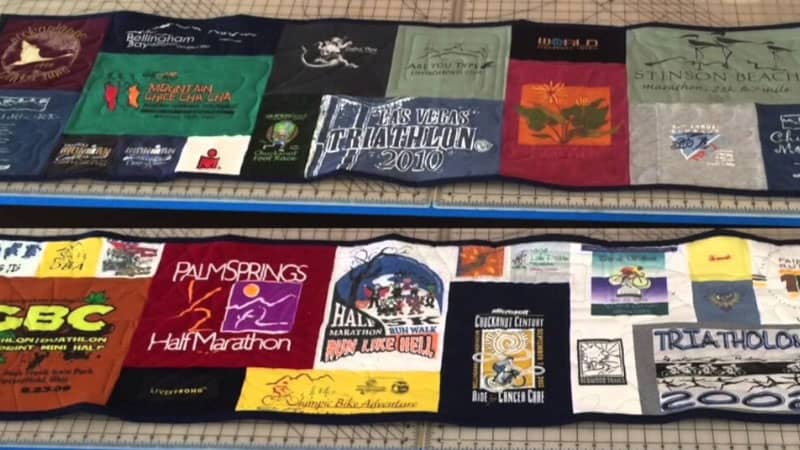
Single-sided quilts dominate the market because they are simpler to produce. But makers holding two meaningful shirt collections gain real advantages from double-sided construction: doubled storytelling surface, increased finished weight for cold-weather use, and a premium presentation that a plain fleece backing cannot replicate. The key variables — fabric weight compatibility, batting selection, and alignment accuracy — are controllable with the right preparation. When those variables are managed correctly, a finished double-sided t-shirt quilt is indistinguishable in quality from any professional output.
Contents
Double-Sided vs. Single-Sided: What the Numbers Show
The structural comparison between double-sided and single-sided t-shirt quilts comes down to four factors: layer composition, finished weight, construction time, and alignment tolerance. Understanding these tradeoffs before the first cut prevents mid-project corrections that compromise the final product.
Construction Fundamentals
A standard single-sided t-shirt quilt uses three layers: a graphic quilt top made from shirt blocks, a batting layer, and a plain backing fabric. A double-sided quilt replaces the plain backing with a second complete graphic quilt top. The layer count stays at three — but both outer surfaces carry intentional design.
The critical operational difference is alignment tolerance. With a plain backing, minor layer shifts go unnoticed. With a second graphic top, misalignment appears on both finished faces. Makers typically use spray basting adhesive or hand basting stitches to lock all three layers before any machine quilting begins. Precision compounds — a small misalignment at the center of a king-size quilt becomes a visible half-inch drift at the perimeter.
Proper block preparation is essential before cutting. Knowing how to properly reuse and prepare cotton t-shirts — including pre-washing to remove residual sizing, stabilizing with fusible tricot interfacing, and squaring blocks to exact dimensions — prevents the dimensional distortion that double-sided construction amplifies. Every inconsistency in block prep shows on both quilt faces simultaneously.
Material Weight and Batting Selection
Batting choice is the most consequential single decision in a double-sided build. The batting sits between two jersey layers, both of which carry inherent stretch. A cotton/polyester blend batting at an 80/20 ratio provides the stability needed to keep the sandwich flat without creating stiffness. Pure polyester batting tends to migrate laterally over time when sandwiched between jersey faces — a slow-motion failure that becomes obvious after a year of use.
| Feature | Single-Sided Quilt | Double-Sided Quilt |
|---|---|---|
| Layer composition | Graphic top + batting + plain backing | Graphic top + batting + graphic back |
| Finished weight (throw size) | 2.5–3.5 lbs | 3.5–5 lbs |
| Construction time | 8–12 hours | 14–20 hours |
| Alignment precision required | Moderate | High — both tops must match exactly |
| Recommended batting | Any weight acceptable | Low-loft 80/20 cotton-poly blend only |
| Binding width | Standard 2.5 in. binding strip | Wider 3 in. binding to cover both tops cleanly |
| Interfacing requirement | Standard — 1 yd per shirt | Doubled — both tops require full stabilization |
Pro tip: Cut both quilt tops to identical final dimensions before layering — even a quarter-inch discrepancy between the two faces compounds across the quilt and produces a visible border shift at every finished edge.

Is It Possible to Have a Double-Sided T-Shirt Quilt — and Should You?
The technical possibility is established. The practical question is whether double-sided construction serves the specific project at hand. Not every shirt collection or use case benefits from the added complexity and time investment.
Projects That Justify Double-Sided Construction
Double-sided quilts make the most sense when:
- Two shirt collections of roughly equal emotional weight exist — a sports career on one face, a concert history on the other
- The finished quilt needs to function as both a wall display and a functional throw
- The combined shirt collection is too large for a single quilt face without downsizing blocks below a readable graphic size
- The project is a premium gift where the craft investment signals the significance of the occasion
- Climate versatility matters — a heavier, reversible quilt adapts to different seasonal contexts without requiring two separate projects
Graduated layout quilts — where one face features large hero-graphic blocks and the reverse uses smaller accent pieces from the same collection era — are a particularly effective format. The two faces reinforce each other thematically without competing for visual dominance. This approach works especially well for milestone quilts built across a decade of shirts from a single team or band.
Machine setup is foundational before committing to any double-sided project. Understanding how to thread a Brother sewing machine correctly, and using a ballpoint 90/14 needle for jersey, prevents the skipped stitches that compromise seam integrity through thick, multi-layer sandwich sections.
When Single-Sided Is the Smarter Choice
Single-sided construction is the correct call in these scenarios:
- Only one cohesive shirt collection exists — forcing a second top creates a visually incoherent reverse face that undermines the whole project
- The two collections carry significantly different fabric weights — mismatched jersey weights cause chronic puckering at block intersections
- Deadline pressure is real — double-sided builds require roughly 60–70% more construction time than comparable single-sided quilts
- Shirts include heavily embroidered graphics — embroidery adds localized bulk that disrupts the flat batting layer and creates lumps visible on the opposite face
- Budget constraints limit batting purchase to a standard roll — the specialty low-loft batting required for double-sided builds costs more per yard and is not always available locally
For shirts carrying embroidered patches or logos, knowing how to remove embroidery from shirts and jackets before cutting blocks resolves the bulk problem entirely. Removing embroidery from candidate pieces makes them viable for either quilt face without creating pressure points in the finished sandwich.
Creative Applications for Double-Sided T-Shirt Quilts
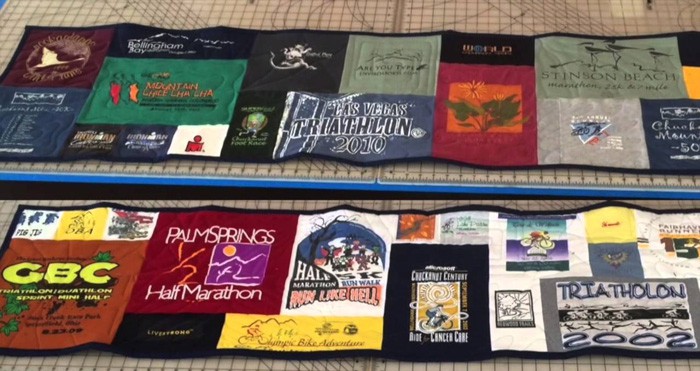
Double-sided t-shirt quilts occupy a distinct creative category. They are not simply functional textiles — they are curated archives of two intersecting personal histories, presented as a single reversible object. The applications range from intimate memorial projects to practical everyday household items.
Memory Quilts and High-Impact Gifts
The most common high-stakes application is the memorial or milestone gift. A double-sided quilt built from a deceased family member's shirts — organized by decade on one face and by relationship on the other — delivers a tactile archive that photographs cannot replicate. According to Wikipedia's history of quilts, these textiles have functioned as memory objects across cultures for centuries. The double-sided format extends that tradition directly into the graphic-tee era, honoring collections that would otherwise be stored in boxes.
Graduation quilts are another proven application. High school athletic jerseys on one face, college event shirts on the other — the quilt physically maps a transition between two life chapters. The recipient displays either narrative depending on context, without needing two separate quilts to tell the full story.
Makers who want to add custom graphics to filler blocks or blank shirts before assembly should review how to screen print t-shirts at home. Screen-printed custom blocks — names, dates, or coordinating imagery — fill visual gaps in a collection and reinforce the quilt's thematic thread without compromising the authenticity of the original shirts.
Functional Everyday Applications
Beyond gifts, double-sided quilts serve concrete practical purposes in daily use:
- Seasonal reversibility: A heavyweight double-sided quilt used for winter warmth flips to a visually lighter graphic face for spring and summer display
- Pet protection: The reverse face absorbs pet contact and debris, preserving the primary graphic surface for display without constant washing
- Child and toddler quilts: Age-appropriate graphics on both faces grow with the child — cartoon characters on one side, text-based milestone graphics on the other
- Photography backdrops: Hung vertically, the quilt provides two distinct textured graphic backgrounds for product or portrait photography sessions
- Travel blankets: The added mass of double-sided construction provides meaningful warmth without requiring a separate blanket for RV road trips or long flights
For makers adding iron-on or HTV graphics to blank filler blocks, using the correct dimensions prevents the stiff, cracked look that undermines the handmade aesthetic. The HTV size chart provides exact sizing references for shirt blocks across standard quilt formats — a critical reference before committing graphics to cut fabric.
Warning: Never use a double-sided t-shirt quilt as an outdoor ground cover — extended UV and moisture exposure degrades jersey knit faster than woven fabrics, and moisture trapped between layers promotes mildew growth in the batting core.
Washing and Caring for a Double-Sided Quilt
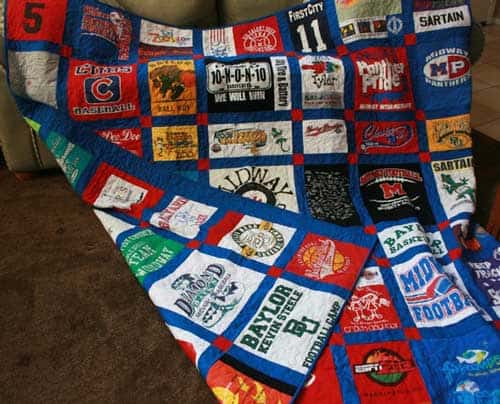
Double-sided quilts carry more mass than single-sided equivalents. Proper washing technique protects both the jersey knit faces and the batting core from the premature breakdown that results from standard laundry handling.
Routine Cleaning Protocol
Machine washing is acceptable for most double-sided t-shirt quilts under specific constraints:
- Cold water on a gentle cycle only — hot water accelerates jersey shrinkage and causes batting shift at the quilt corners
- Turn the quilt inside-out before loading — exposing the secondary face to agitation abrasion protects the primary graphic surface
- Use liquid detergent formulated for knits — powder detergent leaves residue trapped between jersey layers that builds up over repeated wash cycles
- Avoid fabric softener entirely — it degrades batting loft over time and leaves a coating that reduces breathability
- Wash alone or with similarly weighted textiles — washing with denim or terrycloth causes surface pilling on both jersey faces
Drying requires low heat with dryer balls. High heat causes jersey knit to tighten and pull at the seams, and repeated high-heat cycles are the single primary cause of premature batting compression in double-sided builds. Air drying flat on a clean, breathable surface is the safest option for high-value quilts — rotate every two hours until the batting core is completely dry before folding or storing.
Sewing machine maintenance directly affects quilt longevity. A machine with worn feed dogs or inconsistent tension produces uneven stitch depth through thick layered sections, creating weak seams that fail at stress points during washing. Understanding how to apply sewing machine oil correctly keeps the tension mechanism and feed system calibrated for consistent performance through every layer of a double-sided sandwich.
Storage and Long-Term Preservation
Folded storage compresses batting permanently along fold lines over time. Rolled storage on a foam pool noodle or PVC pipe core preserves batting loft for decades. Store in a breathable cotton bag — plastic storage bins trap moisture and accelerate fabric yellowing, particularly in darker graphic tees that off-gas dye compounds over time. Keep stored quilts away from direct light sources to prevent graphic fading on both faces.
For quilts that include screen-printed or transfer-paper graphics from original shirt production, the substrate type affects how the graphic holds up through washing over years of use. Reviewing the difference between dark and light transfer paper provides insight into which original shirt graphics are most vulnerable to wash-cycle degradation — useful for making informed decisions about which shirts to position on the display face versus the reverse.
Building a Long-Term T-Shirt Quilt Collection
The most committed makers do not produce a single double-sided quilt and stop. They develop a systematic collection approach that turns t-shirt quilts into an ongoing, scalable archive practice — building a body of work that grows with the shirt collection rather than reacting to it after the fact.
Curating and Planning Layouts
Start every project with a full inventory. Photograph each candidate shirt on a flat surface, then sort by visual weight, color temperature, and graphic density. High-impact graphics — large prints, photographic images, photorealistic illustrations — anchor corner and center blocks. Text-only or small-logo shirts fill perimeter positions without competing with the hero graphics.
For double-sided projects, plan both faces simultaneously before cutting a single block. Lay both sorted collections side by side and test visual pairings. What sits behind a large, light-colored graphic on face A will occasionally show through thin jersey on face B — contrasting dark-on-light pairings at matching block positions create unwanted bleed-through surprises on the finished quilt.
Seasonal shirt collections — those gathered across a multi-year period from the same event type — produce the most visually coherent double-sided quilts. A decade of marathon race shirts on one face paired with a decade of team jerseys on the reverse creates a two-chapter narrative that gains meaning with every year the quilt is used.
Tools and Workflow Refinements
Building multiple quilts over time justifies targeted tool investment. The right equipment eliminates the dimensional inconsistencies that undermine double-sided construction:
- Rotary cutter and self-healing mat (24×36 minimum): Shirt blocks cut with scissors rarely achieve the dimensional accuracy required for two-face alignment
- Acrylic quilting rulers (6×24 and 12.5×12.5): Essential for squaring blocks and cutting consistent seam allowances across both quilt tops
- Fusible tricot interfacing in bulk: Stabilizes jersey blocks and eliminates stretch during sewing — budget 1.5 yards of interfacing per shirt across both tops
- Spray basting adhesive: Locks the three-layer sandwich before quilting begins, eliminating layer drift without hand-basting the entire surface
- Walking foot attachment: Feeds all layers at equal speed — without it, the bottom layer advances faster than the top, producing quilting drift that is visible on both finished faces
A well-executed double-sided t-shirt quilt, built with compatible materials and maintained under the protocols described above, remains structurally sound for 20–30 years of regular use. The upfront investment in precision tooling and material selection pays dividends across every subsequent quilt in the collection — not just the first build.
Next Steps
- Inventory and photograph every candidate shirt from both collections, then sort by color temperature and graphic weight before cutting any blocks — this prevents layout decisions that look logical on paper but fail visually once assembled.
- Purchase low-loft 80/20 cotton-polyester batting and fusible tricot knit interfacing before starting — these two materials determine finished quilt quality more than any other variable in a double-sided build.
- Cut both quilt tops to identical final dimensions and conduct a dry alignment test on a flat surface, checking for border consistency on all four edges before introducing the batting layer.
- Run a wash test on a sample jersey block — using the chosen detergent, machine cycle, and dryer setting — to confirm no shrinkage or color bleed before committing the finished quilt to the laundry process.
- Source long-term storage materials before the quilt is complete: a breathable cotton bag sized for the finished dimensions and a foam roller long enough to store the quilt rolled rather than folded.


About Alice Davis
Alice Davis is a crafts educator and DIY enthusiast based in Long Beach, California. She spent six years teaching textile design and applied arts at a community college, where she introduced students to everything from basic sewing techniques to vinyl cutting machines and heat press printing as practical, production-ready tools. That classroom experience means she has put more sewing machines, embroidery setups, Cricut systems, and heat press units through real project work than most reviewers ever will. At PalmGear, she covers sewing machines and embroidery tools, vinyl cutters, heat press gear, Cricut accessories, and T-shirt printing guides.
You can get FREE Gifts. Or latest Free phones here.
Disable Ad block to reveal all the info. Once done, hit a button below