How To Reuse Torn-Up Cotton T-Shirts
by Alice Davis
Last winter, our team cleared out a storage bin packed with old band tees, shredded workout shirts, and a few casualties from a heat press experiment that went sideways. Most were torn at the collar, stained beyond recovery, or just structurally done. Tossing them felt like throwing away good raw material — because that's exactly what we were doing. That experience sent us deep into the world of figuring out how to reuse a bunch of torn up cotton t-shirts, and what we found was genuinely practical and surprisingly versatile.
Cotton is one of the most workable natural fibers available to crafters, makers, and everyday households. According to the Wikipedia overview on cotton, it accounts for roughly 35% of all fiber used globally — which means the volume of discarded cotton fabric each year is staggering. Knowing how to put that material back to work is both a skill and a mindset shift. Our team has tested and used every method below, and we're sharing only what actually holds up in practice.
Contents
Why Cotton T-shirts Are Worth Saving
The Fiber That Earns a Second Life
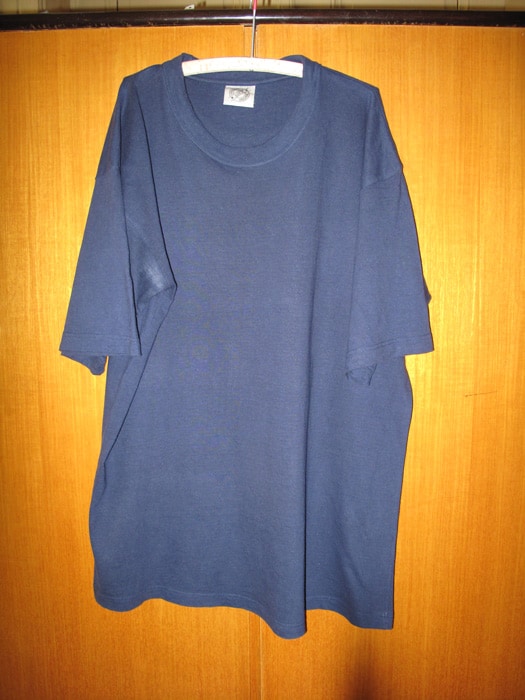
Cotton jersey — the knit fabric used in virtually every standard t-shirt — has properties that most craft materials can't match at the same price point. It's absorbent, soft, dye-receptive, and forgiving to work with by hand or machine. Unlike synthetic blends, 100% cotton doesn't melt under heat, which matters when projects involve any pressing or ironing. If most people understood how to reuse a bunch of torn up cotton t-shirts rather than tossing them, they'd stop treating worn tees as trash and start treating them as raw stock.
Our team has used old cotton tees in quilting projects, cleaning applications, craft builds, and even vinyl-related work in our heat press and vinyl department. The fiber holds shape well when cut into strips and handles heat transfer applications on secondary surfaces surprisingly cleanly. Understanding what cotton actually is — and how it behaves — is the foundation of every good repurposing decision. For a deeper look at where that cotton started, our guide on how a 100% cotton t-shirt is made covers the full manufacturing process from fiber to finished garment.
Sorting the Pile Before Starting
Not all torn tees are equal. Before any cutting or crafting begins, our team sorts incoming fabric into three rough buckets:
- High integrity fabric — tears only at seams, body still intact. Best for larger projects like quilts, bags, or rugs.
- Partial panels — good-sized sections surrounded by damage. Cut out the usable areas; discard the edges.
- Shredded or heavily stained — only the smallest squares are viable here, and those go into a dedicated cleaning rag pile.
Color and weight also factor in. Heavyweight tees — typically 6+ oz — cut into sturdier strips that hold up for rug-making and bag projects. Lightweight tees work better as rags, stuffing, or patchwork filler. Our team keeps a dedicated bin for each category in the workspace so sorted fabric doesn't get mixed back in.
Getting Torn Tees Ready the Right Way
Washing and Inspecting First
Every tee gets washed before it enters the repurposing workflow. This isn't about cleanliness alone — washing reveals weaknesses in the fabric that handling won't. A shirt that looks okay on the pile might fall apart in the wash, which tells us the fiber has degraded too far for structural projects. Those go straight to the rag bin.
Always wash before cutting — heat and agitation expose hidden fabric failures that will ruin a finished project if discovered mid-build.
Inspection after washing focuses on three things: integrity of the knit (no laddering or runs beyond the torn area), colorfastness (if the shirt bleeds heavily, it's not suitable for anything where dye migration is a problem), and odor retention. Our guide on removing bad smells from clothes without washing has some useful pre-treatment tricks for tees that came out of storage smelling musty.
Cutting Techniques That Matter
Cutting cotton jersey correctly determines what the material can and can't do in its next life. The two primary approaches our team uses:
- Strip cutting — Cut across the width of the shirt body in even bands, typically 1–2 inches wide. The edges will curl inward as the jersey relaxes, forming a natural yarn-like strip. These are ideal for braided rugs, crocheted baskets, and t-shirt yarn projects.
- Panel cutting — Remove the seams first, then cut the body flat into usable rectangular sections. These panels are the best candidates for quilting, bag lining, or patchwork.
A rotary cutter and cutting mat make both processes dramatically faster and more accurate than scissors alone. Rotary cutters track the grain more consistently, which matters for strip-cut projects where uneven widths cause tension problems during braiding or knitting.
Reuse, Donate, or Recycle — A Practical Comparison
Before committing a pile of tees to any one path, it helps to understand what each option actually accomplishes. Our team ran through the decision logic across dozens of shirts and found clear patterns for when each choice makes sense.
| Option | Best For | Fabric Condition Needed | Outcome |
|---|---|---|---|
| Reuse / Repurpose | Makers, DIYers, crafters | Any condition | Maximum material value extracted |
| Donate | Wearable, structurally sound shirts | Must be wearable | Extends garment life via new owner |
| Textile Recycling | Heavily degraded fabric | Any — even moldy or shredded | Fiber recovery, industrial repurposing |
| Landfill | Last resort only | N/A | Waste — avoid whenever possible |
When Donating Makes More Sense
Donation makes sense only when the shirt is genuinely wearable. Thrift stores — contrary to what most people assume — do not want torn, heavily stained, or structurally compromised fabric. Sending unusable shirts to donation bins creates sorting work and disposal costs for organizations that are already stretched. Our team donates only shirts that pass the "would anyone actually wear this?" test.
When Textile Recycling Programs Win
Textile recycling programs take what repurposers can't use and what donation centers won't accept. Brands like H&M and municipal textile drop-offs process shredded, moldy, and heavily degraded fabric into industrial insulation, automotive padding, and fiber fill. Our team sends the bottom tier of every tee haul to these programs rather than the bin.
Proven Ways to Reuse a Bunch of Torn Up Cotton T-shirts
Workshop and Cleaning Uses
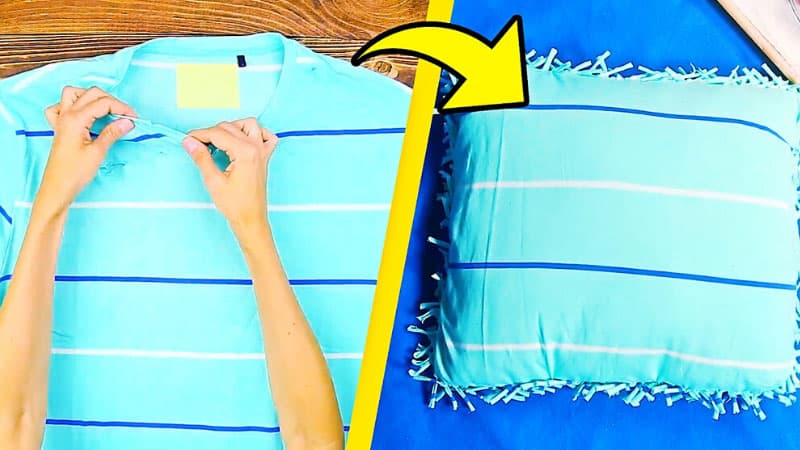
This is the easiest entry point and the highest-volume use case. Cotton jersey is an exceptional cleaning material — more absorbent than most commercial shop rags and lint-free enough for lens and screen cleaning when the fabric is in good condition. Our workshop runs entirely on t-shirt rags for:
- Wiping down heat press platens between jobs
- Applying wood stain and finishing oil (cotton doesn't streak)
- General surface cleaning where microfiber would be overkill
- Polishing metal surfaces and removing residue from vinyl projects
Cut them into consistent squares — roughly 12×12 inches — and store in a dedicated container. Washing and reusing them is straightforward. Once a rag is too contaminated to clean effectively, it goes into the textile recycling stream, not the trash.
DIY Craft and Home Projects
Craft and home DIY projects represent the widest range of applications. Our team has tested all of the following and recommends them without reservation:
- T-shirt yarn rugs and baskets — Strip-cut tees braided or crocheted into flat rugs or coiled baskets. Durable, washable, and genuinely attractive with a curated color palette.
- Bean bag filling — Shredded t-shirt material fills bean bags and floor cushions with a softer, more supportive feel than polystyrene beads. Our team has built several of these and they hold shape well over time.
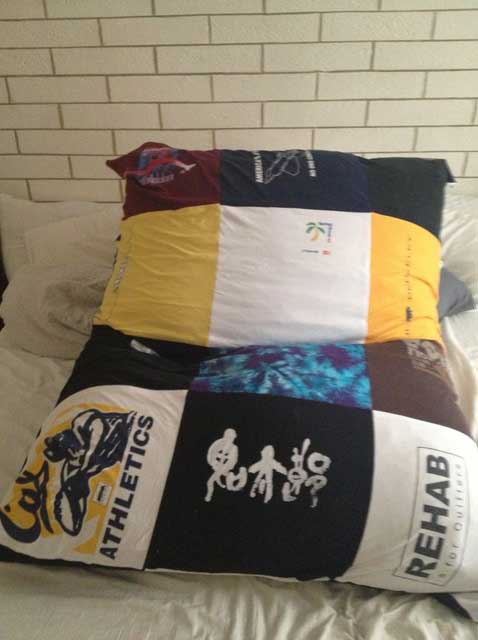
- Patchwork quilts — T-shirt quilting is a well-established craft. Panel sections cut to consistent sizes and backed with interfacing produce clean patchwork blocks. Our detailed walkthrough on how to quilt with a sewing machine covers the full process for anyone building one of these from scratch.
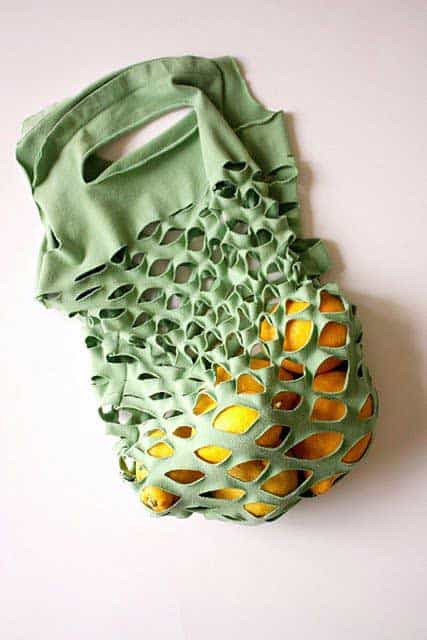
- Reusable produce bags — The mesh-like quality of loosely knit jersey makes excellent produce bags. A drawstring channel cut from a contrasting tee finishes the top edge cleanly.
For anyone interested in layering craft techniques, t-shirt panels also work as a substrate for heat-applied vinyl — especially for practice runs and prototype testing before committing to a finished garment. Our overview on heat pressing canvas bags covers comparable substrate behavior that translates directly to heavy cotton jersey panels.
Repurposing t-shirt fabric for craft projects isn't a compromise — it's often a better material choice than what's sold by the yard at fabric stores.
Wearable Repurposing Ideas
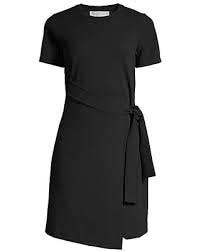
Wearable repurposing works best when starting from shirts that have structural damage limited to one panel or section. An oversized tee with a destroyed collar is still a full back panel and two solid sleeves. Our team has documented several reliable conversions:
- Wrap dress or skirt — Large-format tees cut below the armhole and retied at the waist become casual wrap skirts with zero sewing required.
- Crop tops and muscle tanks — Cutting away damage zones at the hem or collar and hemming the raw edge (which jerseys rarely need, since they don't fray) produces wearable casual tops.
- Headbands and scrunchies — Strip-cut loops from the sleeve or hem section. No sewing required. These hold up surprisingly well through repeated washing.
- Tote bag conversions — Cut off the sleeves, stitch the bottom closed, and a standard tee becomes a functional tote. Adding iron-on vinyl graphics from the home DIY craft workflow gives these a finished, intentional look.
What People Get Wrong About Old T-shirt Repurposing
Myth: Torn Means the Fabric Is Useless
This is the assumption that sends thousands of pounds of perfectly serviceable cotton to landfills every day. Tears in jersey fabric are almost always localized. A shirt torn at the collar has an intact body. A shirt with a blown-out hem still has two usable sleeves and a full back panel. The tear tells us where the fabric gave out first — not that the entire garment is degraded.
Our team's rule: evaluate each panel independently. A destroyed front panel is irrelevant to the quality of the fabric immediately adjacent to it. Cutting around damage is a fundamental repurposing skill, not a workaround.
Myth: Only Large Pieces Are Worth Keeping
Small pieces have dedicated uses that large pieces are too big for. Squares as small as 3×3 inches work for:
- Stuffing and padding in sewn projects
- Applying finish to small carved or turned wood pieces where brush marks are a problem
- Polishing metal and glass surfaces
- Patchwork accent squares in quilts and cushion covers
Most people discard anything smaller than a hand-sized piece. Our team keeps a dedicated small-scraps container and empties it into a stuffing project every few months. Nothing goes to waste until the fiber itself has failed — discolored, stiff, or structurally degraded beyond usefulness.
Costly Mistakes When Working With Old Cotton Tees
Skipping the Pre-Sort
The single most common error is treating all torn tees as interchangeable. Mixing heavyweight and lightweight fabric in a strip-cut project creates uneven tension that ruins braided and crocheted work. Mixing pre-washed and unwashed material in a quilt introduces unpredictable shrinkage after the first laundering. Our team sorts before any project begins — by weight, color family, and condition — and the consistency of finished products reflects it.
Sorting takes fifteen minutes per bin. Skipping it wastes an entire project. The math is obvious.
Ignoring Fabric Grain Direction
Jersey knit has a distinct grain — and cutting against it produces strips that behave completely differently than cutting with it. Strips cut across the width (perpendicular to the ribs of the knit) stretch significantly and curl in, creating the natural yarn-like cord that works well for crochet and braiding. Strips cut with the grain (parallel to the ribs) are less stretchy and more suitable for flat patchwork applications.
Most people cut without thinking about grain at all, then wonder why their strip-cut yarn behaves inconsistently. Our team marks grain direction on the first cut of every shirt before proceeding — a thirty-second step that prevents hours of frustration.
For anyone working specifically with iron-on or printed applications on repurposed fabric panels, our breakdown of DTF printing versus heat transfer vinyl is worth reviewing before committing panels to any heat application process. Cotton jersey panels from old tees behave differently than fresh-cut fabric, and understanding the adhesion mechanics matters.
Understanding how to reuse a bunch of torn up cotton t-shirts is ultimately about recognizing material value that most people are trained to overlook. The fabric doesn't stop being useful when the garment stops being wearable. It shifts categories — from clothing into raw material — and raw material has a long list of applications waiting for it. Our team has found that the households and workshops that adopt this mindset end up buying less, wasting less, and building more interesting things in the process.
A torn t-shirt isn't the end of the fabric's life — it's the beginning of something more intentional.


About Alice Davis
Alice Davis is a crafts educator and DIY enthusiast based in Long Beach, California. She spent six years teaching textile design and applied arts at a community college, where she introduced students to everything from basic sewing techniques to vinyl cutting machines and heat press printing as practical, production-ready tools. That classroom experience means she has put more sewing machines, embroidery setups, Cricut systems, and heat press units through real project work than most reviewers ever will. At PalmGear, she covers sewing machines and embroidery tools, vinyl cutters, heat press gear, Cricut accessories, and T-shirt printing guides.