RV Gear ›
How Does An RV Refrigerator Work?
by Jake Mercer
A family parks their rig at a remote desert campsite after eight hours on the highway. They crack open the fridge — warm beer, soft butter, questionable chicken. The trip hits a wall immediately. Understanding how does an rv refrigerator work could have saved the whole weekend. RV fridges are built around fundamentally different technology than home units, and that difference matters on every single mile of every trip. Explore the full RV gear category for more essential guides covering RV accessories, setup, and equipment.
Contents
- How Does an RV Refrigerator Work? The Science Behind the Chill
- Two-Way vs. Three-Way RV Refrigerators
- Getting the Most From Each Power Source
- Tools and Equipment Every RV Fridge Owner Should Have
- Maintenance That Keeps the Cooling Unit Healthy
- Smart Tips and Tricks for Better RV Fridge Performance
- Frequently Asked Questions
- Next Steps
How Does an RV Refrigerator Work? The Science Behind the Chill
Most home refrigerators use a compressor — a motor that squeezes refrigerant gas to generate cold. RV absorption refrigerators flip that logic entirely. They use heat to create cold. That sounds paradoxical, but it's real chemistry that's been in commercial use for over a century. The underlying science is well documented in Wikipedia's article on absorption refrigerators for anyone who wants the full technical picture.
The biggest practical advantage? No moving parts. No compressor motor. No vibration. Absorption fridges run silently, which matters enormously in a small living space. The tradeoff is that they're sensitive to heat, leveling, and airflow in ways a home fridge simply isn't.
The Absorption Refrigeration Process
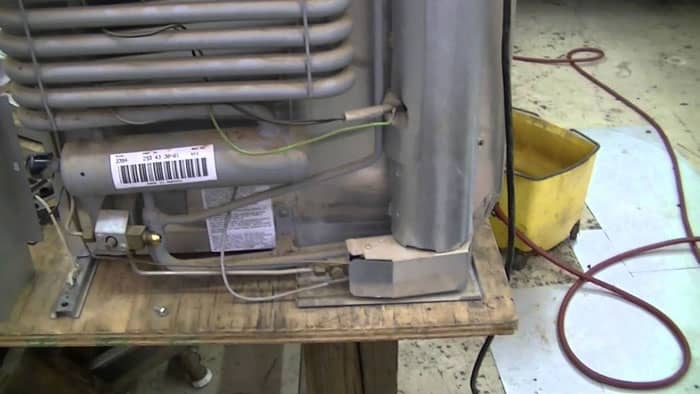
The cooling unit contains a sealed, welded system of three substances: ammonia, hydrogen gas, and water. Here's how the loop works:
- A heat source — either a propane flame or an electric heating element — boils an ammonia-water solution inside the boiler section.
- Ammonia vapor rises to the condenser, cools down, and converts back into liquid ammonia.
- Liquid ammonia flows into the evaporator (the section inside the fridge compartment) and mixes with hydrogen gas.
- This mixture evaporates rapidly. Evaporation pulls heat out of the fridge interior — that's where the cold comes from. Cold is simply the absence of heat.
- Ammonia and hydrogen gases travel to the absorber, where water re-absorbs the ammonia.
- The ammonia-water solution flows back to the boiler. The cycle repeats continuously.
The entire system is gravity-dependent. Ammonia flows downward through the circuit. That's why proper leveling is non-negotiable — a detail covered in depth later in this guide.
Key Components of the Cooling Unit
The cooling unit is a sealed, welded metal assembly. It cannot be refilled, patched, or repaired once it fails — only replaced. Knowing the parts helps diagnose problems early before a minor issue becomes a total unit failure.
- Boiler: Where heat is applied to kick off the ammonia separation process
- Condenser: Mounted at the back of the unit, vented through the RV's exterior wall to release heat outside
- Evaporator: The cold-producing coil inside the fridge compartment — this is what actually chills food
- Absorber: Where ammonia recombines with water to restart the cycle
- Heating element or burner: The interchangeable heat source — electric or propane depending on the active power mode
Pro tip: An absorption fridge running significantly off-level for more than 30 minutes can permanently crystallize the ammonia solution inside the cooling unit. Always level the rig before switching the fridge on at a new campsite — it's not optional, it's survival for the cooling unit.
Two-Way vs. Three-Way RV Refrigerators
The number of power sources a fridge supports defines the two main categories on the market. Knowing the difference before buying — or before troubleshooting — saves a lot of confusion down the road.
Two-Way Models (AC and Propane)
Two-way fridges operate on 120V AC shore power or LP (liquid propane) gas. They're the most common type found in travel trailers, fifth wheels, and older Class A motorhomes. At a campsite with electrical hookups, they run on AC. Out on the road or dry camping without hookups, propane takes over. Simple, widely serviced, and reliable with proper care.
Three-Way Models (AC, Propane, and 12V DC)
Three-way fridges add 12V DC operation from the RV's battery system as a third power source. The 12V mode is the weakest option by a wide margin. It draws heavy current from the batteries and barely maintains temperature — it's intended only for short transitions, not sustained off-grid cooling. Running a three-way absorption fridge on 12V overnight will drain even a large battery bank and leave food warm by morning.
| Feature | Two-Way (AC/LP) | Three-Way (AC/LP/DC) |
|---|---|---|
| Power Sources | Shore power (120V AC), Propane (LP) | Shore power (120V AC), Propane (LP), 12V DC battery |
| Best Use Case | Hookup campgrounds, mixed camping | Boondocking with short DC bridge transitions |
| 12V Cooling Strength | Not available | Weak — short-term bridge only, not sustained |
| Common Brands | Dometic, Norcold | Dometic RM2652, Norcold N641 |
| Typical Capacity | 6–12 cubic feet | 6–12 cubic feet |
| Price Range | $600–$1,500 | $800–$2,000 |
| Moving Parts | None | None |
Getting the Most From Each Power Source
Knowing which mode to use — and when to switch — is half the battle of keeping an RV fridge cold and efficient. Each power source has a specific role. Using the wrong one at the wrong time wastes energy and shortens fridge life.
Running on Propane While Driving
Most experienced RVers run the fridge on propane during travel days. It keeps the cooling cycle active without touching the house battery bank. Propane is efficient in this role and effective even in hot weather. There's typically a 30–60 minute stabilization window when switching from AC to propane — the fridge needs time to settle into the new heat source before reaching optimal temperature. Plan food loading and departure times accordingly.
One real-world consideration: some tunnels, ferry crossings, and border crossings prohibit active propane use. Most modern RVs include automatic shutoff valves, but route planning still matters. Knowing the restrictions in advance prevents a last-minute scramble at a checkpoint.
Warning: Some tunnels and ferries require propane shutoff before entry. Switching to 12V DC for a short crossing won't cause food safety issues — the thermal mass of a full, cold fridge holds temperature for 30 to 45 minutes without active cooling running.
Shore Power at the Campsite
Plugging into a 30-amp or 50-amp campground hookup is the cleanest option for stationary camping. Running the fridge on AC conserves propane for cooking and heating. The electric heating element performs just as well as the propane flame for driving the absorption cycle. At a full-hookup site, AC is always the preferred mode — there's no good reason to run propane when shore power is available.
12V DC Operation
The 12V mode on three-way fridges is best treated as a bridge — useful for the first hour after disconnecting from shore power before the engine is running. Once driving, switch to propane immediately. RVers who want genuine off-grid cooling capability from battery power should look at 12V compressor fridges (a separate product category entirely). Compressor fridges handle sustained DC operation far better than any absorption unit ever will, particularly in hot weather.
Tools and Equipment Every RV Fridge Owner Should Have
Understanding how does an rv refrigerator work is foundational knowledge — but having the right supporting gear makes that knowledge actionable. These tools make a measurable difference in daily fridge performance.
Leveling Blocks and Bubble Levels
Leveling isn't optional with absorption fridges. The ammonia flow relies on gravity to move correctly through the cooling circuit. An unlevel rig leads to poor cooling performance and, over time, permanent cooling unit damage. Every RV toolkit should include a set of stackable interlocking leveling blocks and a two-axis bubble level. Some RVers use a digital leveling app on a phone — that works too, as long as the phone sits on a confirmed flat surface inside the rig. Front-to-back and side-to-side leveling both matter equally.
Inverters for On-the-Road AC Power
A pure-sine wave inverter converts 12V battery power to 120V AC, allowing the fridge to run on AC even without shore power — provided the battery bank is large enough to handle the draw. A 6–8 cubic foot absorption fridge typically pulls 150–200 watts on AC. This setup makes the most sense on solar-equipped rigs with substantial battery storage. For a complete walkthrough of the installation process, the guide on how to install an inverter in an RV covers every step from sizing to wiring. It's worth reading before purchasing any components.
For campsite entertainment alongside the RV setup, a budget TV under $200 is a solid pick for the RV media corner, and a quality shortwave radio adds weather alerts and emergency communications capability at remote sites where cell coverage disappears.
Fridge Fans and Thermometers
Two cheap additions that pay for themselves fast:
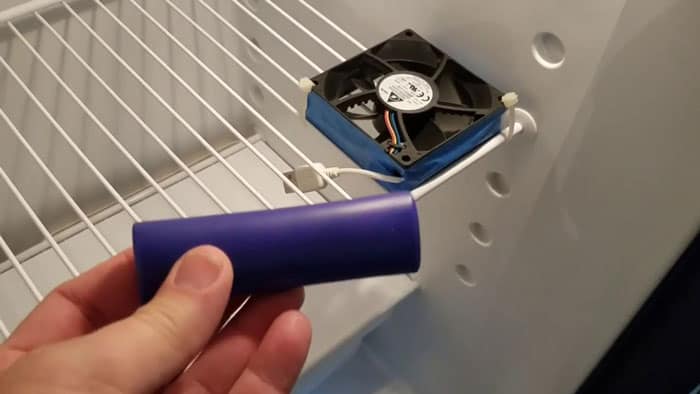
- Interior fridge fan: A small 12V or battery-powered fan inside the compartment circulates cold air and eliminates hot spots. Models designed specifically for RV fridges typically run on a D battery and cost under $20. The improvement in temperature consistency is noticeable.
- Digital thermometer: A probe thermometer with a remote display lets RVers check the actual internal temperature without opening the door. The fridge compartment should stay below 40°F (4°C). The freezer section should hold 0°F (-18°C). Don't rely on the fridge's built-in dial — it reads ambient air near the sensor, not the actual food zone temperature.
Maintenance That Keeps the Cooling Unit Healthy
Absorption fridges are relatively low-maintenance — but skipping the basics leads to expensive repairs and ruined trips. A little seasonal attention prevents the most common failure modes from ever developing.
Cleaning the Burner and Flue
The propane burner and the flue (the exhaust tube directly above the burner) accumulate dust, road debris, and — most commonly — spider webs during storage. A blocked flue disrupts combustion and reduces flame efficiency. The result is a fridge that struggles or fails entirely on propane mode. Before every camping season, the process is straightforward:
- Remove the exterior access panel to reach the burner compartment
- Use a pipe cleaner or thin wire brush to clear the flue tube from top to bottom
- Inspect the burner orifice (the small hole the flame emerges from) for carbon buildup or obstructions
- Blow out remaining debris with a can of compressed air
This takes about 15 minutes. It prevents the most common single reason RV fridges stop cooling on propane.
Inspecting Seals and Door Gaskets
Door gaskets crack, stiffen, and deform with age and UV exposure. A compromised gasket lets warm air leak in constantly, forcing the fridge to run harder while cooling less. The paper test is the standard diagnostic: close the fridge door on a piece of standard printer paper. If the paper slides out with no resistance, the seal isn't doing its job. Replacement gaskets are available for most Dometic and Norcold models and can be installed without professional help using basic tools and a heat gun.
Checking for Cooling Unit Leaks
A yellow or greenish powder residue inside the exterior vent compartment behind the fridge is a serious warning sign. That powder is crystallized ammonia — direct evidence of a cooling unit leak. A leaking cooling unit cannot be patched or refilled. The entire sealed assembly requires replacement, typically costing $400–$800 for parts alone. Catching a leak early prevents ammonia from spreading into the RV living space, which is both a health hazard and an unpleasant travel experience. A two-minute visual inspection of the exterior vent compartment should be part of every pre-trip checklist.
Full-time RVers managing living arrangements in non-traditional settings should also check out the guide on living legally in an RV in a backyard — it covers zoning and utility setup considerations that affect the whole RV living picture.
Smart Tips and Tricks for Better RV Fridge Performance
Even a well-maintained absorption fridge performs better with smart usage habits built around its specific technology. These aren't generic fridge tips — they're specific to how absorption cooling actually works.
Pre-Cool the Fridge Before Loading
Run the fridge empty for at least 4–6 hours before loading any food — ideally the night before departure. Absorption fridges are slow to pull down temperature from ambient. Loading warm groceries into a warm fridge guarantees a long, inefficient struggle to reach safe storage temperatures, especially in summer heat. Starting the fridge on AC power the evening before a trip costs almost nothing and ensures everything arrives cold at the first campsite. This is the single habit most RVers skip and the one that causes the most preventable food safety issues.
Pack the Fridge Strategically
A well-loaded fridge cools more efficiently and holds temperature more consistently than a poorly loaded one. The principles are simple but often ignored:
- Load food that's already cold — directly from the home fridge, not the grocery store shelf
- Leave some air space for cold air circulation — an overstuffed fridge develops warm pockets
- Put frequently accessed items near the front and top to minimize door-open time
- Freeze water bottles or meat that doesn't need to stay fresh — they act as thermal mass and extend cold retention if the power source changes
- Keep raw meat in sealed containers at the back of the lowest shelf
Pro insight: Frozen water bottles placed throughout the fridge compartment act as a cold battery. If the fridge has to switch power modes mid-trip, that thermal mass buys an extra 1–2 hours of safe food temperature without any active cooling.
Ventilation and Heat Dissipation
The back of an absorption fridge runs hot — that's heat being actively rejected from the cooling process, expelled through the RV's exterior vents. Those vents must stay completely clear. Even a partial obstruction traps heat around the condenser and tanks cooling performance fast. Parking in shade on hot days reduces the ambient temperature around the condenser and measurably improves the fridge's ability to maintain temperature. In hot climates, adding a 12V fan to the exterior vent compartment can drop internal fridge temperature by 5–10°F — a meaningful improvement in summer heat.
For completing the campsite setup, these gas grill buying tips pair well with any RV trip — cooking outside keeps heat out of the rig, which directly reduces the fridge's workload. For privacy and thermal insulation at the site, the RV blinds buying guide covers options that reduce solar heat gain through windows, easing the fridge's job on sunny afternoons. And for keeping the whole family entertained on long travel days, the roundup of games for RV travel is a practical, low-power-draw resource worth bookmarking.
Frequently Asked Questions
How does an RV refrigerator work differently from a standard home refrigerator?
Home refrigerators use a compressor — a motor that compresses refrigerant to generate cold. RV absorption refrigerators use heat (from propane or electric) to drive a chemical cycle involving ammonia, hydrogen gas, and water. The process creates cold through evaporation with no moving parts and no compressor motor. The result is a silent fridge that's more sensitive to leveling and airflow than a home unit.
Does an RV absorption refrigerator have to be perfectly level to work?
Yes — and this is non-negotiable. The ammonia solution inside the cooling unit flows via gravity. An off-level fridge cools poorly and, if left significantly unlevel for more than 30 minutes, can permanently crystallize the ammonia and destroy the cooling unit. Always level the rig front-to-back and side-to-side before running the fridge.
Can an RV refrigerator run on battery power alone for extended periods?
Absorption fridges are poor candidates for sustained battery-only operation. The 12V DC mode on three-way models draws heavy current and provides weak cooling — it's a short-term bridge, not an off-grid solution. RVers who need sustained battery-powered cooling should consider a 12V compressor fridge instead, which handles that job far more efficiently.
How long does it take for an RV absorption fridge to reach operating temperature?
An empty absorption fridge takes 4–8 hours to reach safe food storage temperatures (below 40°F / 4°C) from ambient room temperature. In hot weather, that can extend further. The standard recommendation is to start the fridge the night before a trip, running empty on AC power, so it's fully cold before any food is loaded.
What does yellow or greenish powder behind an RV refrigerator mean?
That powder is crystallized ammonia — a clear sign of a cooling unit leak. The sealed cooling assembly has developed a breach, and ammonia is escaping and crystallizing on contact with air. A leaking cooling unit cannot be repaired. The entire unit requires replacement. This is one reason regular visual inspections of the exterior vent compartment are so important.
How often should an RV refrigerator be serviced?
A basic inspection and cleaning should happen once per camping season. This means clearing the burner and flue of debris and spider webs, checking door gasket integrity with the paper test, and visually inspecting the exterior vent compartment for ammonia residue. These three tasks take under 30 minutes total and prevent the most common failure modes.
What is the difference between an absorption fridge and a 12V compressor fridge for RVs?
Absorption fridges use heat-driven chemistry (no moving parts) and can run on propane, AC, or DC. They're quiet but sensitive to leveling, airflow, and ambient heat. Compressor fridges use a small electric motor — similar to a home fridge — and run exclusively on 12V DC or AC power. Compressor models are far more efficient on battery power and perform better in hot weather, but they require a robust electrical system and don't offer propane operation.
Next Steps
- Start the RV fridge the night before the next trip — plug into AC power, run it empty overnight, and load cold food in the morning. This single habit prevents the majority of warm-food complaints.
- Inspect the exterior vent compartment and burner area right now, even if a trip isn't planned. Look for yellow powder (ammonia leak) and clear any debris or spider webs from the flue tube.
- Do the paper test on both fridge and freezer door gaskets. If the paper slides out without resistance, order replacement gaskets for the specific Dometic or Norcold model before the next camping season.
- Pick up a digital probe thermometer and a small interior fridge fan. Install both before the next trip. Verify the fridge compartment is holding below 40°F and the freezer is at 0°F or below.
- Review the guide on installing an inverter in an RV if the rig doesn't already have one — having AC power available on the road opens up more reliable fridge operation options beyond propane.


About Jake Mercer
Jake Mercer spent twelve years behind the wheel as a long-haul trucker, covering routes across the continental United States and logging well over a million miles. That career gave him an unusually thorough education in CB radio equipment — he has tested base station antennas, magnetic mounts, coax cables, and handheld units in real-world conditions where reliable communication actually matters. After leaving trucking, Jake transitioned to full-time RV travel and has since put hundreds of RV accessories through their paces across national parks, boondocking sites, and full-hookup campgrounds from Montana to Florida. At PalmGear, he covers RV gear and accessories, CB radios, shortwave receivers, and handheld radio equipment.
You can get FREE Gifts. Or latest Free phones here.
Disable Ad block to reveal all the info. Once done, hit a button below