RV Gear ›
How Much Propane Does An RV Refrigerator Use?
by Jake Mercer
Last summer, a couple we met at a Utah campground spent their first morning wondering why everything in their RV fridge was lukewarm. Their propane tank had run dry before sunrise. They had been running their stove, water heater, and refrigerator simultaneously off a single 20-pound tank — and had no idea how much propane an RV refrigerator burns per day. One dry tank wiped out a weekend's worth of groceries.
If you've asked yourself how much propane does an RV refrigerator use, you're asking the right question before it becomes an expensive lesson. The short answer: a typical absorption-style RV refrigerator consumes between 1 and 1.5 pounds of propane per day. But the real answer depends on fridge size, ambient temperature, ventilation quality, and how you use the unit. For a foundation on the cooling mechanism itself, read How Does An RV Refrigerator Work? before diving in here. For more gear coverage, the RV gear section on PalmGear has you covered.
Contents
Real-World Propane Consumption Numbers for RV Refrigerators
What the Data Actually Shows
Field testing by RV owners and manufacturer documentation consistently places absorption fridge consumption in a tight, predictable range. Here's what you're actually working with:
- A 6–7 cubic foot fridge burns approximately 1.0–1.2 lbs of propane per day
- An 8–10 cubic foot fridge burns approximately 1.3–1.5 lbs per day
- A standard 20-lb propane tank holds roughly 4.7 gallons — enough to run a mid-size fridge alone for 11–15 days
- A 30-lb tank extends that to approximately 17–22 days of fridge-only use
- A two-tank setup (dual 20-lb) gives you 22–30 days of refrigeration capacity before you're tapping the backup
These are real-world averages, not manufacturer minimums. According to Wikipedia's overview of absorption refrigerators, these systems use heat — from propane or an electric heating element — rather than a mechanical compressor. That fundamental design makes their efficiency unusually sensitive to ambient temperature, ventilation quality, and load. A compressor fridge is relatively immune to those factors. An absorption fridge is not.
How Fridge Size Changes the Equation
| Fridge Size | Typical BTU/hr | Propane Per Day (lbs) | Days on 20-lb Tank | Days on 30-lb Tank |
|---|---|---|---|---|
| 4–6 cu ft | 1,200–1,500 | 0.9–1.1 | 18–22 | 27–33 |
| 6–8 cu ft | 1,500–1,800 | 1.0–1.3 | 15–20 | 23–30 |
| 8–10 cu ft | 1,800–2,200 | 1.3–1.5 | 13–15 | 20–23 |
| 10–12 cu ft | 2,200–2,800 | 1.5–2.0 | 10–13 | 15–20 |
These numbers assume the fridge is the only propane appliance running. Add your stove, furnace, and water heater to the equation and your actual tank life drops sharply. Budget accordingly.
How to Calculate Your RV Fridge's Daily Propane Draw
Stop guessing. You can calculate your fridge's exact daily propane use with two pieces of information: the BTU rating of your unit and one simple formula.
Step 1: Find Your Fridge's BTU Rating
- Check the owner's manual — the BTU rating is listed in the specifications section of every major brand's documentation
- Look for a data plate on the back or interior wall of the fridge compartment
- Search the model number online — Dometic and Norcold publish downloadable spec sheets for every unit they've made
- Call the manufacturer's support line if the plate has worn off — they can pull specs by serial number
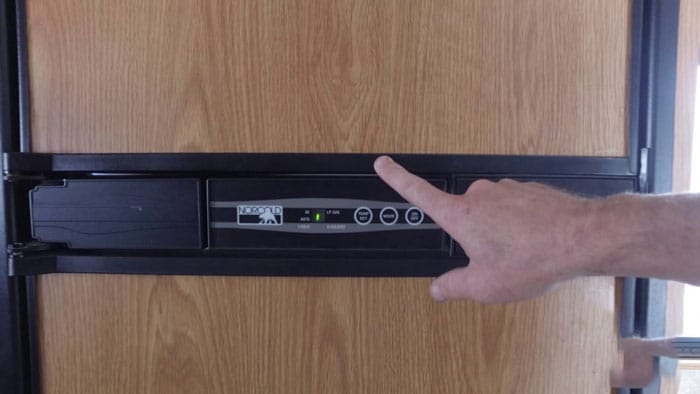
Most residential-sized RV fridges fall between 1,500 and 2,500 BTU/hr during active cooling cycles. The burner does not run continuously — it cycles based on the internal thermostat. In moderate temperatures, real-world duty cycles run 40–65% of the time.
Step 2: Run the Numbers
Propane delivers approximately 21,500 BTU per pound. Here's the formula, step by step:
- Start with your fridge's BTU/hr rating — example: 1,800 BTU/hr
- Estimate your daily active hours using your duty cycle — at 50% duty cycle: 12 hours active per day
- Multiply: 1,800 BTU/hr × 12 hours = 21,600 BTU/day
- Divide by 21,500 BTU/lb: 21,600 ÷ 21,500 = approximately 1.0 lb of propane per day
Adjust the duty cycle upward for hot weather (70–85% in summer heat) and downward for mild conditions (35–45% in cooler climates). That one variable swings your daily consumption by 30–50%.
Pro Tip: Monitor your propane gauge after the first 48 hours of a trip. That real-world reading gives you a far more accurate consumption baseline than any pre-trip estimate.
Practical Ways to Cut Your RV Fridge's Propane Consumption
You have more control over your fridge's propane draw than most RV owners realize. These are actionable changes, not vague suggestions — each one measurably reduces daily consumption.
Pre-Cooling and Loading Habits
- Pre-cool on shore power: Run the fridge on 120V AC for 4–6 hours before your departure. Starting with a cold interior eliminates the most propane-intensive phase — the initial pulldown from ambient temperature.
- Load cold food only: Room-temperature items force the fridge to work significantly harder. Pre-chill groceries in a home refrigerator before packing.
- Fill empty space with water bottles: Thermal mass holds temperature. A full fridge bounces back faster after door openings than a half-empty one.
- Limit door openings: Know what you're grabbing before you open the door. Every opening dumps warm air in and forces a recovery cycle.
- Organize for fast access: Keep daily-use items at the front so you're not standing with the door open searching.
Ventilation and Leveling
- Level your rig properly: Absorption fridges rely on gravity-fed refrigerant circulation. An unlevel unit strains the system, burns more propane, and risks long-term damage to the cooling unit.
- Clear the exterior vents: Hot air must escape through roof and side vents. Blocked vents raise the condenser temperature and gut efficiency.
- Park with the fridge side in shade: Direct sun on the vent side can raise ambient temperature 20°F or more at the condenser — your fridge reads that as a heavier load.
- Install a small 12V vent fan: A fan behind the exterior vent pulls hot air away from the condenser. Many owners report 15–20% efficiency improvement for a $20–$40 investment.
If you're evaluating your power setup for off-grid stretches, our comparison of RV Lithium Battery vs AGM matters here — your battery bank determines how long you can run the fridge in 12V mode when you want to save propane.
What Most RV Owners Get Wrong About Propane Fridges
Online RV forums circulate a handful of persistent misconceptions about absorption refrigerators. Two of them will directly cost you money or safety if you accept them uncritically.
Myth: The Burner Runs Continuously
This is the most common misunderstanding. Many owners assume their propane fridge is burning fuel every second it's switched on. It isn't. The burner cycles based on the thermostat, exactly like a home furnace. That cycling behavior is why the real-world consumption figures are lower than you'd calculate at 100% continuous burn.
- At 60°F ambient: duty cycle often falls below 40%
- At 80°F ambient: duty cycle climbs to 60–70%
- At 95°F+: duty cycle can hit 80–90%, dramatically increasing daily propane use
Understanding the duty cycle also explains why your fridge seems to use "more propane" on a hot desert trip than a cooler mountain weekend — it's not a malfunction. It's physics.
Myth: Cold Weather Always Saves Propane
Cold weather reduces the fridge's duty cycle, yes. But if you're also running the RV furnace — a major propane consumer — cold-weather trips often burn more total propane than warm-weather trips, not less. A typical RV furnace runs at 20,000–30,000 BTU/hr. Your fridge runs at 1,500–2,000 BTU/hr. One furnace cycle erases hours of fridge savings. If you camp in cold conditions regularly, read our guide on How To Winterize An RV to budget your total propane consumption accurately before you leave the driveway.
Warning: Shut off your propane refrigerator burner before fueling up at gas stations — propane flames in unventilated compartments near fuel vapors are a genuine fire risk, and many stations prohibit it by policy.
When to Run Your Fridge on Propane vs. Electric
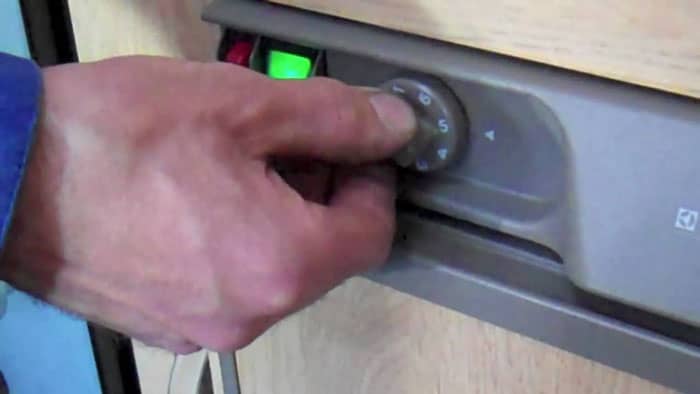
Most modern absorption fridges operate on propane, 120V AC shore power, or 12V DC. Choosing the right mode for your situation is how you stretch your propane supply without sacrificing food safety.
Situations Where Propane Wins
- Boondocking and dry camping: No shore power means propane is your most reliable option for sustained cooling without draining your battery bank to dangerous levels
- Driving between sites: Running in transit on propane is more efficient than 12V DC, which can pull your batteries down over a long drive
- Extended off-grid stays: Even with solar, propane remains the most consistent backup when cloud cover limits generation — see our RV Solar Panel Setup guide for how to calculate whether solar can fully replace propane for your fridge
- High-temperature environments: Propane output remains constant regardless of outdoor temperature — some 12V compressor fridges throttle in extreme heat
Situations Where Electric Makes More Sense
- Campgrounds with 30A or 50A shore power: Switch to 120V AC immediately upon hookup. It costs nothing extra and preserves your propane for cooking and heating
- Multi-day stays at full-hookup RV parks: There is no rational reason to burn propane when reliable AC power is plugged in
- Near fuel stations or in fire-restricted areas: Electric mode eliminates the open-flame concern at gas stations and in high fire-danger regions
- When propane is running low: Conserve remaining propane for your stove and furnace — switch the fridge to electric if any AC source is accessible
If you're managing your total power load across multiple appliances, the RV Generator sizing guide covers how to choose a generator that can support your fridge, air conditioning, and other draws simultaneously when off-grid.
Frequently Asked Questions
How long will a 20-pound propane tank run an RV refrigerator?
A 20-pound propane tank holds approximately 4.7 gallons. Running a mid-size RV fridge (6–8 cubic feet) as the only propane appliance, you can reasonably expect 11–15 days of operation. Add a stove, furnace, and water heater to that same tank and the math changes dramatically — plan for 3–5 days of total propane use in active camping conditions.
Can I run my RV refrigerator on propane while driving?
Technically yes — most absorption fridges are designed to run on propane in transit. However, many campgrounds and fueling stations prohibit open propane flames while refueling. Standard best practice is to shut off the propane burner before entering gas stations and to ensure your trip is short enough that residual cold holds your food at safe temperatures during the brief off period.
Does an RV refrigerator use more propane in hot weather?
Yes, significantly more. At ambient temperatures above 85°F, the burner duty cycle climbs to 70–90%, increasing daily propane consumption by 30–50% compared to mild conditions. Parking with the fridge's exterior vent side in the shade and adding a small vent fan are the two most effective countermeasures when camping in hot climates.
Final Thoughts
You now have the numbers, the formula, and the habits to manage your RV fridge's propane consumption without surprises. Check your fridge's BTU rating today, run the calculation for your tank size, and make the switch to electric whenever shore power is available. If you're gearing up for your next trip and want more hands-on RV accessory guidance, browse the full RV gear section on PalmGear — William Sanders and the team cover everything from backup cameras to water filtration systems to help you camp smarter.


About Jake Mercer
Jake Mercer spent twelve years behind the wheel as a long-haul trucker, covering routes across the continental United States and logging well over a million miles. That career gave him an unusually thorough education in CB radio equipment — he has tested base station antennas, magnetic mounts, coax cables, and handheld units in real-world conditions where reliable communication actually matters. After leaving trucking, Jake transitioned to full-time RV travel and has since put hundreds of RV accessories through their paces across national parks, boondocking sites, and full-hookup campgrounds from Montana to Florida. At PalmGear, he covers RV gear and accessories, CB radios, shortwave receivers, and handheld radio equipment.
You can get FREE Gifts. Or latest Free phones here.
Disable Ad block to reveal all the info. Once done, hit a button below