RV Gear ›
RV Park Income and Expenses: What You Need to Know Before You Start
by Jake Mercer
Our team once sat down with a retired couple who had just sold their house and poured everything into a 40-site campground in Tennessee. Eighteen months later, they were thrilled — but they admitted the first year nearly broke them because they hadn't done the math on the full cost picture. That story stuck with us. Getting a clear handle on rv park income and expenses before signing anything is the single most important step any prospective owner can take. The RV industry is genuinely thriving, demand for quality sites remains high, and this is a real business with real returns — but only for those who go in with open eyes. Our RV gear coverage keeps us close to the full-time RV community, and the business side of park ownership keeps coming up in those conversations. Here's the complete picture our team has assembled.
Contents
First Revenue Wins: How RV Parks Generate Income
The fastest path to profitability in an RV park is straightforward: maximize site occupancy, then layer in additional income channels. Parks that chase complexity before filling their sites consistently underperform. The operators our team has spoken with who hit strong returns in year one all share the same discipline — fill the sites first, diversify second.
Nightly vs. Monthly Rate Strategy
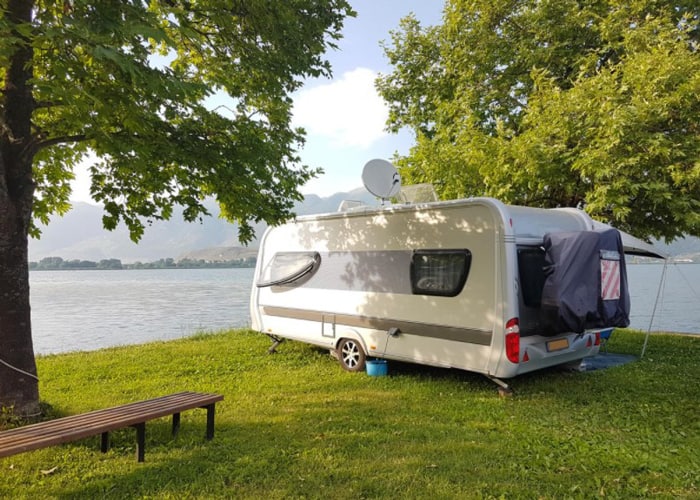
Most parks offer both booking types, and the right mix depends heavily on location. The core options:
- Nightly rates ($35–$75+): Generate the highest revenue per site-night but require active marketing, reservation management, and higher turnover costs. Best suited for parks near national parks, coastlines, or tourist corridors.
- Weekly rates: Typically priced at a 10–15% discount from the nightly equivalent. Reduce check-in/check-out frequency without a major revenue hit.
- Monthly rates ($350–$900): Provide predictable, recurring income with minimal turnover. Long-term residents often stay for months or years. Strong base for cash flow stability.
Parks our team has analyzed that achieve 70%+ annual occupancy almost always run a deliberate blend — monthly tenants anchor the cash flow, and nightly transient guests fill in during peak seasons. Relying entirely on one model creates vulnerability.
Ancillary Revenue That Adds Up Fast
Secondary income streams are where well-managed parks separate themselves. The most reliable add-ons include:
- Coin-operated or app-based laundry facilities
- Propane sales and refill stations
- Dump station access fees for non-guests ($10–$25 per use)
- Covered storage for boats, trailers, and extra vehicles ($80–$150/month per unit)
- Camp store stocked with essentials, ice, firewood, and branded merchandise
- Premium Wi-Fi tier upgrades for remote workers
- Pet fees and dog wash stations
Storage is consistently undervalued by new owners. A single row of ten 10×30 ft covered units at $100/month adds $12,000 annually with minimal ongoing operating cost after the initial construction. That's often the margin that makes a park's first year comfortable rather than stressful.
Busting the Big Myths About RV Park Income and Expenses
Anyone who's done preliminary research on rv park income and expenses has encountered wildly optimistic projections. Our team digs into the two myths that most consistently catch new owners off guard — sometimes catastrophically.
Myth: It's Mostly Passive Income
This is the most persistent and most dangerous myth in the space. RV park ownership is an active, operational business — at least until a seasoned management team is firmly in place. New owners should expect to personally handle:
- Reservations, check-ins, and check-outs (often 7 days a week during peak season)
- Guest disputes, rule enforcement, and the occasional eviction process
- Maintenance calls that don't respect business hours — a sewer backup at 10 PM is a real scenario
- Utility system failures, especially during the high-demand summer stretch when electrical loads peak
- Vendor coordination for landscaping, trash removal, and facility repairs
Hiring an on-site manager shifts much of this burden, but adds $35,000–$60,000 in annual payroll and housing costs. Genuinely passive ownership typically requires either a portfolio of multiple parks large enough to justify a professional management company or a very hands-on general manager hired from day one. Getting there takes time and a larger capital base than most first-time buyers plan for.
Pro insight: Our team consistently recommends budgeting for on-site management from opening day — parks that understaff in year one almost always accumulate negative reviews that suppress occupancy for years afterward.
Myth: Operating Costs Are Minimal
The "land prints money" narrative completely ignores the real expense stack underneath. According to Wikipedia's overview of the recreational vehicle industry, RV adoption has expanded dramatically across demographic groups — and parks have scaled up their infrastructure expectations to match. Utilities, insurance, property taxes, staffing, reservation platform fees, and capital reserves for road and utility repairs all stack up. A well-run 50-site park routinely carries $150,000–$250,000 in annual operating expenses before any debt service. That's not a deal-breaker — it's just math that has to appear in every financial model before a purchase decision is made.
Ownership Realities: The Honest Pros and Cons
The Genuine Upsides
RV park ownership carries real advantages that hold up under scrutiny:
- Recession resistance: RV camping demand historically increases during economic slowdowns as travelers substitute expensive hotels and flights for affordable road trips. The data from previous recessions is consistent on this point.
- Real asset appreciation: Well-located land appreciates independently of the business's operating performance. Owners build equity on two tracks simultaneously.
- Multiple revenue levers: Owners can add amenities, implement dynamic seasonal pricing, expand site count, or add storage units to grow income without acquiring additional properties.
- Tax advantages: Depreciation on infrastructure, equipment, vehicles, and improvements creates meaningful annual tax offsets that improve effective cash-on-cash returns.
- Community and lifestyle: Owner-operators who enjoy the environment find the social aspect genuinely rewarding — repeat guests become familiar faces who invest in the park's success alongside ownership.
The Real Challenges
- Seasonal cash flow volatility: In northern climates, parks operate at 20–30% capacity for 4–5 months. Operating reserves are not optional — they're structural requirements.
- High entry cost and compressed cap rates: Quality parks in desirable locations sell at 8–12x annual net operating income. A park netting $100,000/year might list at $900,000–$1.2 million.
- Regulatory complexity: Zoning approvals, health department permits, utility easements, fire codes, and ADA requirements vary significantly by state and county. Due diligence on entitlements is critical before any purchase.
- Deferred capital expenditures: Older parks frequently carry aging septic systems, undersized electrical panels, and deteriorating water infrastructure that require expensive capital investment within the first few ownership years.
Serious RV enthusiasts — the type who invest in quality RV accessories and research their destinations carefully before booking — are the highest-value guests any park attracts. They know what a well-run operation looks like, they leave detailed reviews, and they return year after year to parks that meet their standards.
Infrastructure and Equipment That Make or Break Operations
The physical infrastructure of an RV park is where a large portion of rv park income and expenses is determined at the construction or acquisition stage. Underspending on core infrastructure creates the operational headaches and negative reviews that suppress long-term revenue. Getting the fundamentals right from the start is far cheaper than retrofitting later.
Utility Hookups and Power Systems
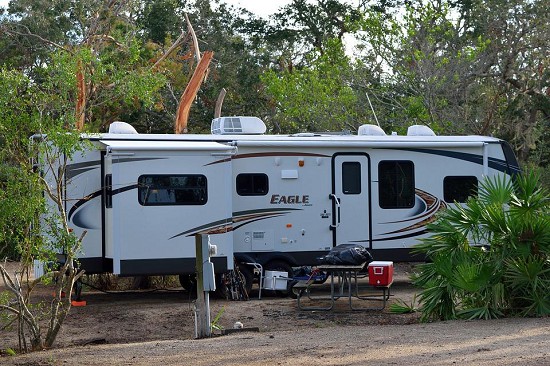
Every site needs reliable electric, water, and sewer — or clean dump access at minimum. The standard service tiers define pricing power:
- 30-amp electric + water: Entry-level hookup that works for most smaller trailers and camper vans.
- 50-amp electric + water + sewer (full hookup): Required by larger Class A and Class C motorhomes. Full hookup sites command 20–40% higher nightly rates and fill first during peak periods.
- Pull-through sites: Eliminate the need to back in — a practical advantage that many experienced RVers actively filter for when booking. Pull-throughs justify a rate premium on their own.
Electrical infrastructure is the costliest upgrade to retrofit. Rewiring an established 100-site park from 30-amp to 50-amp service routinely runs $200,000–$400,000. Our team's strong recommendation for anyone building new: spec 50-amp from the start. Protecting that electrical investment matters too — our detailed breakdown of RV EMS vs surge protectors reflects exactly how seriously full-time RVers take electrical safety, and park owners should take the same view on their pedestal infrastructure.
Amenities That Actually Drive Bookings
Not all amenity spending returns equally. The investments that consistently move occupancy and justify rate increases:
- Clean, modern bathhouses with private showers — the single most-reviewed facility feature on every major booking platform
- Reliable high-speed Wi-Fi with genuine mesh coverage and minimum 25 Mbps per site during peak hours — non-negotiable for remote workers
- Swimming pool — dramatically increases family bookings and average length of stay
- Dog-friendly design with dedicated waste stations and a fenced off-leash area
- Level concrete or gravel pads at each site (versus bare grass) — reduces moisture damage to RVs and dramatically improves guest satisfaction
- Community pavilion and fire ring areas for evening gatherings
Remote workers traveling by RV are among the fastest-growing traveler segments, and reliable internet is their top filter when choosing a park. That demographic tends to book longer stays and return to the same park repeatedly when the infrastructure supports their work. Guests who are serious enough about their RV lifestyle to research things like RV decorating and comfort upgrades are exactly the guests who read amenity lists closely before committing to a booking.
Step-by-Step: Building a Realistic RV Park Financial Plan
A credible financial model is the foundation of every good rv park income and expenses analysis. Here's the structured approach our team uses when evaluating park acquisition or development opportunities.
Startup and Land Costs
Before modeling ongoing operations, the capital stack needs to be clearly defined:
- Land acquisition: $50,000–$500,000+ depending on region, acreage, and existing development. Proximity to major attractions is the dominant pricing variable.
- Site development: Grading, road construction, and pad installation run $5,000–$15,000 per site on raw land.
- Utility infrastructure: Water lines, sewer or septic, and electrical pedestals cost $3,000–$8,000 per site in hard construction costs.
- Permits and engineering: Budget $10,000–$50,000 depending on municipality complexity and project scope. Environmental review can add significant time and cost.
- Buildings and amenities: Office, bathhouse, and recreational structures range from $100,000 for a modest build to $500,000+ for a premium facility.
- Operating reserve: Minimum 3–6 months of projected operating expenses held in liquid reserves before opening day.
Monthly Budget Framework
For a 50-site park operating at 65% annual occupancy, a realistic monthly financial picture looks like this:
| Category | Estimated Monthly Range | Notes |
|---|---|---|
| Site rental income | $12,000 – $22,000 | Blend of nightly, weekly, and monthly bookings |
| Ancillary income | $1,500 – $4,000 | Laundry, propane, storage, dump fees, store |
| Total Revenue | $13,500 – $26,000 | Highly seasonal in northern climates |
| Utilities (electric, water, sewer) | $2,500 – $5,000 | Peaks significantly in summer with high AC load |
| Staffing | $3,500 – $6,500 | On-site manager plus part-time help |
| Insurance | $800 – $1,500 | General liability, property, workers' comp |
| Property taxes | $500 – $1,500 | Highly location-dependent |
| Maintenance and repairs | $1,000 – $3,000 | Roads, utilities, bathhouse, amenity upkeep |
| Marketing and reservations platform | $300 – $900 | Campspot, Hipcamp, Google Ads, social |
| Capital reserve fund | $500 – $1,500 | Set aside for future infrastructure replacement |
| Debt service (if financed) | $3,000 – $8,500 | Variable by purchase price and loan terms |
| Total Expenses | $12,100 – $28,400 | Pre-tax, pre-depreciation |
That table shows why margins feel thin in the first operating year. The three variables that determine whether a park survives year one — seasonality exposure, debt load, and staffing model — all need honest assumptions in the model before any purchase. Parks that build a 3–6 month operating reserve before opening survive the inevitable slow periods and bad-luck months. Those operating without reserves tend to list for sale within two years, usually at a loss.
Frequently Asked Questions
How much profit does an average RV park make per year?
A well-run 50-site park in a desirable location typically generates $50,000–$150,000 in annual net operating income before debt service. Larger parks with 100+ sites and strong ancillary revenue can exceed $300,000 annually. Profitability depends heavily on occupancy rate, location, the nightly/monthly revenue mix, and how tightly operating expenses are managed. Most operators our team has spoken with reach meaningful profitability in years two or three, not year one.
What are the biggest unexpected expenses for new RV park owners?
The three surprises that hit new owners hardest are: aging utility infrastructure (especially septic and electrical) that requires immediate capital investment, staffing costs that run higher than projected once seasonal demand is understood, and seasonal cash flow gaps during shoulder and off-season months. Building a 6-month operating reserve and budgeting $2,000–$4,000 per site annually for capital maintenance goes a long way toward avoiding these surprises.
Is RV park ownership a good investment compared to other real estate?
RV parks offer a compelling combination of cash flow potential, real asset appreciation, and recession resilience. Cap rates in the 7–10% range are attainable with proper management — stronger than most traditional commercial real estate in comparable markets. The trade-off is operational intensity. Parks require active involvement or a management team, unlike passive real estate investments. For operators willing to engage directly, or those with capital to hire management from day one, the risk-adjusted returns are genuinely attractive.
What occupancy rate does an RV park need to be profitable?
Most park financial models break even somewhere between 45–55% annual occupancy, depending on the debt load and operating cost structure. Genuine profitability — where the business covers all expenses, builds reserves, and returns cash to ownership — typically requires 65%+ annual occupancy. Parks in strong seasonal markets can achieve 85–95% occupancy for 5–6 months while maintaining lower rates through the off-season, and still hit strong annual averages when the numbers are blended out.
Key Takeaways
- RV park income and expenses are highly manageable when modeled honestly before purchase — the parks that fail almost always skipped rigorous pre-acquisition financial analysis.
- Ancillary revenue streams like storage, laundry, and propane sales meaningfully improve margins and should be planned into the site design from the beginning, not added as afterthoughts.
- Infrastructure quality — especially electrical service tier, bathhouse condition, and Wi-Fi reliability — directly determines occupancy, nightly rate potential, and review scores more than any other operational variable.
- A 3–6 month operating reserve is a structural requirement, not optional financial padding; parks that open without one face serious risk during their first slow season.


About Jake Mercer
Jake Mercer spent twelve years behind the wheel as a long-haul trucker, covering routes across the continental United States and logging well over a million miles. That career gave him an unusually thorough education in CB radio equipment — he has tested base station antennas, magnetic mounts, coax cables, and handheld units in real-world conditions where reliable communication actually matters. After leaving trucking, Jake transitioned to full-time RV travel and has since put hundreds of RV accessories through their paces across national parks, boondocking sites, and full-hookup campgrounds from Montana to Florida. At PalmGear, he covers RV gear and accessories, CB radios, shortwave receivers, and handheld radio equipment.
You can get FREE Gifts. Or latest Free phones here.
Disable Ad block to reveal all the info. Once done, hit a button below