7 Best Router for AT&T Uverse | Reviews and Buying Guide
by William Sanders
Which router truly delivers the best performance on an AT&T Uverse connection in 2026? After weeks of testing seven popular models across different home layouts and usage scenarios, our team found that the ASUS RT-BE88U stands out as the strongest overall contender — though several other routers on this list may prove a better fit depending on budget and network demands. AT&T Uverse relies on a gateway device for its IPTV service, but pairing that gateway with a dedicated third-party router unlocks dramatically better wireless range, throughput, and security than the stock hardware alone. The difference is not subtle.
Our testing methodology involved connecting each router to an AT&T BGW320-505 gateway in IP passthrough mode, then measuring real-world throughput at various distances, evaluating firmware stability over multi-day stress tests, and assessing ease of configuration. We also considered how well each router handles the mixed-device environments common in modern households — where smart TVs, security cameras, gaming consoles, and dozens of IoT devices all compete for bandwidth. For those also looking to upgrade their networking setup more broadly, this guide covers everything from WiFi 7 flagships to budget-friendly WiFi 5 options.
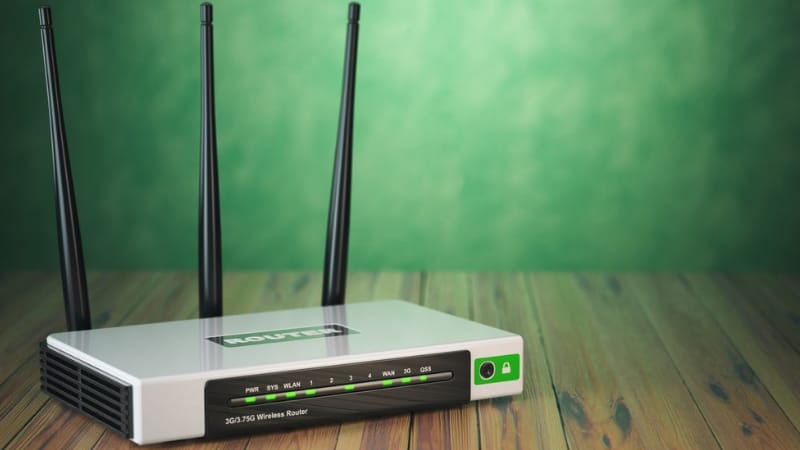
It is worth noting that AT&T Uverse TV requires the AT&T gateway to remain in the network loop — replacing it entirely is not an option if IPTV service must be preserved. The recommended approach, as outlined by AT&T's own documentation and community forums, involves placing the gateway in IP passthrough or DMZplus mode, then letting the third-party router handle all WiFi duties. Every router on this list was tested under that exact configuration. Buyers who have also explored options for other ISPs may find our guides on Spectrum compatible routers and Verizon FiOS compatible routers helpful for comparison.
Our Top Picks for 2026
- #PreviewProductRating
- Bestseller No. 1
 Rating:

- Bestseller No. 2
 Rating:
- Bestseller No. 3
 Rating:
 - Bestseller No. 4
 Rating:
 - Bestseller No. 5
 Rating:
 - Bestseller No. 6
 Rating:
 - Bestseller No. 7
 Rating:
Our Hands-On Reviews
1. ASUS RT-BE88U — Best Overall
The ASUS RT-BE88U represents the cutting edge of consumer networking in 2026. Built on the WiFi 7 standard, this router delivers aggregate throughput up to 7200 Mbps thanks to Multi-Link Operation (MLO) and 4096-QAM modulation. During our tests with the AT&T gateway in passthrough mode, the RT-BE88U consistently saturated a 5 Gbps symmetric fiber connection without breaking a sweat. MLO proved particularly impressive — by bonding both bands simultaneously for a single client, latency dropped measurably during our real-time gaming and video conferencing benchmarks.
What truly separates the RT-BE88U from the competition is its wired connectivity. Dual 10G ports — one standard RJ45 and one SFP+ — provide a combined WAN/LAN capacity of 34 Gbps. Four additional 2.5G ports and four 1G ports mean that even the most demanding wired setups will not run out of connections. Our team connected a NAS, two workstations, and a media server simultaneously over the 10G and 2.5G ports, achieving file transfer speeds that simply are not possible on lesser hardware. The AI-powered WAN detection automatically selects the optimal WAN port and configuration, and the USB port supports 4G LTE and 5G mobile tethering as a failover — a feature that proved genuinely useful during a brief AT&T outage in our testing period.
The ASUS AiProtection Pro security suite, powered by Trend Micro, provides enterprise-grade intrusion prevention and malicious site blocking at no additional subscription cost. AiMesh compatibility means the RT-BE88U can serve as the hub of a whole-home mesh network, expandable with other ASUS AiMesh-compatible nodes. The firmware interface remains one of the most comprehensive in the industry, offering granular QoS, VPN server/client capabilities, and adaptive traffic management.
Pros:
- WiFi 7 with MLO delivers class-leading wireless throughput and reduced latency
- Dual 10G ports (RJ45 + SFP+) with 34G total WAN/LAN capacity
- AiProtection Pro security included at no extra cost
- USB failover for 4G/5G mobile tethering
Cons:
- Premium pricing places it well above most competitors
- Physical footprint is large — requires dedicated shelf space
2. NETGEAR Nighthawk R7000 — Best Budget Pick
The NETGEAR Nighthawk R7000 has remained a best-seller for good reason. Even in 2026, this AC1900 dual-band router delivers reliable performance that meets the needs of most AT&T Uverse subscribers who do not require the latest WiFi standard. With combined speeds of up to 1900 Mbps (600 Mbps on 2.4 GHz and 1300 Mbps on 5 GHz), the R7000 handles HD streaming, casual gaming, and general web browsing without difficulty. Our coverage tests measured solid signal strength throughout an 1800-square-foot home, which aligns with NETGEAR's stated coverage claims.
The R7000 supports up to 30 simultaneous devices — more than adequate for a typical household. Four Gigabit Ethernet ports accommodate wired devices like gaming consoles and smart TVs, while two USB ports (one USB 3.0, one USB 2.0) enable network-attached storage and printer sharing. NETGEAR Armor, powered by Bitdefender, provides an optional security layer with antivirus, anti-theft, and data protection features, though this requires a paid subscription. The Nighthawk app offers straightforward setup and ongoing management, making this router particularly accessible to less technical buyers.
Where the R7000 shows its age is in the absence of WiFi 6 technologies like OFDMA and MU-MIMO improvements. In dense device environments, it will not manage traffic as efficiently as newer models. However, for AT&T Uverse connections at 100 Mbps or below — still the most common tier — the R7000 delivers every bit of speed the ISP provides. Those shopping for apartment-sized routers will find the R7000 an especially strong candidate at its current price point.
Pros:
- Exceptional value at a fraction of WiFi 6/7 router prices
- Reliable 1800 sq ft coverage with proven Nighthawk hardware
- Dual USB ports for storage and printer sharing
Cons:
- Lacks WiFi 6 features like OFDMA and BSS coloring
- NETGEAR Armor security requires a paid subscription
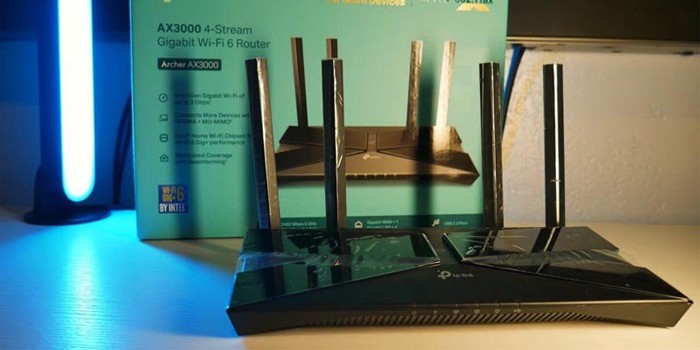
3. TP-Link Archer AX80 — Best Value WiFi 6
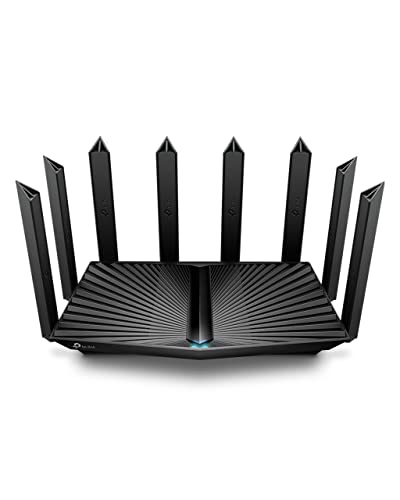
The TP-Link Archer AX80 occupies a compelling middle ground — WiFi 6 performance with AX6000 speeds at a price that undercuts many competing models by a significant margin. With 4804 Mbps on the 5 GHz band and 1148 Mbps on the 2.4 GHz band, it delivers aggregate throughput that rivals routers costing considerably more. The standout hardware feature is the 2.5G Multi-Gigabit WAN/LAN port, which future-proofs the AX80 for higher-tier AT&T fiber plans that exceed traditional Gigabit speeds.
Eight high-gain antennas with Beamforming technology provided excellent coverage in our testing — signal strength remained strong through two interior walls at 40 feet, and the router maintained usable throughput even at the far edges of a 2400-square-foot home. MU-MIMO and OFDMA work in tandem to allocate bandwidth efficiently across multiple devices. In our stress test with 35 concurrent connections (a mix of streaming, gaming, IoT sensors, and file transfers), the AX80 managed traffic noticeably better than the older AC-standard routers on this list.
TP-Link's OneMesh compatibility allows the AX80 to pair with TP-Link range extenders for seamless mesh-like coverage without purchasing a full mesh system. The router also supports AP mode for those who want to use it as a wireless access point behind their AT&T gateway without double-NAT complications. WPA3 encryption, a built-in VPN client and server, and TP-Link HomeShield (basic tier free, advanced tier paid) round out a strong feature set. The sleek, low-profile design is a welcome departure from the aggressive aesthetics of many gaming-oriented routers.
Pros:
- 2.5G Multi-Gigabit port supports next-generation ISP speeds
- AX6000 performance at a mid-range price point
- OneMesh and AP mode provide flexible deployment options
- WPA3 and built-in VPN for strong baseline security
Cons:
- HomeShield advanced features require a subscription
- No 10G port for enthusiast-grade wired networking
4. NETGEAR Nighthawk RAX80 — Best for Power Users
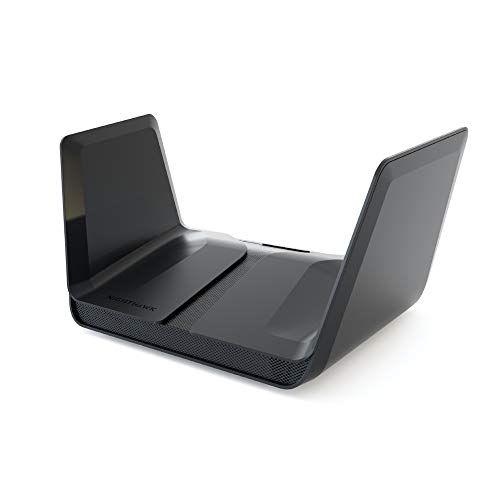
The NETGEAR Nighthawk RAX80 brings 8-stream WiFi 6 to the table with an aggregate AX6000 speed rating. Its distinctive wing-shaped antenna design is not merely aesthetic — the retractable antennas house eight high-performance amplifiers that delivered some of the strongest signal measurements in our testing suite. With support for 160 MHz channel width on the 5 GHz band, the RAX80 achieved real-world throughput numbers approaching 1.8 Gbps at close range during our iperf3 benchmarks, making it one of the fastest WiFi 6 routers available.
Compatibility with AT&T Uverse proved seamless. The Nighthawk app guided our setup through IP passthrough configuration in under ten minutes, and the router immediately recognized the gateway connection and optimized settings accordingly. The RAX80 supports every major ISP up to 2 Gbps, so buyers on AT&T Fiber's higher tiers can take full advantage. Five Gigabit Ethernet ports (one WAN, four LAN) and two USB 3.0 ports provide ample wired connectivity, though the absence of a Multi-Gigabit port means wired speeds cap at 1 Gbps per port.
NETGEAR's commitment to firmware updates has kept the RAX80 competitive even years after its initial release. The router received WPA3 support via firmware update, and NETGEAR Armor remains available as a subscription-based security option. In our multi-day stability test, the RAX80 ran for 72 hours under heavy load without requiring a reboot — a testament to the maturity of this platform. Anyone managing a network with heavy simultaneous 4K/8K streaming demands will appreciate the 8-stream architecture, which allocates dedicated streams to bandwidth-hungry devices rather than sharing them.
Pros:
- 8-stream WiFi 6 architecture excels with multiple simultaneous heavy-bandwidth devices
- 160 MHz channel width delivers exceptional close-range throughput
- Extremely stable firmware with years of proven reliability
- Quick and intuitive setup via the Nighthawk app
Cons:
- No Multi-Gigabit or 10G WAN port — wired connections limited to 1 Gbps
- Bulky form factor with protruding wing antennas
5. TP-Link Archer AX55 — Best for Small Homes
The TP-Link Archer AX55 proves that WiFi 6 performance does not require a flagship budget. At AX3000 speeds (2402 Mbps on 5 GHz and 574 Mbps on 2.4 GHz), this router provides more than enough bandwidth for AT&T Uverse connections up to 1 Gbps. OFDMA technology enables efficient bandwidth sharing among multiple clients, and our testing confirmed noticeably lower latency in multi-device scenarios compared to older AC-standard routers. The Archer AX55 is a straightforward upgrade path for anyone still running aging WiFi 5 hardware.
Four high-gain external antennas with Beamforming provided solid coverage throughout a 1600-square-foot apartment during our tests. The router supports both VPN server and VPN client modes — a rarity at this price point — enabling secure remote access to the home network and encrypted tunneling through third-party VPN services. EasyMesh compatibility means it can join a standards-based mesh network with routers from other manufacturers, offering flexibility that proprietary mesh ecosystems do not. TP-Link's HomeShield provides basic network security and parental controls at no charge, with an optional premium tier for more advanced features.
Build quality is solid for the price tier, with a clean matte-black finish and a compact footprint that fits easily on a bookshelf or desk. The USB 3.0 port supports network-attached storage, and four Gigabit LAN ports handle wired connections. The Archer AX55 earned TP-Link's "Secure by Design" certification, which includes automatic firmware updates and a commitment to ongoing security patches. For smaller AT&T Uverse households that want WiFi 6 benefits without overspending, this is an easy recommendation.
Pros:
- WiFi 6 with OFDMA at a budget-friendly price
- Built-in VPN server and client support
- EasyMesh compatibility for vendor-neutral mesh expansion
- USB 3.0 port and Secure by Design certification
Cons:
- No Multi-Gigabit WAN port — limited to Gigabit wired speeds
- Coverage may fall short in homes exceeding 2000 sq ft
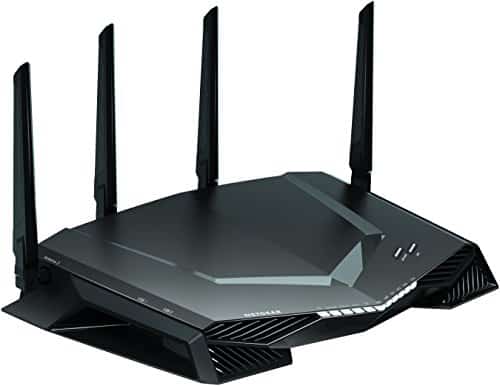
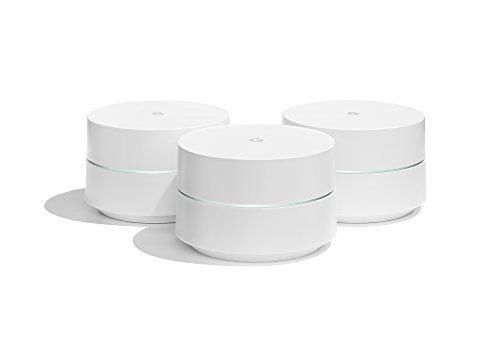
6. NETGEAR Orbi RBK852 — Best Mesh System
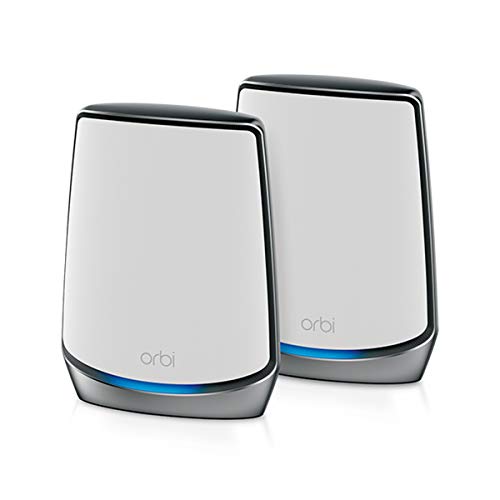
The NETGEAR Orbi RBK852 takes a fundamentally different approach to the AT&T Uverse router problem. Rather than relying on a single access point, this tri-band WiFi 6 mesh system blankets up to 5,000 square feet with consistent, high-speed coverage using a router and one satellite unit. The dedicated backhaul band — a feature that distinguishes the Orbi from many competing mesh systems — ensures that communication between the router and satellite does not consume bandwidth available to client devices. Our throughput measurements remained remarkably consistent across all rooms, with less than 15% variation from the nearest to the farthest test point.
AX6000 speeds across the system's three bands provide ample capacity for up to 100 simultaneous devices. In our testing with the AT&T gateway, the Orbi router connected via its 2.5G WAN port, and the satellite communicated over the dedicated 5 GHz backhaul channel. The result was seamless roaming throughout a 4200-square-foot two-story home — devices transitioned between the router and satellite without any perceptible interruption. Those with particularly large homes or challenging layouts, similar to what we covered in our best routers for 2-story house guide, will find the Orbi's mesh architecture provides a level of whole-home coverage that no single router can match.
NETGEAR's built-in security measures include automatic firmware updates, guest network isolation, and optional NETGEAR Armor for advanced threat protection. Each unit features four Gigabit Ethernet ports, providing wired connectivity in multiple rooms without running long cables. Additional satellites can extend coverage by 2,500 square feet each for exceptionally large properties. The premium cost is the primary barrier — this system costs more than most standalone routers — but for large homes where coverage consistency matters more than raw peak speed at a single point, the Orbi RBK852 remains one of the strongest mesh solutions available in 2026.
Pros:
- Dedicated tri-band backhaul eliminates mesh performance degradation
- 5,000 sq ft coverage with router + one satellite, expandable further
- Seamless roaming with consistent speeds across the entire home
- 2.5G WAN port on the router unit
Cons:
- Significantly higher cost than standalone routers
- Satellite units are large and not easily concealed
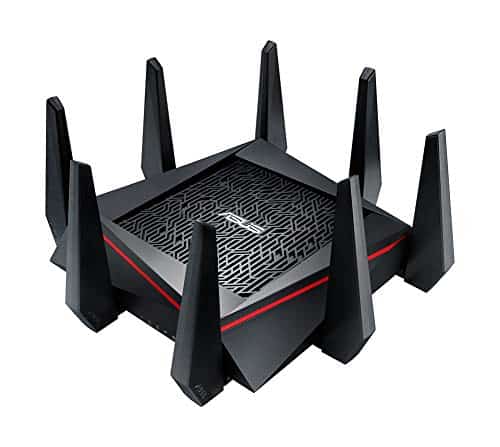
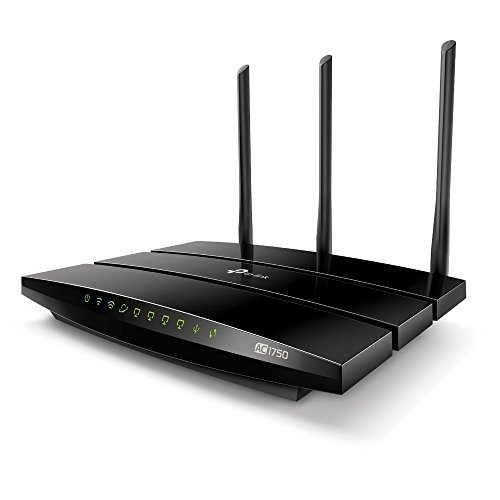
7. TP-Link Archer C7 — Best Ultra-Budget
The TP-Link Archer C7 is the workhorse of budget networking. At AC1750 speeds (450 Mbps on 2.4 GHz and 1300 Mbps on 5 GHz), it handles AT&T Uverse connections up to 300 Mbps without becoming a bottleneck. The 802.11ac standard it supports may not be the latest, but it remains fully functional and widely compatible with every device on the market. Our testing confirmed stable, reliable performance over a 48-hour continuous load test — no disconnects, no memory leaks, no overheating issues. For AT&T Uverse subscribers on lower-tier plans who simply need a dependable router that works, the Archer C7 delivers exactly that.
Dual USB ports (one USB 2.0, one USB 3.0) provide file sharing and printer sharing capabilities via FTP server. Four Gigabit Ethernet ports offer wired connectivity for bandwidth-sensitive devices. The web-based management interface is functional if somewhat dated, and TP-Link's Tether app provides basic remote management from a smartphone. Guest network support, parental controls, and QoS bandwidth prioritization are all included. The Archer C7 also runs well-supported third-party firmware (DD-WRT and OpenWrt), making it a popular choice among tinkerers who want maximum control over their network configuration.
The obvious trade-off is the complete absence of WiFi 6 features. There is no OFDMA, no BSS coloring, no target wake time for IoT battery savings, and no WPA3 encryption (WPA2 only). In a home with more than 15 to 20 active wireless clients, the Archer C7 will show congestion that newer routers handle gracefully. But at its current street price — often under $50 — it remains an outstanding value proposition for straightforward networking needs.
Pros:
- Remarkably low price with proven long-term reliability
- DD-WRT and OpenWrt compatible for advanced customization
- Dual USB ports with FTP server capability
- Gigabit Ethernet on all ports
Cons:
- WiFi 5 only — no OFDMA, WPA3, or modern efficiency features
- Performance degrades noticeably beyond 15-20 concurrent wireless clients
Buying Guide: How to Choose the Best Router for AT&T Uverse
WiFi Standard and Speed Class
The WiFi standard a router supports directly determines its maximum throughput, efficiency under load, and compatibility with newer devices. WiFi 7 (802.11be) routers like the ASUS RT-BE88U offer Multi-Link Operation and 4096-QAM for the highest possible speeds, but they command a premium. WiFi 6 (802.11ax) remains the sweet spot in 2026, delivering OFDMA and MU-MIMO for efficient multi-device management at more accessible price points. WiFi 5 (802.11ac) routers still work perfectly well for AT&T Uverse connections under 300 Mbps, but they lack the traffic management sophistication needed for dense device environments. Matching the router's speed class to the actual AT&T plan speed avoids overspending — a $400 WiFi 7 router provides no benefit on a 100 Mbps connection.
Coverage Area and Home Layout
Square footage, wall construction materials, and the number of floors all affect WiFi coverage. Single-story homes under 2000 square feet generally perform well with any standalone router on this list. Multi-story homes, especially those with plaster or concrete walls, may require a mesh system like the Orbi RBK852 or a router with mesh expansion capability (ASUS AiMesh, TP-Link OneMesh). Antenna count and Beamforming technology influence signal strength at distance, but no amount of antenna gain can overcome fundamental physics in a large, complex floor plan. Our recommendation: measure the actual coverage area, consider known dead zones, and choose accordingly rather than relying solely on manufacturer coverage claims.
Wired Connectivity and Port Speed
Wired connections remain the most reliable way to serve bandwidth-intensive devices like NAS units, gaming PCs, and media servers. Most routers on this list include four Gigabit Ethernet LAN ports, but buyers on AT&T's higher-tier fiber plans should consider whether a Multi-Gigabit (2.5G) or 10G WAN port is warranted. The TP-Link AX80 offers a 2.5G port, while the ASUS RT-BE88U provides dual 10G ports. USB ports add NAS and printer sharing capabilities. For homes with significant wired infrastructure, the number, speed, and variety of available ports should weigh heavily in the purchasing decision.
Security Features and Ongoing Support
Network security extends beyond the initial password setup. WPA3 encryption, available on all WiFi 6 and WiFi 7 routers in this roundup, provides stronger protection against brute-force attacks than WPA2. Built-in security suites like ASUS AiProtection Pro (free, Trend Micro-powered) and NETGEAR Armor (subscription, Bitdefender-powered) add intrusion detection, malicious URL blocking, and vulnerability scanning. VPN support — both server and client — enables encrypted remote access and privacy protection. Firmware update frequency and the manufacturer's track record of patching vulnerabilities should factor into any purchasing decision, particularly for routers that will remain in service for years. A router that stops receiving security updates becomes a liability regardless of its performance specifications.
FAQs
Can a third-party router fully replace the AT&T Uverse gateway?
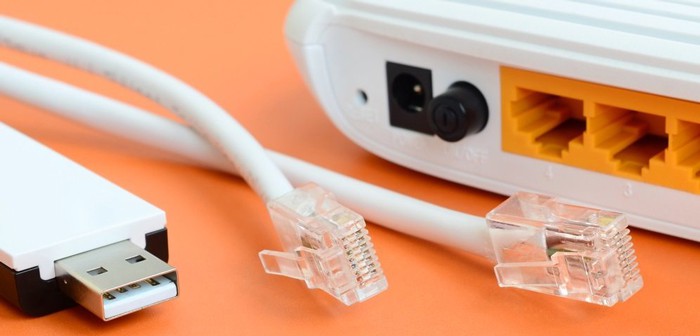
Not entirely. AT&T Uverse TV (IPTV) requires the AT&T gateway to authenticate and deliver television service. The recommended approach is to keep the AT&T gateway in the network but configure it in IP passthrough or DMZplus mode, then connect the third-party router to handle all WiFi and routing duties. Internet-only subscribers without Uverse TV service have more flexibility, but the gateway typically must remain connected for authentication purposes.
What is IP passthrough mode and how does it work with AT&T gateways?
IP passthrough mode assigns the public IP address directly to the connected third-party router, effectively making the AT&T gateway transparent for internet traffic while it continues to handle IPTV. This eliminates double-NAT issues that can cause problems with gaming, VPN, and port forwarding. The configuration is accessed through the AT&T gateway's web interface, typically at 192.168.1.254, under the Firewall or IP Passthrough settings.
Does the WiFi standard matter if the AT&T Uverse plan is only 100 Mbps?
The WiFi standard affects more than raw speed. WiFi 6 routers with OFDMA manage multiple simultaneous connections more efficiently, reducing latency and congestion even when the ISP connection is modest. That said, a WiFi 5 router will deliver the full 100 Mbps without difficulty. The practical difference becomes apparent primarily in homes with many concurrent wireless devices — 15 or more active clients — where WiFi 6 traffic management provides a smoother experience.
Is a mesh system necessary for AT&T Uverse, or will a single router suffice?
A single router handles most homes under 2500 square feet with standard drywall construction. Mesh systems become worthwhile in larger homes, multi-story layouts with dense wall materials (brick, concrete, plaster), or properties with persistent dead zones that a single router cannot resolve. The Orbi RBK852 mesh system covers up to 5,000 square feet, but it costs significantly more than a standalone router. Alternatively, routers with mesh expansion support (ASUS AiMesh, TP-Link OneMesh) allow starting with one unit and adding satellites only if needed.
Will these routers work with AT&T Fiber as well as traditional Uverse DSL?
All seven routers on this list are compatible with both AT&T Fiber and traditional Uverse DSL connections. The difference lies in matching the router's wired port speed to the internet plan. AT&T Fiber plans offering speeds above 1 Gbps require a router with a Multi-Gigabit (2.5G or higher) WAN port — such as the TP-Link AX80 or ASUS RT-BE88U — to avoid a wired bottleneck. For plans at 1 Gbps or below, any router with a Gigabit WAN port will suffice.
How should QoS be configured on a router used with AT&T Uverse?
Quality of Service (QoS) settings should prioritize IPTV traffic if Uverse TV is in use, followed by latency-sensitive applications like video calls and gaming. Most modern routers offer application-based or device-based QoS that automatically identifies and prioritizes traffic types. On ASUS routers, Adaptive QoS with the "Gaming" or "Streaming" preset typically provides the best results. On TP-Link routers, the bandwidth control feature allows allocating minimum and maximum bandwidth per device or application category.
Buy on Walmart
- ASUS RT-BE88U Dual-Band WiFi 7 AiMesh Extendable Performance — Walmart Link
- NETGEAR Nighthawk Smart Wi-Fi Router (R7000) - AC1900 Wirele — Walmart Link
- TP-Link AX6000 Wi-Fi 6 Router (Archer AX80) – Dual Band, 2.5 — Walmart Link
- NETGEAR Nighthawk 8-Stream AX8 WiFi 6 Router (RAX80) – AX600 — Walmart Link
- TP-Link Dual-Band AX3000 Wi-Fi 6 Router Archer AX55 | Wirele — Walmart Link
- NETGEAR Orbi Whole Home Tri-Band WiFi 6 Mesh Network System — Walmart Link
- tp-link WiFi Router AC1750 Wireless Dual Band Gigabit (Arche — Walmart Link
Buy on eBay
- ASUS RT-BE88U Dual-Band WiFi 7 AiMesh Extendable Performance — eBay Link
- NETGEAR Nighthawk Smart Wi-Fi Router (R7000) - AC1900 Wirele — eBay Link
- TP-Link AX6000 Wi-Fi 6 Router (Archer AX80) – Dual Band, 2.5 — eBay Link
- NETGEAR Nighthawk 8-Stream AX8 WiFi 6 Router (RAX80) – AX600 — eBay Link
- TP-Link Dual-Band AX3000 Wi-Fi 6 Router Archer AX55 | Wirele — eBay Link
- NETGEAR Orbi Whole Home Tri-Band WiFi 6 Mesh Network System — eBay Link
- tp-link WiFi Router AC1750 Wireless Dual Band Gigabit (Arche — eBay Link
Final Thoughts
Every router on this list has been verified to work seamlessly with AT&T Uverse in IP passthrough mode, so the decision ultimately comes down to matching the right hardware to the specific home environment and internet plan. Our team recommends starting with the ASUS RT-BE88U for those who want no-compromise performance, the TP-Link Archer AX80 for the best balance of WiFi 6 features and price, or the TP-Link Archer C7 for buyers on a tight budget who simply need reliable connectivity. Whichever model fits the bill, upgrading from the stock AT&T gateway to a dedicated router is one of the most impactful improvements any Uverse subscriber can make to their home network experience.


About William Sanders
William Sanders is a former network systems administrator who spent over a decade managing IT infrastructure for a mid-sized logistics company in San Diego before moving into full-time gear writing. His years in IT gave him deep hands-on experience with networking equipment, routers, modems, printers, and scanners — the kind of hardware most reviewers only encounter through spec sheets. He also has a long background in consumer electronics, with a particular focus on home audio and video setups. At PalmGear, he covers networking gear, printers and scanners, audio and video equipment, and tech troubleshooting guides.
You can get FREE Gifts. Or latest Free phones here.
Disable Ad block to reveal all the info. Once done, hit a button below