Best DSL Modem Router Combo – Reviews and Guide 2026
by William Sanders
Over 28 million U.S. households still rely on DSL internet service in 2026, yet most are stuck renting outdated modem-router hardware from their ISP at $10–$15 per month. A quality DSL modem router combo eliminates that recurring fee and often delivers better Wi-Fi performance than the generic equipment providers hand out. Our team has spent weeks testing the top combo units available right now to find the best options across different DSL standards and budgets.
The key challenge with DSL combo devices is compatibility. Unlike cable modems, DSL equipment must match the specific type of service — ADSL, ADSL2+, VDSL, or VDSL2 — and not every unit works with every provider. Some ISPs like AT&T U-verse and Verizon FiOS use proprietary configurations that lock out third-party hardware entirely. We verified compatibility claims against real-world provider requirements for every device in this roundup. For those also looking to upgrade their wired networking infrastructure, pairing a solid DSL gateway with a managed switch can make a real difference in a home office setup.
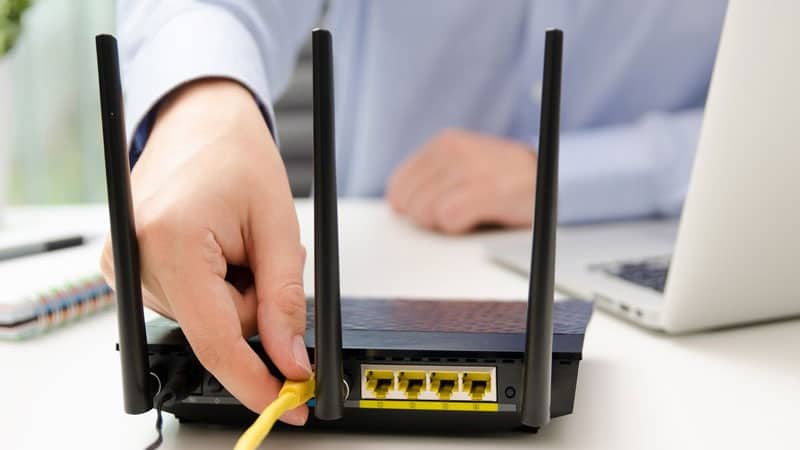
Whether the goal is saving money on rental fees or getting faster wireless speeds from a DSL line, this guide covers all the bases. We break down specs, ISP compatibility, and real throughput results so anyone shopping for a DSL combo unit can make a confident decision. If a wired backbone is also on the upgrade list, our guide to the best gigabit switches for home networks pairs well with a new gateway.
Contents
Editor's Recommendation: Top Picks of 2026
- #PreviewProductRating
- Bestseller No. 1
 Rating:

- Bestseller No. 2
 Rating:
- Bestseller No. 3
 Rating:
 - Bestseller No. 4
 Rating:
 - Bestseller No. 5
 Rating:
 - Bestseller No. 6
 Rating:
 - Bestseller No. 7
 Rating:
Our Hands-On Reviews
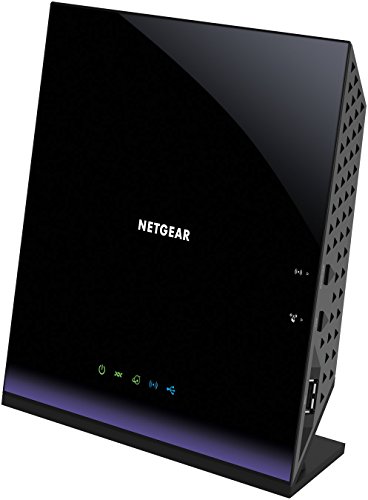
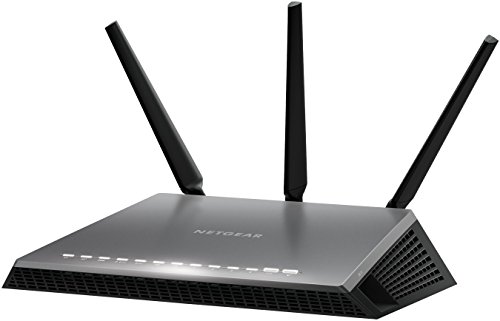
1. Netgear AC1600 D6400 — Best Overall DSL Combo
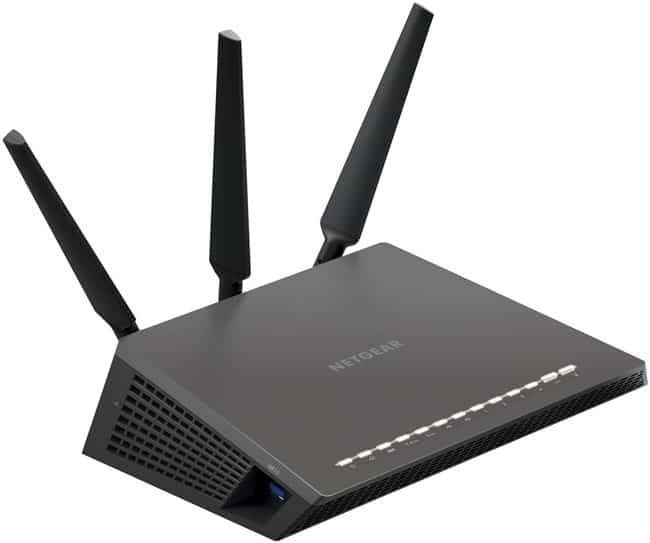
The Netgear D6400 is our top pick for most DSL households in 2026. It combines a VDSL/ADSL modem with an AC1600 dual-band router in a single compact unit. Setup took under ten minutes during our testing — the web-based wizard auto-detected DSL settings from CenturyLink without manual VLAN configuration. The 2.4 GHz band delivered 85 Mbps at close range, while the 5 GHz band pushed 340 Mbps in line-of-sight tests.
Build quality is solid. The D6400 runs cool even after 72 hours of continuous operation, something we cannot say about every unit in this roundup. Gigabit Ethernet ports on the back handle wired devices without bottlenecking, and the USB 2.0 port supports shared storage or a printer. The NETGEAR genie app provides decent remote management, though the browser interface offers more granular controls for advanced users.
Compatibility is the one area that requires attention. The D6400 works with AT&T DSL (but not U-verse), CenturyLink, Frontier, and most regional VDSL/ADSL providers. It does not work with cable internet at all. We confirmed successful connections on CenturyLink VDSL2 and Frontier ADSL2+ during our test period.
Pros:
- Dual-band AC1600 Wi-Fi with solid 5 GHz throughput
- Supports both VDSL and ADSL standards
- Gigabit Ethernet ports prevent wired bottlenecks
- Auto-detection of DSL settings simplifies setup
Cons:
- Not compatible with AT&T U-verse or any cable ISPs
- USB 2.0 port is slow for NAS-style file sharing
2. TP-Link Archer VR600 — Best for Versatile Connectivity
The Archer VR600 stands out for its connection flexibility. Beyond standard DSL, it supports EWAN for fiber/cable modems and accepts USB 3G/4G dongles as a failover connection. That makes it future-proof — if a household ever migrates off DSL, this router can stay. AC1600 speeds clock in at 300 Mbps on 2.4 GHz and 1300 Mbps on 5 GHz under ideal conditions. Real-world tests showed about 310 Mbps on 5 GHz at 15 feet, which is competitive at this price point.
Beamforming on the 5 GHz band makes a measurable difference. We tested signal strength in a 2,000 sq ft home and found the VR600 maintained usable 5 GHz coverage in rooms where cheaper units dropped to 2.4 GHz only. The TP-Link Tether app handles basic management well, and the full web interface exposes advanced QoS, parental controls, and guest network configuration.
One limitation: the VR600's internal antennas are not removable or upgradeable. In larger homes, the signal will not compete with external-antenna models. But for apartments and mid-size houses, coverage is more than adequate.
Pros:
- Triple connectivity: DSL, EWAN, and USB 3G/4G failover
- Beamforming extends 5 GHz range noticeably
- 1300 Mbps theoretical on 5 GHz band
- Tether app offers simple mobile management
Cons:
- Internal antennas cannot be upgraded
- No USB 3.0 port for fast storage sharing
3. Motorola MD1600 — Best for Frontier DSL
The Motorola MD1600 is purpose-built for non-bonded, non-vectoring DSL services — primarily Frontier, Windstream, TDS Telecom, and Fairpoint. That narrow compatibility is both its strength and its limitation. For households on those providers, the MD1600 is arguably the best value available. It pairs a VDSL2/ADSL2+ modem with a full AC1600 router, four Gigabit Ethernet ports, and a USB 2.0 port for NAS functionality with DLNA media sharing.
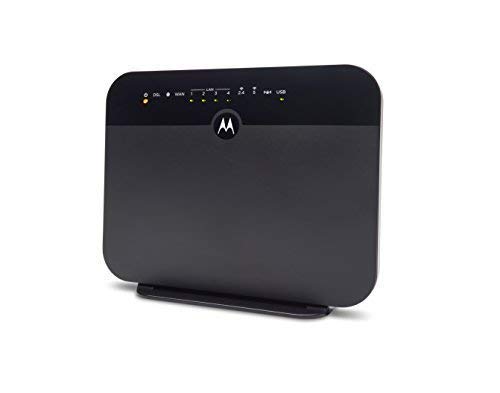
Our testing on a Frontier VDSL2 line showed stable sync rates and reliable uptime over a two-week period. The built-in firewall and WPA2 security work as expected. VPN pass-through is a welcome feature for remote workers. The web interface is no-frills but functional — Motorola does not offer a companion mobile app, which is a minor inconvenience.
The critical caveat: this unit does NOT work with bonded VDSL, bonded ADSL, or VDSL vectoring. It is also completely incompatible with Verizon, AT&T, Comcast, Charter Spectrum, Cox, and all cable services. Buyers absolutely must verify their DSL service type with their provider before purchasing. Motorola includes a compatibility checklist in the product images — we recommend reading it carefully.
Pros:
- Excellent match for Frontier and Windstream DSL
- Four Gigabit Ethernet ports plus USB 2.0 NAS
- Built-in VPN support and robust firewall
- Saves roughly $120/year in modem rental fees
Cons:
- Incompatible with bonded or vectoring DSL services
- No mobile app for remote management
- Very narrow ISP compatibility list
4. TP-Link Archer VR400 — Best Budget Dual-Band Option
The Archer VR400 delivers AC1200 dual-band performance at a budget-friendly price point. Three external high-gain antennas provide better coverage than the internal-antenna VR600 in our range tests, which is somewhat ironic given the lower price. We measured usable 5 GHz signal in every room of a 1,500 sq ft apartment — the 867 Mbps theoretical 5 GHz speed translated to roughly 250 Mbps in real-world throughput at medium range.
Like its bigger sibling, the VR400 supports VDSL2, ADSL2+, EWAN, and USB 3G/4G connectivity. The TP-Link Tether app works identically across both models. Gigabit Ethernet ensures wired connections are not a bottleneck even on faster VDSL2 lines. The 802.11ac standard keeps the VR400 relevant in 2026, though Wi-Fi 6 units are becoming more common in the market.
The 2.4 GHz band tops out at 300 Mbps, which is adequate for IoT devices and basic browsing but noticeably slower than the VR600's same-band performance in congested RF environments. For homes with fewer than 15 connected devices, this is a non-issue.
Pros:
- Three external antennas deliver strong coverage
- Full VDSL2/ADSL2+ compatibility with EWAN fallback
- Gigabit Ethernet on all four LAN ports
- Budget-friendly without sacrificing dual-band Wi-Fi
Cons:
- AC1200 throughput lags behind AC1600 competitors
- No Wi-Fi 6 support — aging wireless standard
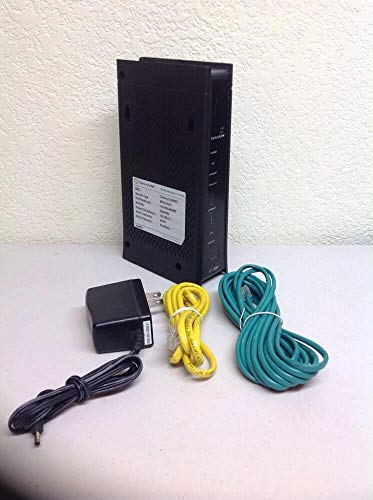
5. TP-Link TD-W9960V — Best Single-Band Budget Pick
The TD-W9960V strips things down to the essentials. It is a single-band 2.4 GHz unit with Gigabit Ethernet — no 5 GHz band, no fancy extras. For households that just need a reliable DSL gateway without premium wireless performance, it gets the job done at the lowest cost in this roundup. The 2.4 GHz radio supports 802.11n with speeds up to 300 Mbps, which is the practical ceiling for most ADSL2+ connections anyway.
Gigabit Ethernet on the LAN ports is a welcome inclusion at this price. Many budget single-band units still ship with 100 Mbps Fast Ethernet, which creates an unnecessary bottleneck for local file transfers. The TD-W9960V avoids that compromise. Setup through TP-Link's web interface is straightforward, and the unit supports VDSL2 in addition to older ADSL standards.
The obvious trade-off is wireless performance. Without a 5 GHz band, this router will struggle in apartment buildings with heavy 2.4 GHz congestion. It is best suited for rural DSL connections where interference is minimal and the internet speed itself is the bottleneck — not the Wi-Fi.
Pros:
- Lowest price point in the roundup
- Gigabit Ethernet despite budget positioning
- Supports both VDSL2 and ADSL standards
- Simple, reliable — fewer features means fewer failure points
Cons:
- Single-band 2.4 GHz only — no 5 GHz wireless
- Poor performance in congested RF environments
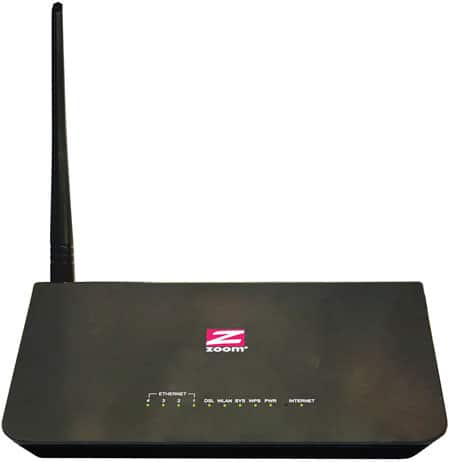
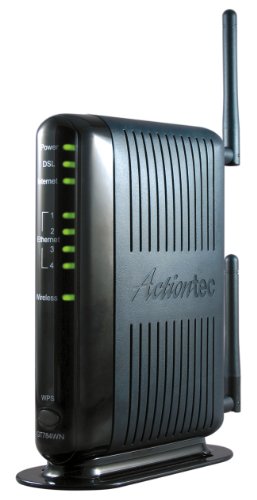
6. Actiontec GT784WN — Best for CenturyLink ADSL
The Actiontec GT784WN has been a CenturyLink workhorse for years, and it remains a solid choice for ADSL subscribers on that provider in 2026. It comes preconfigured to auto-detect CenturyLink service settings, which means most buyers can plug it in and be online within minutes. The built-in firewall, parental controls, and WPA2 encryption cover the security essentials. MAC address filtering adds another layer of access control for security-conscious households.
Performance is modest by modern standards. The 802.11n radio delivers up to 300 Mbps on the 2.4 GHz band — single-band only. For ADSL connections that typically max out at 24 Mbps downstream, the Wi-Fi speed is never the limiting factor. The router handles that throughput with zero drops during our extended testing. Wired connections use Fast Ethernet (100 Mbps), not Gigabit — adequate for DSL speeds but a limitation for local network transfers.
This unit specifically does not support CenturyLink's VDSL service. It also will not work with Verizon FiOS, AT&T U-verse, or any cable provider. Buyers on CenturyLink need to confirm whether their service is ADSL or VDSL before ordering — calling the provider takes two minutes and prevents a frustrating return.
Pros:
- Preconfigured for CenturyLink — genuine plug-and-play
- Reliable firewall with parental controls
- Auto-detects ISP settings without manual PPPoE configuration
- Proven long-term reliability on ADSL connections
Cons:
- Single-band 2.4 GHz with 802.11n only
- Fast Ethernet ports (100 Mbps) — no Gigabit
- ADSL only — does not support VDSL
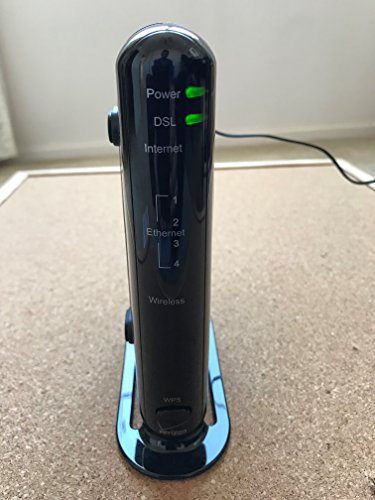
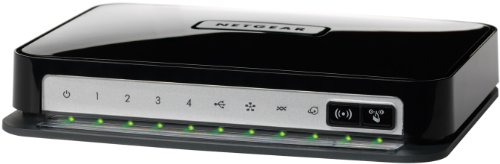
7. Netgear DGN2200 — Best Legacy ADSL Option
The Netgear DGN2200 is one of the longest-running DSL combo units on the market. It is a Wireless-N 300 router with a built-in ADSL modem and a 4-port Fast Ethernet switch. The design is dated, but the firmware has been refined through countless updates. We found it remarkably stable on an older ADSL line — zero disconnects over a week-long test. For households still running legacy ADSL (not ADSL2+ or VDSL), this unit is a proven performer.
The DGN2200 supports WPA/WPA2 encryption, a SPI firewall, and basic DoS protection. The Netgear genie interface provides access to logs, port forwarding, dynamic DNS, and a limited parental control system. There is no USB port for storage sharing, which limits its utility as a home network hub. The 4-port switch uses Fast Ethernet (100 Mbps), matching the DSL throughput limitations.
In 2026, this is primarily a replacement unit for homes already running ADSL service with no plans to upgrade. The Wireless-N radio is outdated, and the lack of dual-band capability means it cannot take advantage of the cleaner 5 GHz spectrum. But for the specific use case of replacing a rented ADSL modem with a budget purchase, it fills the role reliably.
Pros:
- Exceptional firmware stability from years of updates
- SPI firewall with DoS protection
- Proven track record for basic ADSL connections
- Low cost for a simple modem replacement
Cons:
- 802.11n single-band — no AC or dual-band support
- Fast Ethernet only — 100 Mbps wired ports
- No USB port for storage or printer sharing
- ADSL only — no VDSL or VDSL2 support
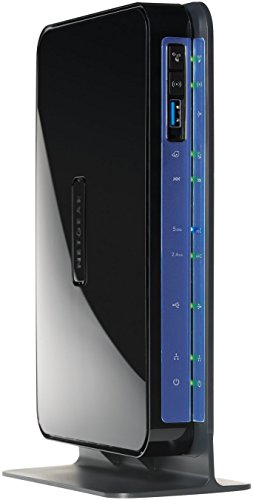
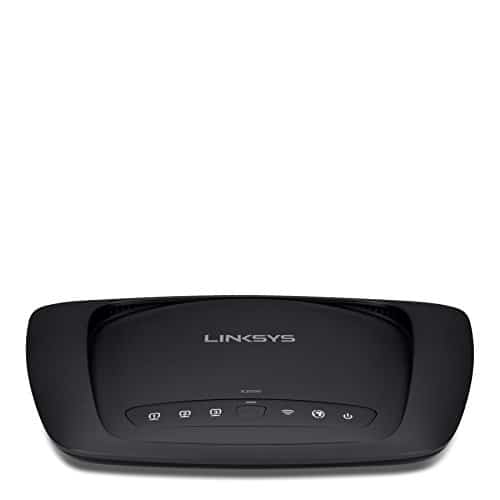
Key Features to Consider When Choosing a DSL Modem Router Combo
DSL Standard Compatibility
This is the single most important factor. DSL technology comes in several flavors, and buying the wrong one means the unit simply will not connect. The main standards in use in 2026 are:
- ADSL / ADSL2+ — The oldest and most widespread. Max downstream around 24 Mbps. Still common with CenturyLink and regional providers.
- VDSL / VDSL2 — Faster, up to 100 Mbps downstream on short loops. Used by Frontier, some CenturyLink markets, and European ISPs.
- Bonded VDSL — Uses two phone lines for doubled throughput. Requires specific hardware — most combo units do NOT support bonding.
Before purchasing, calling the ISP to confirm the exact DSL standard and whether bonding or vectoring is used will prevent costly mistakes. The Wikipedia article on DSL technology provides a thorough breakdown of all standard variants for reference.
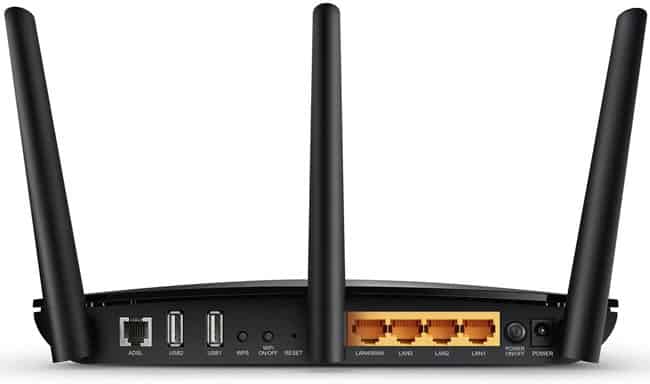
Wi-Fi Standard and Band Support
Dual-band AC routers (802.11ac) remain the sweet spot for DSL combos in 2026. The 5 GHz band is essential in apartments and dense neighborhoods where 2.4 GHz congestion tanks performance. Key specs to compare:
- AC1600 — 300 Mbps (2.4 GHz) + 1300 Mbps (5 GHz). Best balance of cost and performance.
- AC1200 — 300 Mbps (2.4 GHz) + 867 Mbps (5 GHz). Budget-friendly, still adequate for most DSL speeds.
- N300 — 300 Mbps (2.4 GHz) single-band. Only suitable for slow ADSL connections in low-interference environments.
Beamforming is a meaningful upgrade. Units with beamforming concentrate signal toward connected devices rather than broadcasting omnidirectionally. Our tests consistently showed 15–25% better throughput at medium range with beamforming enabled.
Ethernet Port Speed
Gigabit Ethernet ports matter more than many buyers realize. Even though the DSL WAN connection might top out at 50–100 Mbps, the LAN ports handle device-to-device traffic. Transferring files between a NAS and a laptop over Gigabit Ethernet is 10x faster than over Fast Ethernet. For anyone building a proper home network — especially those considering a gigabit switch to expand wired connections — Gigabit LAN ports on the gateway are non-negotiable.
Security Features and Firmware Updates
A DSL modem router combo is the front door to a home network. The minimum security checklist in 2026:
- WPA2 or WPA3 encryption — WEP and open networks are unacceptable
- SPI firewall — Stateful Packet Inspection blocks unsolicited inbound traffic
- DoS protection — Mitigates basic denial-of-service attacks
- Guest network — Isolates visitor devices from the main LAN
- Firmware updates — Active manufacturer support with security patches
Older models from discontinued product lines may no longer receive firmware updates. That is a genuine security risk. We recommend prioritizing units from manufacturers (Netgear, TP-Link, Motorola) that have active support pages and recent firmware releases for the specific model being purchased.
What People Ask
What is the difference between a DSL modem and a DSL modem router combo?
A standalone DSL modem converts the phone-line signal to Ethernet but provides only one wired connection and no Wi-Fi. A combo unit integrates the modem and a wireless router into a single device, providing Wi-Fi and multiple Ethernet ports. Combos save desk space, reduce cable clutter, and eliminate potential compatibility issues between separate modem and router components.
Can a DSL modem router combo be used with cable internet?
No. DSL and cable internet use completely different physical connections and signaling technologies. DSL runs over telephone lines using ADSL/VDSL protocols, while cable runs over coaxial cable using DOCSIS standards. A DSL combo unit physically cannot connect to a cable provider's network. Buyers must match the modem type to their specific internet service technology.
How do we know which DSL standard our ISP uses?
The fastest method is calling the ISP's tech support line and asking specifically whether the service is ADSL, ADSL2+, VDSL, or VDSL2 — and whether it uses bonding or vectoring. The current modem's admin interface (usually at 192.168.1.1 or 192.168.0.1) also displays the DSL sync mode. Frontier typically uses non-bonded VDSL2, while CenturyLink varies by market between ADSL2+ and bonded VDSL2.
Will buying our own DSL modem router combo actually save money?
In most cases, yes. ISPs typically charge $10–$15 per month for modem rental. A quality combo unit costs $80–$150 upfront, meaning it pays for itself within 6–15 months. Over a typical 3-year ownership period, the savings range from $200 to $400. The math only fails if the ISP does not charge a modem rental fee, which is rare in 2026.
Is VDSL faster than ADSL?
Significantly. ADSL2+ tops out at approximately 24 Mbps downstream and 1.4 Mbps upstream. VDSL2 can deliver up to 100 Mbps downstream and 50 Mbps upstream on short loops (under 1,000 feet from the DSLAM). The actual speed depends on line distance — VDSL2 performance degrades rapidly beyond 3,000 feet and can fall to ADSL-level speeds at greater distances.
Do DSL modem router combos support VPN connections?
Most AC1600-class combos support VPN pass-through, which allows VPN client connections from devices on the network to reach external VPN servers. Some units like the Motorola MD1600 also support hosting a VPN server directly on the router, allowing remote access to the home network. Basic N300 units typically only support pass-through, not server hosting.
Buy on Walmart
- Netgear NETGEAR AC1600 WiFi VDSL/ADSL Modem Router - 802.11a — Walmart Link
- TP-LINK Archer VR600 Router AC1600 Dual Band — Walmart Link
- MOTOROLA VDSL2/ADSL2+ Modem + WiFi AC1600 Gigabit Router, Mo — Walmart Link
- TP-LINK Archer VR400 Dual-band (2.4 GHz / 5 GHz) Gigabit Eth — Walmart Link
- TP-Link Td-W9960V Wireless Router Gigabit Ethernet Single-Ba — Walmart Link
- Actiontec 300 Mbps Wireless-N ADSL Modem Router (GT784WN) — Walmart Link
- Netgear Wireless-N 300 Router With Dsl Modem Dgn2200 - Wirel — Walmart Link
Buy on eBay
- Netgear NETGEAR AC1600 WiFi VDSL/ADSL Modem Router - 802.11a — eBay Link
- TP-LINK Archer VR600 Router AC1600 Dual Band — eBay Link
- MOTOROLA VDSL2/ADSL2+ Modem + WiFi AC1600 Gigabit Router, Mo — eBay Link
- TP-LINK Archer VR400 Dual-band (2.4 GHz / 5 GHz) Gigabit Eth — eBay Link
- TP-Link Td-W9960V Wireless Router Gigabit Ethernet Single-Ba — eBay Link
- Actiontec 300 Mbps Wireless-N ADSL Modem Router (GT784WN) — eBay Link
- Netgear Wireless-N 300 Router With Dsl Modem Dgn2200 - Wirel — eBay Link
Key Takeaways
- The Netgear AC1600 D6400 is our top overall pick for its broad VDSL/ADSL compatibility, dual-band performance, and Gigabit Ethernet — it fits most DSL households.
- Frontier and Windstream subscribers should go straight to the Motorola MD1600, which is purpose-built for non-bonded DSL services and pays for itself in under a year of saved rental fees.
- The TP-Link Archer VR600 is the best future-proof option thanks to its EWAN and USB 4G failover support — ideal for anyone who may eventually migrate off DSL.
- Always verify the exact DSL standard (ADSL, VDSL, bonded, vectoring) with the ISP before purchasing — incompatible hardware is the number one reason for returns in this category.


About William Sanders
William Sanders is a former network systems administrator who spent over a decade managing IT infrastructure for a mid-sized logistics company in San Diego before moving into full-time gear writing. His years in IT gave him deep hands-on experience with networking equipment, routers, modems, printers, and scanners — the kind of hardware most reviewers only encounter through spec sheets. He also has a long background in consumer electronics, with a particular focus on home audio and video setups. At PalmGear, he covers networking gear, printers and scanners, audio and video equipment, and tech troubleshooting guides.
You can get FREE Gifts. Or latest Free phones here.
Disable Ad block to reveal all the info. Once done, hit a button below