What to Look for Before Buying a Nut Splitter
by Sandra Holt
The answer to what to look for before buying a nut splitter is direct: jaw capacity matched to the target fastener range, blade material rated above the fastener's hardness, and a housing construction that holds alignment under sustained load without flexing. Nut splitters used in automotive, plumbing, and home appliance repair contexts face considerable mechanical stress — selecting a model without cross-referencing those specifications to the actual work environment almost always results in stalled splits, damaged threads, or a cracked tool body that fails mid-job.
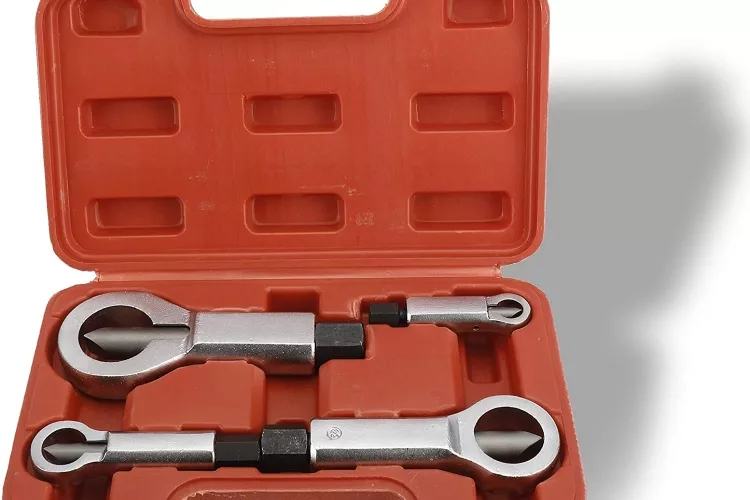
According to Wikipedia's overview of nut splitters, the tool works by driving a hardened chisel blade into the flat face of a seized nut until the metal fractures along a controlled path, leaving the underlying bolt and surrounding components undisturbed. That mechanism is elegantly simple, but its reliability in practice depends entirely on the precision of jaw fit, blade edge geometry, and housing rigidity under load — variables that differ substantially across price tiers and manufacturers.
Buyers who approach nut splitters as interchangeable commodity tools encounter failures at the worst possible moments — midway through an exhaust manifold job or deep inside an RV undercarriage where access is limited. Anyone who has worked through RV mechanical and electrical systems understands how confined access points make tool reliability non-negotiable. The sections below examine each specification category in detail and explain what separates a capable tool from one that will be discarded after its first serious application.
Contents
- The Role of a Nut Splitter in Fastener Removal
- What to Look for Before Buying a Nut Splitter: Core Specifications
- Price Tiers and What Each Level Delivers
- Strengths and Trade-Offs Across Design Types
- Common Errors That Lead to Tool Failure or Collateral Damage
- Routine Care That Extends Service Life
- Diagnosing Performance Problems in the Field
The Role of a Nut Splitter in Fastener Removal
How the Mechanism Works
A nut splitter operates through purely mechanical principle: a drive screw advances a hardened chisel blade against the flat of a nut until internal stress causes fracture along the cutting edge. The body of the tool wraps around the nut and holds it in position while the blade penetrates progressively deeper with each turn of the drive screw. Unlike bolt extractors or penetrating oil approaches, nut splitters do not rely on thread engagement or chemical release — the nut is destroyed to preserve everything behind it.
The critical variable in this process is blade hardness relative to nut hardness. Standard carbon steel nuts fracture cleanly under most commercial splitters, while stainless steel, grade 8, and case-hardened fasteners require blades of comparable or superior Rockwell hardness to avoid deflection or premature dulling. Tools that omit blade material specifications from their packaging are almost always soft-blade designs intended for light-duty use only.
Where Nut Splitters See the Most Use
Automotive exhaust systems, suspension components, and chassis fasteners represent the most common application environment, where corrosion from road salt and heat cycling renders conventional removal ineffective. Plumbing connections in older structures, industrial machinery maintenance, and owner-serviced RV undercarriage hardware account for the remaining market. The tool also appears in appliance repair scenarios where corrosion has set in around mounting hardware — any technician who has worked through vehicle or HVAC maintenance on a DIY basis recognizes corroded fasteners as a recurring obstacle that makes a reliable nut splitter a logical addition to the kit.
What to Look for Before Buying a Nut Splitter: Core Specifications
Jaw Capacity and Nut Range
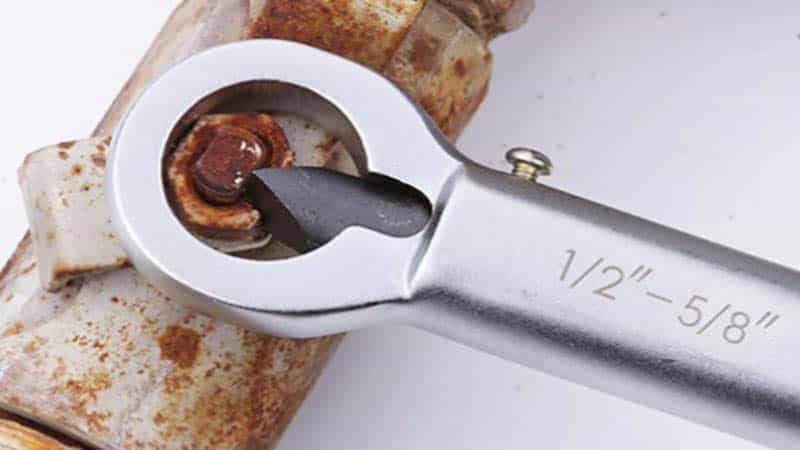
Jaw capacity is the specification most frequently misread at the point of purchase. The published range — typically expressed as minimum and maximum nut flat-to-flat measurement — indicates the span the jaws can physically accommodate, not necessarily the span at which the tool exerts maximum splitting force. Most tools perform best in the middle third of their stated range, with effectiveness declining toward both extremes.
- Standard sets cover M8 through M27 or the SAE equivalent, adequate for most automotive and general hardware applications
- Heavy-duty sets extend to M36 or M46 for industrial plumbing and structural fastener work
- Buyers working with a known, recurring fastener size benefit from selecting a tool where that size falls near the center of the rated jaw range
- Four-piece and larger sets cover overlapping ranges, reducing the likelihood of operating any single piece at its capacity limits
Pro tip: When a nut measures close to the upper limit of a tool's jaw range, move up to the next larger piece rather than forcing the fit — overloading the jaws at maximum capacity is the primary cause of housing cracks in budget and mid-range models.
Blade Material and Edge Geometry
Chrome vanadium and S2 tool steel represent the accepted minimum for blades intended for automotive-grade fasteners. Carbon steel blades — common in sub-$15 tools — dull rapidly against hardened nuts and occasionally crack under peak load. Edge angle matters as well: a sharper, narrower wedge concentrates stress more effectively on the nut flat but is more susceptible to chipping on stainless or high-alloy steel; a blunter edge tolerates harder materials more reliably but demands higher torque input to initiate fracture. Neither geometry is universally superior — the application determines which is appropriate.
Price Tiers and What Each Level Delivers
Entry-Level Models
Tools priced below $20 are almost universally single-piece designs covering a narrow nut range, built with cast iron or low-grade carbon steel bodies and non-replaceable blades. They perform adequately on lightly corroded, standard-hardness hardware below metric M16 but fail predictably on anything harder or larger. The value proposition is limited to infrequent users with narrowly defined, low-stress applications where the cost of failure is low.
Professional-Grade Sets
Sets in the $45–$90 range typically include four to six pieces covering M8 through M36, with forged chrome vanadium bodies, replaceable blades, and either a lifetime or multi-year manufacturer warranty. These represent the most cost-efficient category for serious home mechanics and tradespeople who encounter seized fasteners regularly. The table below summarizes what buyers can expect at each investment level.
| Feature | Budget (Under $20) | Mid-Range ($20–$50) | Professional ($50+) |
|---|---|---|---|
| Body material | Cast iron | Chrome vanadium | Forged alloy steel |
| Nut size range | M8–M24 | M8–M30 | M10–M46 |
| Pieces in set | 1–2 | 3–4 | 4–6 |
| Blade replaceable | No | Occasionally | Yes |
| Warranty coverage | None | Limited (90 days) | 1–3 years or lifetime |
Strengths and Trade-Offs Across Design Types
Hydraulic vs. Manual Models
Manual nut splitters — advanced by a standard hex drive or wrench — represent the overwhelming majority of the consumer market and are adequate for most applications where access allows a reasonable wrench swing. Hydraulic models, which deliver splitting force through an integrated ram, are primarily encountered in professional automotive and industrial environments where consistent force application and faster cycle times justify the higher cost and added weight.
- Manual models: lower cost, lighter, broadly wrench-compatible, well-suited for occasional use in confined spaces
- Hydraulic models: consistent splitting force independent of operator torque variability, advantageous for repetitive high-volume work
- Pneumatic variants exist but remain rare outside dedicated industrial tool catalogs
Set Configurations vs. Single Units
Single-unit purchases are rational when the application is narrowly defined — a specific fastener size that appears repeatedly in one type of work — and the budget ceiling is low. Sets provide coverage flexibility at a modest per-piece premium and reduce the risk of consistently operating near any individual tool's rated maximum. For most general-purpose buyers, a four-piece set covering M8 through M30 or M36 delivers the most reliable cost-per-application ratio over a realistic service period.
Warning: Purchasing a single-piece splitter with an intentionally wide jaw range to cover all applications is a common false economy — tools operated consistently near their maximum jaw capacity show significantly higher housing failure rates than those kept within the middle of their rated range.
Common Errors That Lead to Tool Failure or Collateral Damage
Sizing and Fit Mistakes
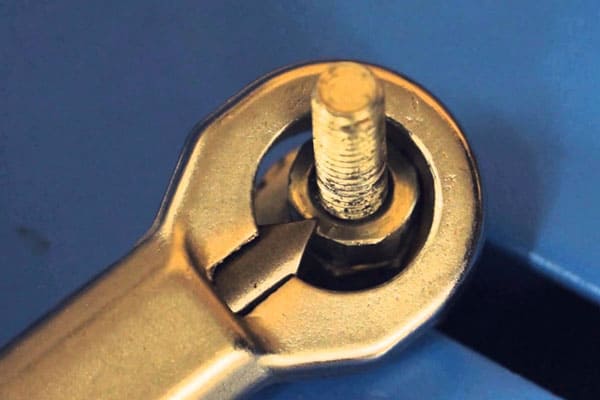
The most prevalent error is selecting a tool whose stated capacity nominally covers the target nut but places that size at the upper extreme of the jaw range. Under load, jaws operating near maximum capacity flex outward rather than transmitting force directly to the blade, resulting in a split that stalls partway through the nut wall and frequently damages the tool body in the process. A secondary sizing error involves metric and SAE confusion — a tool rated for metric M22 does not reliably fit a 7/8-inch imperial nut despite nominally similar dimensions, and assuming interchangeability between measurement systems is a frequent source of field failures.
Material Compatibility Oversights
Stainless steel fasteners require hardened blades — most budget tools are not rated for stainless and will show visible blade deformation after a single application on grade 316 or 304 material. Grade 8 and metric class 10.9 fasteners similarly demand professional-grade blade stock to achieve a clean fracture. Applying an under-rated tool to a harder nut does not simply fail to split — it routinely damages the tool housing, deforms the surrounding component, or causes the tool to slip under load at the worst possible moment. Cross-referencing fastener grade against blade specification before beginning work is standard practice in professional settings and equally relevant for capable home mechanics.
Routine Care That Extends Service Life
Post-Use Cleaning
Metal debris and corrosion fragments generated during splitting embed in the jaw seat and blade contact surfaces if not removed promptly, accelerating wear on the drive threads and reducing splitting force over successive uses. A wire brush followed by a light application of penetrating oil on the drive screw mechanism after each use is the standard practice across most manufacturers' maintenance documentation. Tools used in wet environments — marine, outdoor construction, or plumbing applications — benefit from a moisture-displacing lubricant applied to all metal surfaces before storage to prevent corrosion from setting into the precision surfaces that control blade alignment.
Storage and Lubrication Practices
- Store tools with the blade fully retracted to relieve compression stress on the drive threads between uses
- Apply a light grease coating to the drive screw threads periodically to reduce operating torque and extend thread service life
- Avoid loose contact between tools in storage without protective sleeves, since blade edge damage from contact with other metal tools is a frequently cited finding in professional tool condition audits
- On tools with replaceable blades, inspect the cutting edge after each heavy-use session and swap the blade before visible chipping progresses to a field failure
Insight: A well-maintained mid-range splitter routinely outperforms a neglected professional-grade tool — drive thread wear from accumulated debris is the most common cause of degraded splitting force, regardless of the original build quality or price paid.
Diagnosing Performance Problems in the Field
Blade Slipping and Incomplete Cuts
Blade slippage — where the chisel edge rides across the nut face rather than biting in — typically indicates one of two conditions: the blade edge has dulled below the minimum effective cutting angle, or the jaw is not seating flush against the nut flat before force is applied. The latter is frequently a sizing or setup issue rather than a tool defect. Confirming that the jaw sits parallel to the nut flat and that the blade contacts the center of the flat rather than a corner resolves most slippage events without requiring tool replacement. The same specification-matching discipline that applies to nut splitters governs buying decisions across precision tool categories — a principle equally relevant when evaluating equipment like vinyl cutting machines, where blade-to-material compatibility determines output quality.
Housing Deformation and Thread Wear
Visible jaw spread — where the two halves of the tool body separate laterally under load rather than maintaining alignment — indicates housing fatigue, most commonly resulting from repeated use at or beyond rated capacity. This condition cannot be corrected in the field and constitutes a direct safety hazard; the tool must be taken out of service immediately. Drive thread wear, identifiable by increasing backlash in the drive screw before splitting force reaches the blade, is a more gradual failure mode that responds to re-lubrication in early stages but eventually requires blade assembly replacement in tools that support it. Catching both conditions early through routine inspection after each use session is the most cost-effective maintenance strategy available.
Frequently Asked Questions
What size nut splitter does most automotive work require?
Most passenger vehicle and light truck exhaust, suspension, and chassis hardware falls within the M10 to M27 metric range or the 3/8-inch to 1-inch SAE equivalent, making a three- or four-piece set covering M8 through M30 the standard recommendation for general automotive applications.
Can a nut splitter be used on stainless steel fasteners?
Stainless steel fasteners require tools with hardened chrome vanadium or S2 tool steel blades rated for the material; most entry-level models are not designed for stainless and will deform rather than fracture the fastener cleanly, leaving the nut intact and the blade damaged.
How does jaw capacity affect splitting performance?
Tools operated near the upper limit of their jaw capacity transmit reduced force to the blade because the housing flexes outward under load; selecting a tool where the target nut size falls within the middle third of the jaw range consistently produces the most reliable and complete splits.
Are replaceable blades worth the higher initial cost?
For users who encounter seized fasteners regularly, replaceable blades represent a significant long-term cost advantage — a dulled blade in a non-replaceable tool renders the entire unit unusable, while a blade swap on a serviceable model restores full performance at a fraction of full replacement cost.
What is the practical difference between hydraulic and manual nut splitters?
Manual models advance the blade through wrench or hex-drive torque, making them suitable for most occasional-use applications; hydraulic models deliver consistent ram-driven force independent of operator technique, which is advantageous in high-volume professional work where torque variability would otherwise produce inconsistent results.
How frequently should the drive threads be lubricated?
Most manufacturers recommend a light grease application on the drive threads after every five to ten uses under normal dry conditions, with more frequent service recommended after use in wet, gritty, or chemically contaminated environments to prevent accelerated thread wear and loss of splitting force.
Final Thoughts
Understanding what to look for before buying a nut splitter — jaw capacity relative to target fastener size, blade material grade matched to fastener hardness, and housing rigidity sufficient to maintain alignment under load — separates a purchase that delivers years of reliable service from one that fails on the first serious application. Buyers are advised to identify the specific fastener sizes and material grades they expect to encounter before evaluating any product, then compare options using the tier table above as a baseline reference. Selecting the appropriate set configuration and committing to basic maintenance practices from the first use will consistently extend tool service life beyond what the price point alone might suggest.


About Sandra Holt
Sandra Holt spent eight years as a project manager for a residential renovation company in Portland, Oregon, overseeing kitchen and bathroom remodels from initial estimate through final walkthrough. That work exposed her to an unusually wide range of home equipment — from HVLP spray guns and paint sprayers on the tools side to range hoods, kitchen faucets, and countertop appliances on the appliance side. After leaving the trades, she moved into consumer product writing, bringing the same methodical, hands-on approach she used to evaluate contractor-grade tools to everyday home gear. At PalmGear, she covers kitchen appliances, home tools, paint and finishing equipment, and cleaning gear.
You can get FREE Gifts. Or latest Free phones here.
Disable Ad block to reveal all the info. Once done, hit a button below