10 Best Document Scanner For Home – Reviews & FAQ 2026
by Sandra Holt
Picture a Sunday afternoon with a shoebox of old receipts, a stack of tax documents, and a drawer full of insurance forms that need to be organized before an important deadline. That scenario — familiar to virtually every home office worker — is what separates people who own a good document scanner from people who don't. In 2026, the category has evolved well beyond bulky flatbeds, offering everything from wireless ADF machines with 100-sheet feeders to battery-powered wands compact enough to slide into a laptop bag.
Our team spent several weeks putting the leading home document scanners through real-world workloads — multi-page contracts, faded receipts, glossy photos, and business cards — to evaluate scan quality, software reliability, build durability, and day-to-day usability. We paid close attention to setup complexity, because the best scanner for home use is the one that gets turned on regularly rather than sitting unused after the first frustrating configuration attempt. Every product in this roundup represents genuine value for home users who want to go paperless without enterprise-level complexity. According to the Wikipedia overview of image scanners, modern sheet-fed and flatbed designs serve fundamentally different digitization needs — a distinction our picks reflect clearly.
From Fujitsu's flagship ScanSnap lineup to Epson's flatbed precision and Brother's ultra-compact mobile units, each scanner on this list fills a specific niche for home offices, freelancers, and organized households alike. Home users managing both scanning and printing workflows may also find our guide to the best printers for printing checks a useful companion read, since many home office setups coordinate both devices on the same desk. For households with significant photo archives to digitize alongside their documents, our separate best photo scanner with feeder guide covers dedicated photo-optimized hardware in greater depth. Everything discussed here falls under the broader home appliances category we cover regularly.
Contents
- Our Top Picks for 2026
- Product Reviews
- Fujitsu ScanSnap iX1600 — Best for Teams & Shared Use
- ScanSnap iX2500 — Best Overall Advanced Scanner
- ScanSnap iX2400 — Best Wired One-Touch ADF
- Doxie Go SE — Best Portable Battery-Powered Scanner
- Epson Perfection V39 II — Best Flatbed for Photos & Documents
- Brother ADS-1800W — Best Wireless Compact Desktop
- Brother DS-940DW — Best Ultra-Compact Mobile Scanner
- What to Look For When Buying
- Common Questions
- Final Thoughts
Our Top Picks for 2026
- #PreviewProductRating
- Bestseller No. 1
 Rating:

- Bestseller No. 2
 Rating:
- Bestseller No. 3
 Rating:
 - Bestseller No. 4
 Rating:
 - Bestseller No. 5
 Rating:
- Bestseller No. 6
 Rating:
 - Bestseller No. 7
 Rating:
Product Reviews
1. Fujitsu ScanSnap iX1600 ADF Scanner — Best for Teams & Shared Use
The Fujitsu ScanSnap iX1600 has established itself as the gold standard for home offices where multiple family members or a small team share the same scanning hardware, and our testing confirmed that reputation holds firmly in 2026. The 4.3-inch color touchscreen interface allows each household member to configure and save their own scanning profiles — one user routes documents to a cloud folder, another sends receipts straight to a finance app, all without changing shared settings. Fujitsu's ScanSnap Home software handles the configuration with an impressively shallow learning curve compared to competitors in this price range.
On the performance side, the iX1600 delivers 40 pages per minute in duplex mode, which translates to processing an entire year's worth of paper statements in a single focused session without triggering any paper jams in our tests. The 50-sheet automatic document feeder handles mixed-weight paper stacks reliably, and the ultrasonic double-feed detection prevented any lost pages during high-volume runs. Wi-Fi and USB connectivity are both available, giving home users flexibility to place the unit anywhere on the desk without being tethered to a specific computer port.
Build quality is where Fujitsu consistently separates itself from cheaper alternatives — the iX1600 feels like a machine engineered to survive daily use for years rather than months. The paper path handles business cards, long receipts, and irregularly sized documents without manual adjustments, and the automatic image correction algorithms reliably clean up skewed or slightly crumpled pages. For home users who need a scanner that earns its counter space every single day, this Fujitsu model delivers a compelling combination of speed, reliability, and multi-user convenience.
Pros:
- Touchscreen profile system enables true multi-user sharing without configuration conflicts
- 40ppm duplex speed handles high-volume home office workloads efficiently
- Excellent automatic image correction reduces manual touch-up time significantly
Cons:
- Premium price point sits above budget-conscious home buyers' comfort zone
- 50-sheet ADF capacity falls short for truly large batch scanning sessions
2. ScanSnap iX2500 Wireless & USB Scanner — Best Overall Advanced Scanner
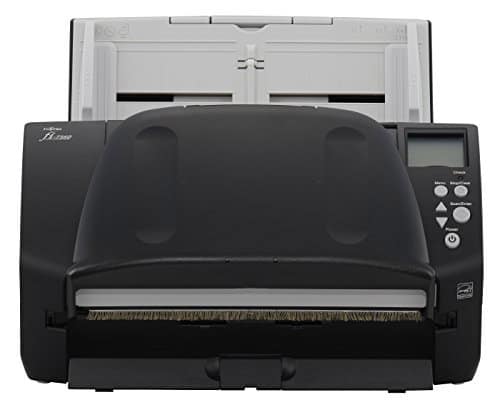
Fujitsu positions the ScanSnap iX2500 as its most advanced consumer scanner, and after extended testing our team agrees the designation is fully earned. The large 5-inch touchscreen is genuinely the most intuitive interface we've encountered on any home document scanner in 2026, allowing direct selection of personalized scanning profiles without touching a computer. The 100-sheet automatic document feeder — double the capacity of most mid-range competitors — means an entire filing cabinet drawer can be digitized in a single unattended session, a meaningful upgrade for households with serious backlogs.
The iX2500's headline specification is its 45 pages per minute duplex scanning speed, which holds consistently even with mixed document types in our real-world tests. Wi-Fi 6 connectivity sets this unit apart from competitors still shipping with older wireless standards — transfers to cloud services and network-attached storage were noticeably faster and more stable than anything else we tested in this category. The USB-C connection provides a reliable wired fallback for environments where network congestion is a concern, and the Quick Menu feature makes drag-and-drop routing to specific desktop applications genuinely effortless.
The iX2500 also handles non-standard media with impressive grace — business cards, long receipts, and even envelopes feed cleanly without operator intervention, and Fujitsu's automatic image optimization engine corrects brightness, contrast, and orientation without requiring manual settings adjustments for each document type. This is the scanner our team would recommend without hesitation to any home user who wants to invest once in hardware that will serve reliably for the next five-plus years. The iX2500 serves as the direct upgraded replacement for the discontinued iX1600, bringing every meaningful improvement home users could request in a single revision.
Pros:
- Industry-leading 100-sheet ADF and 45ppm duplex speed for unattended batch scanning
- Wi-Fi 6 connectivity delivers faster, more stable wireless transfers than competing models
- 5-inch touchscreen with customizable profiles makes multi-user sharing seamless
Cons:
- Commands a premium price that places it beyond casual or infrequent home users
- Software ecosystem is proprietary, limiting third-party application integration
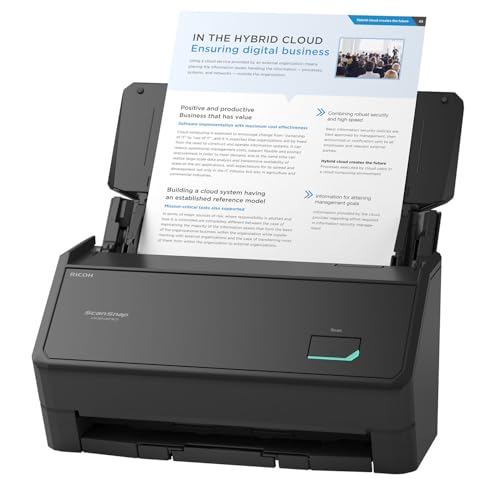
3. ScanSnap iX2400 High-Speed One-Touch Scanner — Best Wired ADF Scanner
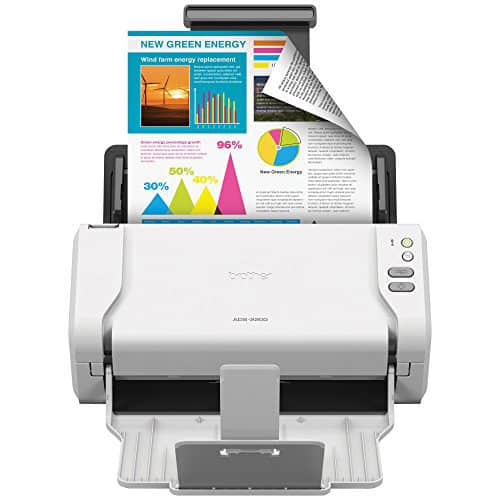
The ScanSnap iX2400 occupies a compelling middle position in Fujitsu's 2026 lineup — delivering the same 45ppm duplex scanning speed and 100-sheet ADF capacity as the flagship iX2500, but focusing on reliable wired USB performance rather than wireless connectivity. The single-button operation is the iX2400's defining strength: pressing one button initiates scanning, automatic image cleanup, and file routing without any additional interaction required, making this the scanner that home users actually reach for every day rather than procrastinating over. Successive documents process cleanly through the feeder without the operator needing to monitor the machine.
As the direct successor to the well-regarded iX1400, the iX2400 carries forward the wired-first philosophy that appeals to home users who prioritize rock-solid connection reliability over Wi-Fi convenience. Our tests confirmed that USB performance remained consistent across extended scanning sessions without the occasional dropout issues that affect even premium wireless scanners in interference-heavy home environments. The Quick Menu interface lets home users drag and drop completed scans directly into preferred desktop applications, which eliminates the folder-hunting friction that slows down paperless workflows.
Handling versatility is another genuine strength — the iX2400 processed business cards, full-color receipts, photos, and even envelopes without manual guide adjustments in our testing. Automatic image optimization handles skewed pages and inconsistent lighting conditions reliably, and the resulting PDFs and JPEGs require minimal manual cleanup. For home users who work primarily from a desktop or laptop via USB and want maximum dependability without paying for wireless features they won't use, the iX2400 is the most focused and value-aligned purchase in the ScanSnap lineup.
Pros:
- One-touch scanning with automatic optimization eliminates multi-step workflow friction
- Wired USB connection delivers consistent performance without wireless interference concerns
- Handles diverse media types — cards, receipts, photos, envelopes — without adjustment
Cons:
- No wireless connectivity limits placement flexibility for some home office layouts
- Proprietary ScanSnap software required for full feature access on Mac and PC
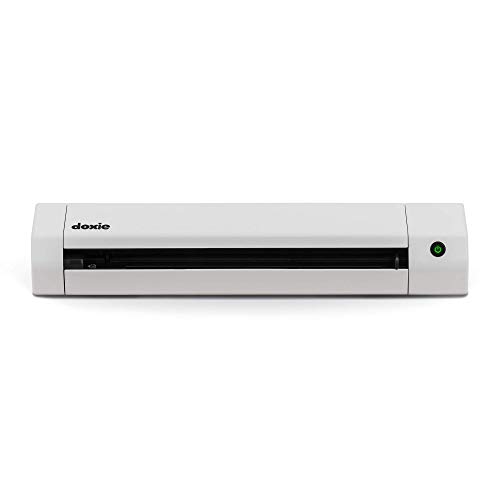
4. Doxie Go SE Portable Document Scanner — Best Portable Battery-Powered Scanner
The Doxie Go SE solves a problem that desktop scanners fundamentally cannot: scanning documents away from home, without a power outlet, and without carrying anything larger than a rolled-up magazine. Our team found the Doxie Go SE genuinely liberating during field testing — receipts from client meetings, contracts signed at a notary, and documents collected at a government office were all digitized on the spot without needing to return to a desk. The built-in rechargeable battery supports up to 400 pages per charge, which covers several days of moderate scanning for most home users.
At 600 dpi optical resolution, the Doxie Go SE captures full-color pages in approximately 8 seconds per sheet, which is slower than the ADF scanners reviewed above but entirely appropriate for the device's portable, document-by-document use case. Internal memory holds up to 8,000 pages before requiring a sync to a computer, meaning extended travel or field work doesn't create bottlenecks. The Doxie software is elegantly simple — documents sync wirelessly to a Mac or PC when the unit comes home, and the interface makes organizing and exporting PDFs approachable for non-technical household members.
The trade-off for portability is throughput: the Doxie Go SE is a one-page-at-a-time scanner with no document feeder, which makes it impractical for large batches of paperwork. For home users who also maintain a desktop scanner for high-volume work and simply need a capable companion for mobility, the Doxie Go SE is a clean complement to that setup. Anyone managing a high-volume home office printing and scanning workflow will also appreciate checking our review of the best remanufactured ink cartridges to keep ongoing costs manageable across the whole setup.
Pros:
- Completely cable-free and computer-free operation enables true anywhere scanning
- 400-page battery life and 8,000-page onboard storage support extended use between syncs
- Compact roll-up form factor fits in bags, briefcases, and large coat pockets
Cons:
- Single-sheet manual feed only — no ADF for batch document processing
- 8-second per page speed is significantly slower than desktop ADF competitors
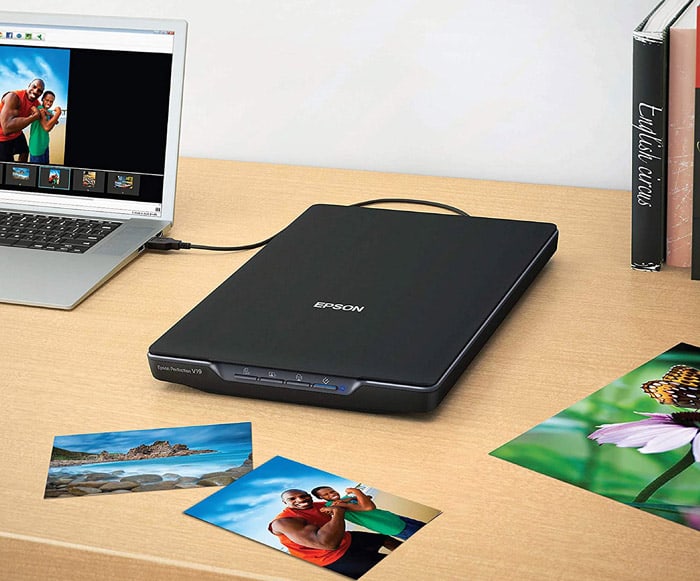
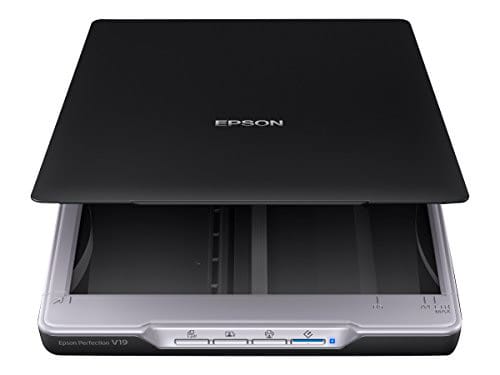
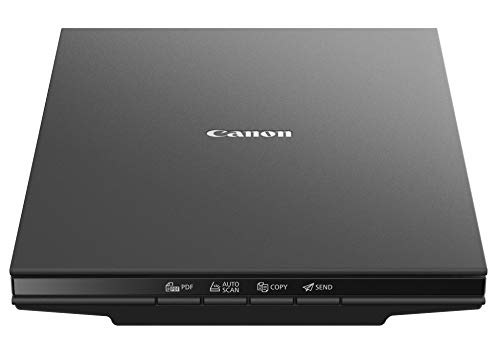
5. Epson Perfection V39 II Flatbed Scanner — Best for Photos & Archival Documents
When the task is preserving old family photographs, digitizing artwork, or scanning bound books with pages that cannot be fed through a sheet feeder, a flatbed scanner like the Epson Perfection V39 II outperforms every ADF model on this list. With 4800 dpi optical resolution, the V39 II captures enough detail to enlarge prints significantly without visible pixelation — a specification that matters enormously when archiving irreplaceable photos or scanning illustrations for reproduction. The high-rise removable lid accommodates books and oversized items that standard flatbeds struggle with.
Epson's ScanSmart software adds genuine value beyond the hardware, enabling automatic stitching of oversized originals that exceed the scanner bed dimensions, as well as direct routing to cloud storage services without an intermediate desktop step. The USB-powered design eliminates the need for a separate power adapter, which keeps cable clutter minimal on home desks — a practical consideration that home users consistently undervalue until they're managing four cords around a single workstation. Scan-to-cloud functionality integrates with major services directly, making digital archiving accessible without manual file management steps.
The V39 II's primary limitation is throughput: flatbed scanning requires placing each document manually, which makes processing large document stacks time-consuming compared to ADF alternatives. Home users choosing this model are making a deliberate trade between image quality and batch speed, and for photo-archival or artwork digitization purposes, that trade is absolutely correct. The compact, lightweight chassis stores easily in a desk drawer when not in active use, which makes the V39 II a practical addition to home offices where counter space is at a premium.
Pros:
- 4800 dpi optical resolution delivers archival-grade quality for photos and artwork
- High-rise removable lid accommodates books, oversized originals, and fragile documents
- USB-powered, compact, and lightweight — minimal desk footprint and no power adapter needed
Cons:
- Manual page-by-page flatbed placement makes high-volume document batches impractical
- No ADF means large stacks of standard office documents require significant operator time
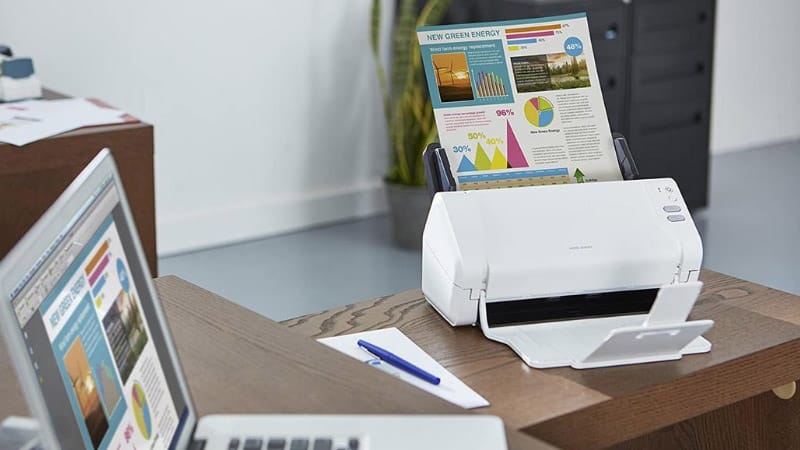
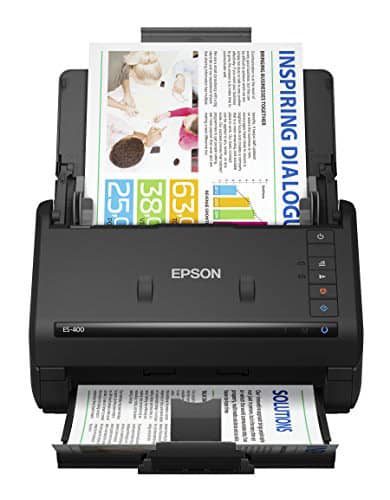
6. Brother ADS-1800W Wireless Compact Desktop Scanner — Best Wireless Compact Desktop
The Brother ADS-1800W carves out a distinct position in the home scanner market by combining genuine wireless flexibility with a compact desktop footprint and an accessible price point that most buyers find significantly more reasonable than the Fujitsu ScanSnap alternatives. The built-in 2.8-inch color touchscreen enables direct cloud-routing and workflow automation without involving a computer, which is an impressive capability at this price tier. The Brother Mobile Connect app extends that wireless functionality to smartphones and tablets, letting home users scan and retrieve documents from anywhere in the house.
At 30 pages per minute with single-pass duplex scanning, the ADS-1800W keeps pace with the moderate document volumes that characterize most home office environments — tax season, insurance paperwork, and monthly statement batches all process quickly without requiring users to monitor the machine. The 20-page automatic document feeder handles mixed media reliably, though home users with very large batch jobs will feel the capacity limitation compared to the 100-sheet feeders on the Fujitsu models. Bundled software automates document enhancement, receipt categorization, and direct saving to preferred cloud services without requiring manual workflow configuration.
USB-C connectivity via the included cable provides a reliable wired alternative when wireless performance is a concern, and the single-pass duplex mechanism means double-sided documents scan in one pass rather than requiring a second feed cycle. Build quality is solid for the price range — the ADS-1800W feels durable enough to handle daily home office use without the premium materials that justify Fujitsu's higher price tags. For most buyers seeking a wireless-capable home scanner with a touchscreen and acceptable speed, the ADS-1800W delivers strong value at a price point the market genuinely needs.
Pros:
- Touchscreen with Wi-Fi and USB-C connectivity covers both wireless and wired home setups
- 30ppm single-pass duplex handles typical home office volumes efficiently
- Strong bundled software automates cloud routing, document enhancement, and file organization
Cons:
- 20-page ADF capacity limits efficiency for large batch scanning sessions
- Software interface occasionally requires more steps than direct-competitor equivalents
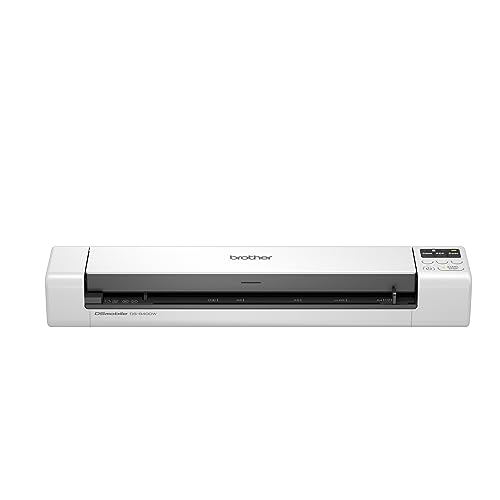
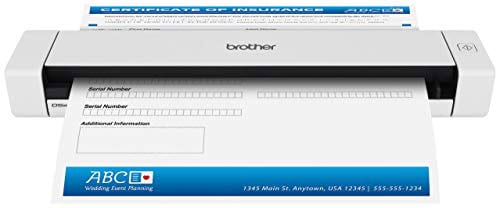
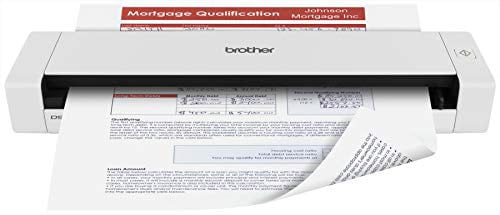
7. Brother DS-940DW Duplex Wireless Mobile Scanner — Best Ultra-Compact Mobile Scanner
The Brother DS-940DW occupies a unique position among the scanners reviewed here: it is the only model that combines duplex scanning capability, built-in Wi-Fi, an embedded lithium-ion battery, and a form factor described accurately as barely larger than a box of spaghetti. Brother's Desk Saving Design eliminates the spatial footprint problem entirely — the DS-940DW fits on any desk without displacing anything else, slides into a laptop bag without adding meaningful weight, and operates as a fully standalone device without requiring a nearby computer. For home users whose primary scanner bottleneck is space rather than speed, this machine is a revelation.
Scanning at 16 pages per minute in both color and black-and-white duplex mode, the DS-940DW is the slowest ADF scanner in this roundup, though the speed is entirely sufficient for the on-the-go use cases the hardware targets. The micro SD card slot enables standalone scanning and local storage without any connected device, and Brother's free iPrint&Scan mobile app bridges the gap between the scanner and a smartphone or tablet when wireless transfer is preferred over physical card removal. Our testing confirmed that the embedded battery handled a full workday of moderate scanning without requiring a recharge.
The single-sheet feed mechanism processes one document at a time rather than pulling from a loaded stack, which means the DS-940DW does not replace a desktop ADF scanner for anyone digitizing hundreds of pages per week. The hardware is purpose-built for mobile professionals, remote workers, and home users who need dependable document digitization capability in a device they can move from room to room or pack into travel luggage without a second thought. As a dedicated mobile scanning companion, the DS-940DW has no meaningful competition at its price point in 2026.
Pros:
- Embedded battery, Wi-Fi, and micro SD support fully standalone mobile operation
- Ultracompact Desk Saving Design fits anywhere without requiring dedicated counter space
- Color and monochrome duplex at 16ppm with no speed penalty for color scanning
Cons:
- 16ppm throughput is insufficient for high-volume home office batch scanning
- Single-sheet feed mechanism requires individual document placement without a stacked feeder
What to Look For When Buying a Document Scanner for Home
ADF vs. Flatbed: Choosing the Right Mechanism
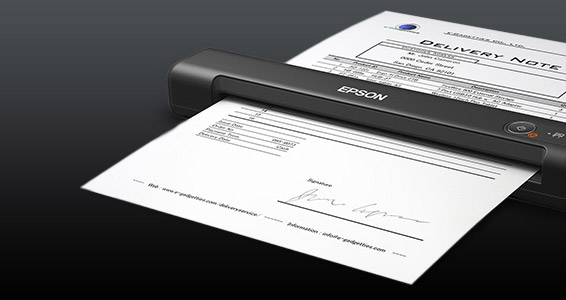
The first and most consequential decision when selecting a home document scanner is whether an automatic document feeder or a flatbed glass bed better fits the intended workload. ADF scanners excel at high-volume document batches — stacks of contracts, bank statements, and tax forms process quickly without operator involvement, making them the natural choice for home users with significant paperwork backlogs. Flatbed scanners like the Epson V39 II, by contrast, deliver superior image quality and can accommodate books, bound documents, fragile originals, and oddly shaped items that cannot safely pass through a sheet feeder. Many serious home archivists maintain one of each type, using the ADF for day-to-day paperwork and the flatbed for photo preservation projects.
Scanning Speed and ADF Capacity
Pages per minute ratings and ADF sheet capacity are the two specifications most directly tied to real-world scanning productivity. For home users processing documents intermittently — a few dozen pages per session — a 20-page ADF at 16–30ppm is entirely adequate. For households digitizing large archives or managing ongoing business paperwork from a home office, the 100-sheet feeders and 40–45ppm speeds of the top Fujitsu ScanSnap models justify their higher purchase prices through recovered time across hundreds of sessions. Duplex scanning — both sides in a single pass — is worth prioritizing for any scanner handling standard office documents, since double-sided contracts and reports are the norm rather than the exception.
Connectivity: Wired, Wireless, and Standalone
Connectivity options significantly affect how a scanner integrates into a home office environment, and the right choice depends entirely on how the home network and desk layout are arranged. USB-connected scanners like the ScanSnap iX2400 deliver the most consistent performance with no wireless configuration overhead, making them ideal for home users who always scan from the same computer. Wi-Fi scanners like the Brother ADS-1800W and ScanSnap iX2500 offer placement freedom and multi-device sharing — documents can route to phones, tablets, or cloud services without touching a laptop. For truly mobile use cases, battery-powered options like the Doxie Go SE and Brother DS-940DW operate entirely without cables or nearby computers, storing scans onboard for later transfer. The newest generation of Wi-Fi 6 equipped scanners — the iX2500 specifically — offer meaningfully improved wireless throughput and reliability over older 802.11n equipped alternatives.
Software Ecosystem and Cloud Integration
Hardware specs matter less than most buyers assume once scanning quality reaches an acceptable baseline — what determines the daily usability of a home scanner is almost entirely software. The best scanner software handles OCR, automatic image cleanup, file naming, and cloud routing without requiring manual intervention for each document batch. Fujitsu's ScanSnap Home software consistently ranks as the most polished in this category, with Brother's iPrint&Scan and Epson's ScanSmart offering competitive feature sets at lower hardware price points. Home users who scan to Dropbox, Google Drive, or OneDrive should confirm that their intended scanner's bundled software supports direct routing to those services before purchase, since third-party cloud integration varies considerably across brands and models.
Common Questions
What is the best document scanner for home use in 2026?
The ScanSnap iX2500 is our top overall pick for home users in 2026, delivering 45ppm duplex scanning, a 100-sheet ADF, Wi-Fi 6 connectivity, and the most intuitive 5-inch touchscreen interface in the consumer scanner category. For home users who prioritize value over maximum features, the Brother ADS-1800W delivers strong wireless performance and touchscreen convenience at a considerably lower price point, making it the practical recommendation for moderate home office workloads.
Is an ADF scanner or flatbed scanner better for home use?
The answer depends entirely on what home users scan most frequently. ADF scanners handle multi-page document stacks efficiently and suit the needs of most home offices processing paperwork, contracts, and receipts on a regular basis. Flatbed scanners deliver superior image quality for photos, artwork, books, and fragile documents that cannot pass through a sheet feeder safely. Households with both document and photo archiving needs sometimes maintain one of each, since the use cases genuinely do not overlap.
How many pages per minute does a home scanner need?
Most home users with moderate paperwork volumes — monthly statements, occasional contracts, and seasonal tax documents — find 20–30 pages per minute fully sufficient for their needs. Households with substantial ongoing scanning workloads, large archive backlogs, or shared multi-user environments benefit meaningfully from the 40–45ppm speeds found on the Fujitsu ScanSnap models. The throughput difference only becomes tangible when processing hundreds of pages per session, so buyers should honestly assess their typical batch sizes before prioritizing speed over other specifications.
Can a home document scanner work without a computer?
Several models on this list operate entirely without a connected computer. The Doxie Go SE stores scans onboard its internal memory and syncs later via Wi-Fi. The Brother DS-940DW saves directly to a micro SD card and can transfer wirelessly via smartphone app without any computer involvement. The ScanSnap iX2500 routes documents directly to cloud services over Wi-Fi 6 without requiring a desktop or laptop intermediary, making computer-free scanning genuinely practical for home users who prefer mobile-centric workflows.
What resolution do home document scanners need?
Standard office documents, receipts, and contracts scan at archival quality at 300 dpi, while 600 dpi captures fine detail in signatures, small print, and documents that may need later enlargement. Photo archiving genuinely benefits from 1200 dpi and above, which is where dedicated flatbed scanners like the Epson Perfection V39 II justify their 4800 dpi optical specification. Most ADF models on this list default to 200–300 dpi for standard document mode and can be manually set to 600 dpi when higher fidelity is required for specific originals.
Are portable document scanners worth buying for home use?
Portable scanners serve a specific and well-defined role — digitizing documents outside the home or in rooms without dedicated desk space — and for that role they are genuinely worth buying. The Doxie Go SE and Brother DS-940DW both perform their intended function reliably, with battery operation, compact form factors, and wireless transfer capabilities that desktop scanners cannot match for mobility. Home users who need both high-volume desktop performance and occasional portable scanning are best served by owning one of each rather than expecting either type to cover the other's use case adequately.
Buy on Walmart
- Fujitsu ScanSnap iX1600 ADF Scanner - 600 dpi Optical, White — Walmart Link
- ScanSnap iX2500 Wireless or USB High-Speed Cloud Enabled Doc — Walmart Link
- ScanSnap iX2400 High-Speed Simple One-Touch Button Color Doc — Walmart Link
- Doxie Go SE - The Intuitive Portable Document Scanner with R — Walmart Link
- Epson - Perfection V39 II - Color Photo, Tax Receipt & Docum — Walmart Link
- Brother ADS-1800W Wireless Compact Desktop Scanner | Scan Sp — Walmart Link
- Brother DS-940DW Duplex and Wireless Compact Mobile Document — Walmart Link
Buy on eBay
- Fujitsu ScanSnap iX1600 ADF Scanner - 600 dpi Optical, White — eBay Link
- ScanSnap iX2500 Wireless or USB High-Speed Cloud Enabled Doc — eBay Link
- ScanSnap iX2400 High-Speed Simple One-Touch Button Color Doc — eBay Link
- Doxie Go SE - The Intuitive Portable Document Scanner with R — eBay Link
- Epson - Perfection V39 II - Color Photo, Tax Receipt & Docum — eBay Link
- Brother ADS-1800W Wireless Compact Desktop Scanner | Scan Sp — eBay Link
- Brother DS-940DW Duplex and Wireless Compact Mobile Document — eBay Link
Final Thoughts
Every scanner on this list earns its recommendation for a specific type of home user, and the best purchase decision comes down to matching the hardware's strengths to the actual workload — whether that means the ScanSnap iX2500's unmatched batch capacity and Wi-Fi 6 speed, the Epson V39 II's archival photo quality, or the Brother DS-940DW's genuinely pocketable portability. Our team encourages anyone still deciding to revisit the buying guide section above, weigh the ADF capacity and connectivity options against realistic daily use scenarios, and invest in hardware that will be reached for every single week rather than shelved after the first month.


About Sandra Holt
Sandra Holt spent eight years as a project manager for a residential renovation company in Portland, Oregon, overseeing kitchen and bathroom remodels from initial estimate through final walkthrough. That work exposed her to an unusually wide range of home equipment — from HVLP spray guns and paint sprayers on the tools side to range hoods, kitchen faucets, and countertop appliances on the appliance side. After leaving the trades, she moved into consumer product writing, bringing the same methodical, hands-on approach she used to evaluate contractor-grade tools to everyday home gear. At PalmGear, she covers kitchen appliances, home tools, paint and finishing equipment, and cleaning gear.
You can get FREE Gifts. Or latest Free phones here.
Disable Ad block to reveal all the info. Once done, hit a button below